
























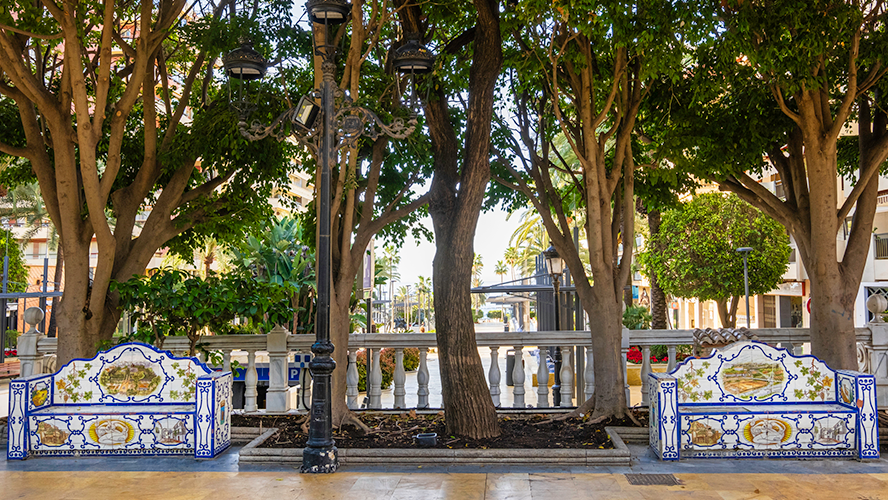
Right in the heart of Marbella, where the narrow streets of the old town meet the salty Mediterranean breeze, the old Alameda Park endures as a sanctuary of freshness and tradition. More than just a green space, this centuries-old area has been a meeting place for generations of Marbella residents since the 18th century. Its leafy ficus trees and benches tiled in Andalusian style have borne witness to everything from illustrious 19th-century travellers to locals seeking shade on sunny days. Among ornamental fountains and winding paths, the park preserves the spirit of a Marbella that, despite its swift expansion, continues to hold the key to its identity in these oldest parts.
- History and context of Alameda Park: centuries-old roots in the heart of Marbella
- What you can see in the park: a mosaic of Andalusian nature and art
- Where to eat in the area: Andalusian flavours in the old town and along the Seafront Promenade
History and context of Alameda Park: centuries-old roots in the heart of Marbella
The origins of Alameda Park date back to the 18th century, when it was designed as a place of recreation for the people of Marbella. Originally, this green space covered approximately 20,000 square metres, accounting for 20% of the urban centre at the time. Its original boundaries were marked by calle Fortaleza and calle Alameda to the north, Avenida del Mar to the east, Avenida Miguel Cano to the west and Avenida del Fuerte to the south.
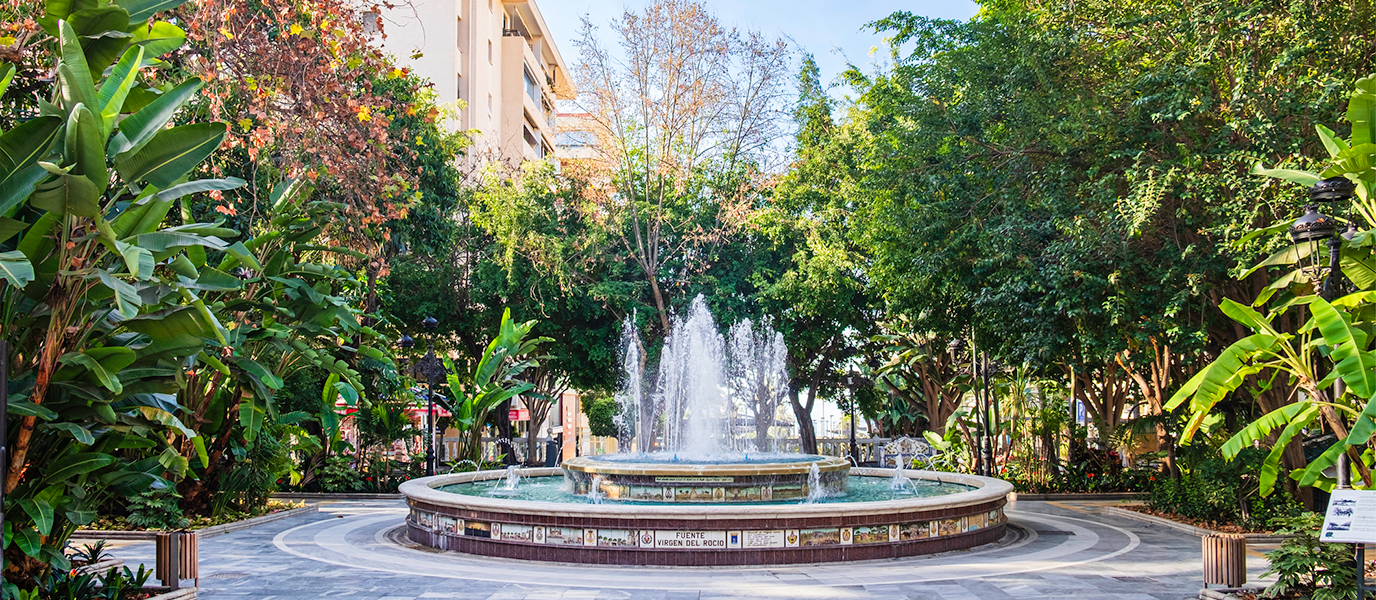
The park’s initial layout featured a central walkway flanked by two side paths, lined with six ornamental roundabouts fitted with built-in benches and a central fountain that still stands as a testament to that era. Over time, the park has undergone several transformations, the most significant being the reduction in its area due to Marbella’s rapid urban growth and demand for building land. Despite this, it has retained its essence as a meeting place and space for leisure among the local Marbella community.
During the 19th and early 20th centuries, Alameda became the Marbella’s social hub, hosting events, fairs and popular celebrations. In 1930, a major renovation was carried out, including the paving of walkways and the addition of marble paths, lending the park a more refined appearance in keeping with the city’s urban development in the jet-set era. It was also at this time that the Sociedad Recreativa Casino building was built on the park’s western side.
What you can see in the park: a mosaic of Andalusian nature and art
Upon entering Alameda Park, visitors are welcomed by lush vegetation that provides shade and coolness, especially appreciated during the hot Marbella summers. Tree species include ficus, jacarandas, date palms, araucarias, London plane trees and the distinctive floss silk tree, each contributing its own beauty and enriching the space’s biodiversity.
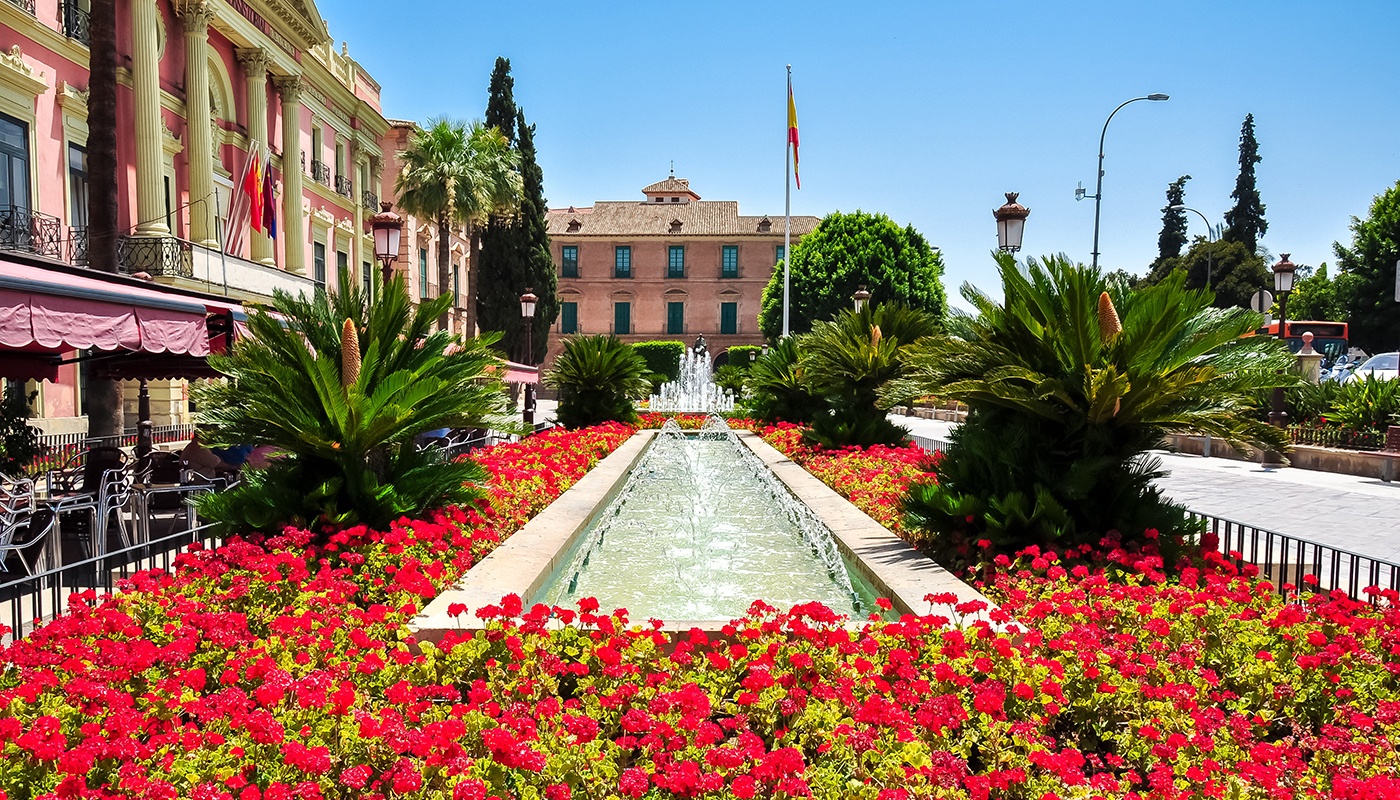
At the heart of the park stands a majestic ceramic fountain from 1792, known as the Fuente de la Virgen del Rocío. This iconic feature, surrounded by benches adorned with typical Andalusian tiles, serves as a meeting point where locals and visitors pause to rest and admire the craftsmanship that reflects the region’s rich cultural heritage.
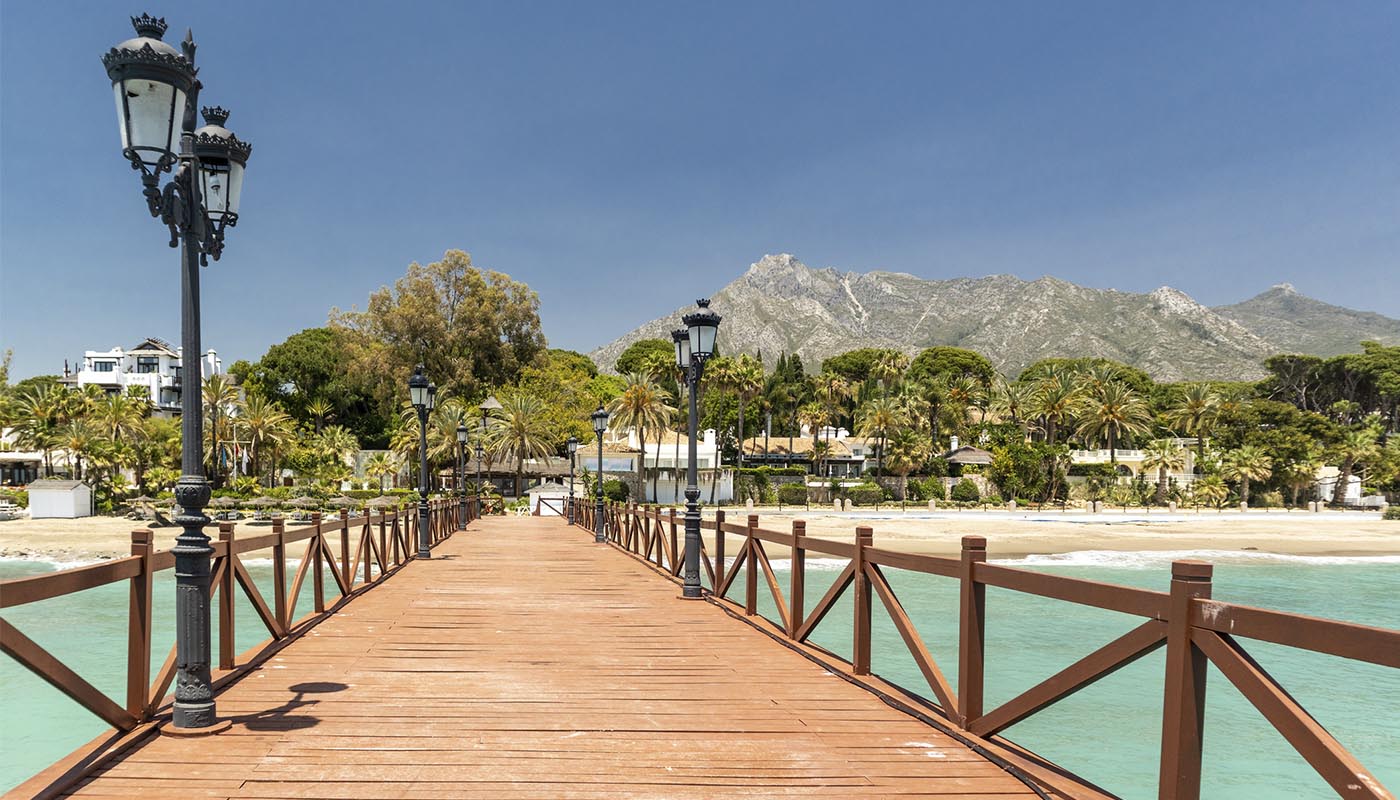
The winding paths are perfect for a leisurely stroll, revealing picturesque corners and allowing visitors to enjoy the tranquillity offered by this spot amidst the bustle of the city. In addition, the park’s location close to both the old town and the Seafront Promenade makes it a must see for those looking to immerse themselves in Marbella’s authentic atmosphere.
Where to eat in the area: Andalusian flavours in the old town and along the Seafront Promenade
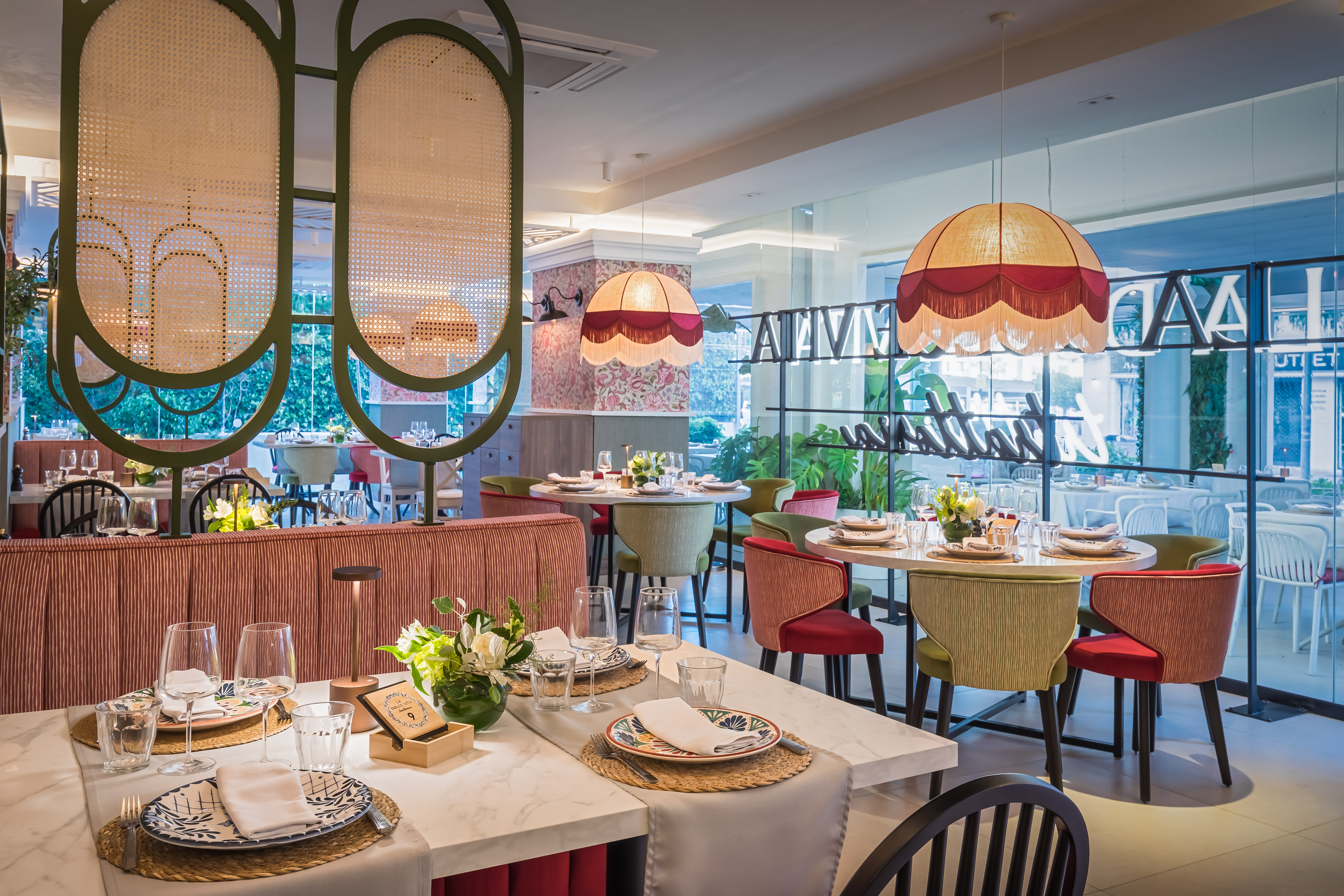
The central location of Alameda Park offers convenient access to a range of dining options that reflect the essence of Marbella. Just steps away, in the old town, restaurants such as El Patio de Mariscal and Casa del Corregidor serve traditional Andalusian cuisine in flower-filled courtyards with whitewashed walls. Here, diners can enjoy specialities such as ajoblanco, a refreshing cold soup featuring almonds and garlic, or the thicker salmorejo from Córdoba, served with Iberian ham and chopped egg. Also worth trying are flamenquines, meat rolls filled with Serrano ham, breaded and fried, and oxtail stew, slow-cooked until meltingly tender.
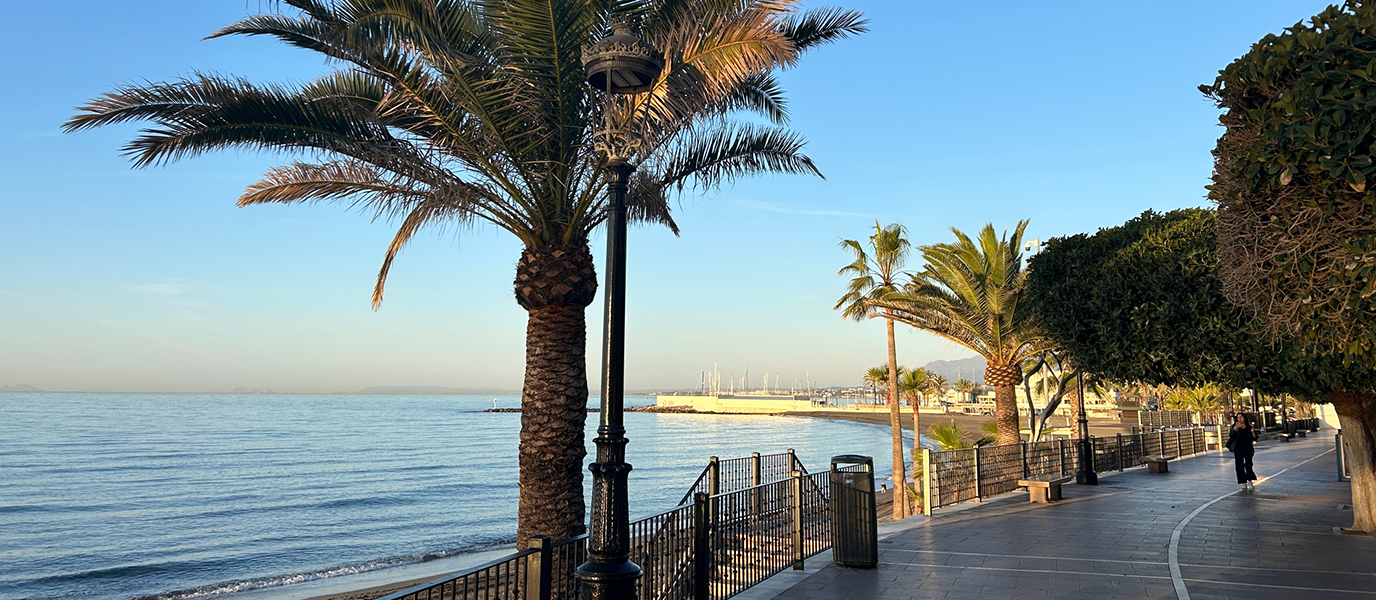
For those with a taste for seafood, the Seafront Promenade is the perfect spot. Beach bars and seafood restaurants such as Los Mellizos and La Lonja are renowned for their fresh local fish and shellfish. Diners can sample offerings such as sardine skewers grilled over coals in sand-filled boats, Málaga white prawns, garlic clams and Andalusian-style squid in a crisp, light batter. For something more filling, seafood rice dishes and Málaga-style fried fish, combining anchovies, baby squid and red mullet, offer a taste of the Costa del Sol’s culinary identity.