











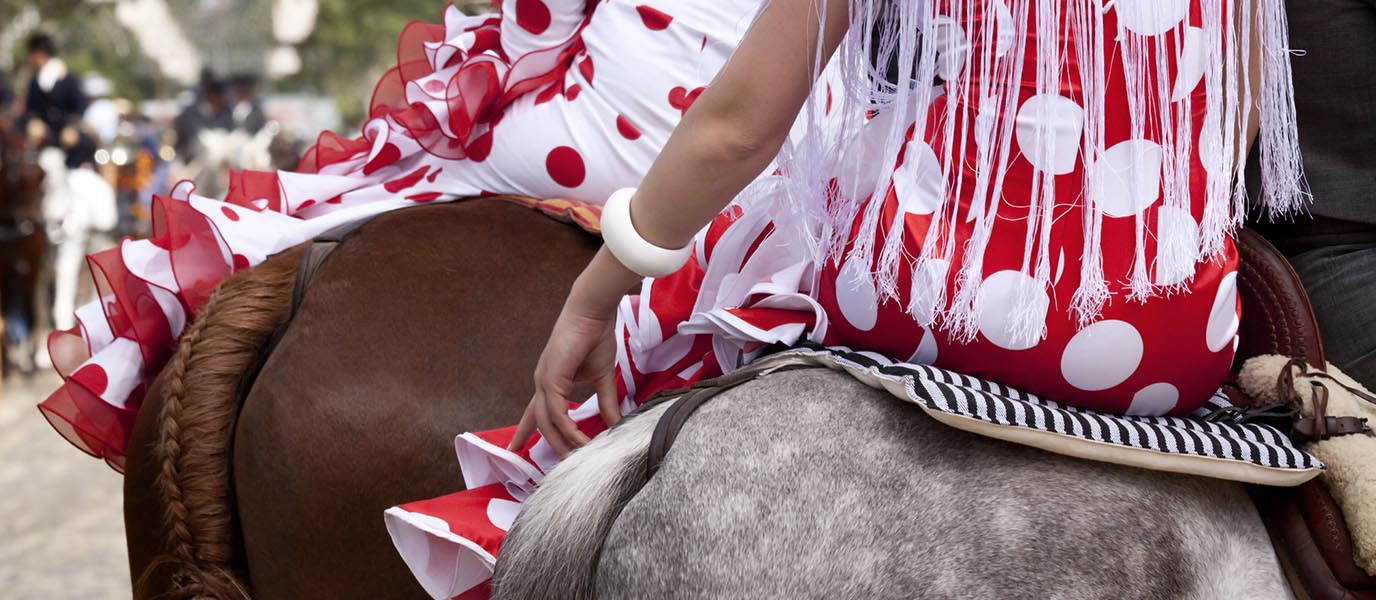
This traditional celebration is the most important urban pilgrimage in Andalusia. Thousands of floats fill the streets, accompanied by music and joy, as they make their way to the hermitage of San Miguel. The goal during these days is simple: enjoy life and the sunshine. At night, the fairgrounds turn into the town’s main hub of fun for everyone who comes along.
- History of the San Miguel Fair, the perfect blend of religion and folklore
- Dates and celebrations: the big day of the pilgrimage
- Activities: marquees, music, food and bullfights
- How to get to the Torremolinos fair, about 15 minutes from the centre
History of the San Miguel Fair, the perfect blend of religion and folklore
Religious celebrations in honour of San Miguel Arcángel, the patron saint of Torremolinos, have taken place here since this Malaga town was no more than a fishing village back in the 19th century. Like in most villages at the time, the festivities were limited to mass, a procession and perhaps a small family gathering, but nothing official.
While it’s not clear exactly when these celebrations became a pilgrimage, we do know that in 1917 a local newspaper published the first programme for the Torremolinos Fair. There’s also evidence that the fair continued between 1926 and 1930, though there’s still no mention of floats or pilgrims heading to the hermitage of San Miguel.
It wasn’t until 1940 that the word “pilgrimage” was printed in reference to the celebrations being planned in Torremolinos, which at that time was still just a neighbourhood of Malaga; Torremolinos didn’t become an independent municipality until 1988. That year, a regional newspaper encouraged people to decorate their floats as beautifully as possible, a tradition that’s been going ever since.
In the 1960s, with the rapid growth of tourism on the Costa del Sol, the celebrations in Torremolinos gained prominence, becoming one of the area’s biggest social events, an end-of-summer celebration filled with parties, marquees and, of course, bullfights.
Today, the pilgrimage to San Miguel is recognised as a Festival of National Tourist Interest thanks to its importance and is the most significant urban pilgrimage in Andalusia.
Dates and celebrations: the big day of the pilgrimage
The fair is held on the weekend in September closest to the 24th, which is San Miguel’s day. On that same day, the main mass is celebrated and there’s a procession of the saint through the town’s streets.
The pilgrimage itself usually takes place on the Sunday before the fair, starting at nine in the morning, when pilgrims and thousands of floats pulled by oxen and horses gather on Avenida de Los Manantiales to begin the journey to the hermitage of San Miguel.
Pilgrims from the San Miguel brotherhood make their way singing, clapping and enjoying a glass of wine and a ham tapa.
It’s common for the floats, decked out in their finest decorations, to stop along the way so people can enjoy a bit of music and dancing on a route that lasts most of the day.
Tourists, visitors and locals from nearby towns often join this popular celebration too, taking part in the pilgrimage to the chapel and enjoying one of the most important events in Torremolinos.
Activities: marquees, music, food and bullfights
During the fair, Torremolinos is packed with cultural and food-focused events across the town. There are two main venues: the town centre, with the more traditional side of the programme like the main mass, processions and folk concerts, as well as the fairgrounds, where the marquees, especially at night, turn into a playground of fun for all ages.
Fairground rides are set up there, alongside concerts, sports competitions and, above all, plenty of music, food and drink for everyone who wants to join in.
Another highlight during these days is the bullfighting, although the town’s bullring also puts on equestrian shows for those who’d rather watch horses than bulls.
How to get to the Torremolinos fair, about 15 minutes from the centre
The Torremolinos Fairgrounds are in La Colina, the upper part of town. Shuttle buses usually run during the fair, but it’s also possible to walk from the centre, which takes around 20 minutes.
If you’re driving or taking a taxi, bear in mind that many streets around the fairgrounds are closed to traffic, so it’s worth checking in advance how far you can go by car.
If you’re coming by train, the station is fairly close to the fairgrounds, so you can get there by bus or even on foot. If you’re flying into Malaga airport, the best option is to take a taxi or public transport to the centre and walk from there.