

_435x320?&)

Spanish Christmas sweets to mark the festive season
December is here, and it can only mean one thing. The Spanish Christmas sweets are back. How many have you tried?

Travel is food for the soul; it is a tired cliché that, nevertheless, is true. Spain in December is definitely a foodie paradise with sugared air drifting from centuries-old bakeries, market stalls piled with candied almonds and the faint crackle of paper-wrapped confections slipping into shoppers’ pockets. Remarkably under the radar, Spanish Christmas sweets are everywhere in December and are an important signal to Spaniards that the holidays are officially underway.
The complicated allure of Spanish Christmas sweets
During the festive season, Spanish Christmas sweets can be found in delicatessens, wrapped in bright foil on supermarket shelves, and freshly made at the Spanish Christmas markets. Yet, not all Spanish Christmas treats deserve a place in your suitcase. Some classics, once faithfully handmade, are now muted under the weight of industrial production.
However, if you are willing to travel to their town of origin, you will find authentic versions that still hold their original magic
However, if you are willing to travel to their town of origin, you will find authentic versions that still hold their original magic. When you do get to taste the real deal, Spanish Christmas sweets become miniature testaments to Spain’s regional identity, from Castilian convent kitchens to Andalusian patios scented with orange blossom. It all boils down to where you look.
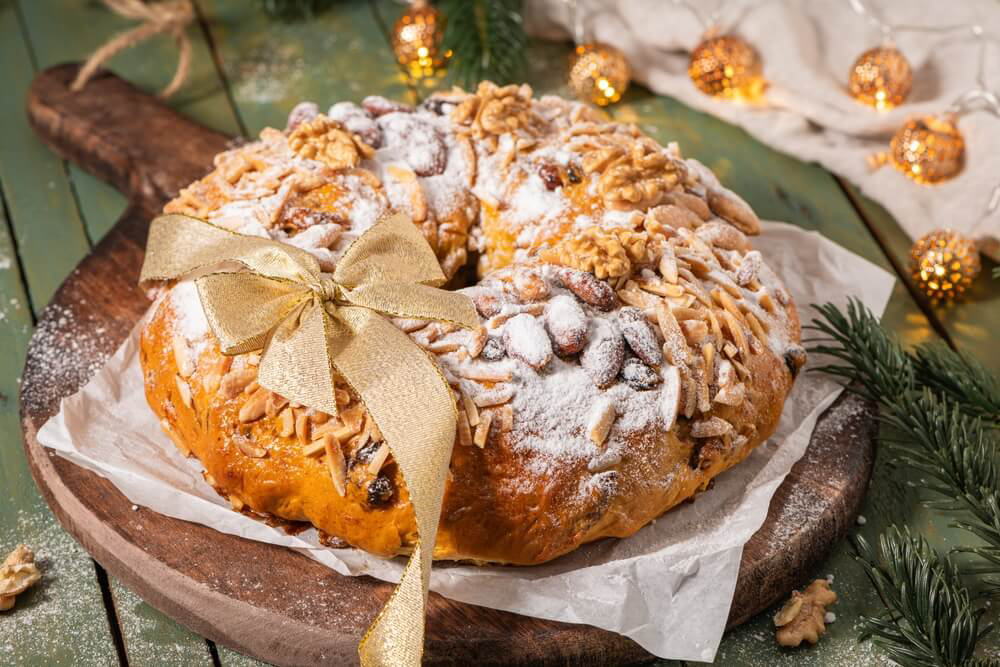
Roscón de Reyes
Stock up on turrón blando at the Jijona Christmas markets
If you want to taste the best Spanish turrón in its purest expression while on holiday in the Valencia region, head to Jijona, home of soft nougat. Here, Spanish almond turrón still tastes like tradition, not sugar. Here, modest factories hide a timelessly poetic craft combining roasted almonds ground into a paste, warmed with honey until they loosen into a silky, almost buttery sweetness. No supermarket bar can replace this and if you close your eyes while you taste some, you might almost believe you are standing in a century-old kitchen somewhere in the Mediterranean. When shopping for turrón blando, look for a bar that glistens softly but resists melting on the tongue. This is a sign of correct cooling and storage. Be sure to ask for freshly unwrapped bars, as the difference from even yesterday’s batch can be dramatic.

Soft nougat known as turrón blando
The Alicante Christmas markets sell turrón duro
While Jijona serves up sticky, gooey, almond deliciousness, Alicante offers a crunchy version of turrón. This brittle counterpart is a classic slab of toasted almonds bound with honey that cracks like lacquer between your teeth. It may seem an austere version of the traditional Spanish Christmas sweet, but that is exactly its appeal. Inside the bar, the almonds should be evenly toasted, giving a slightly smoky edge to the flavour. Good turrón duro isn’t just sweet, it is nutty, deep and a timeless presence amongst the Christmas treats in this region. If you are on holiday in Alicante, look for hard turrón in unpretentious family shops or market stalls, buying from people who have been producing Spanish turrón long before it became an airport cliché.

Hard nougat or turrón duro
Try an alfajor de Medina in Andalusia
Anyone who has been on holiday to Andalusia knows that its Moorish history echoes through every aspect of the culture and its Spanish Christmas sweets are no different. In Medina Sidonia, little cylinders of honey, ground almonds, breadcrumbs and spices known as alfajores de Medina are created to celebrate the region’s history. The exotic spice mix hints at trade routes long vanished, the honey tastes like a late summer sunset, and the texture is dense but soft. For travellers weary of Spain’s Christmas candy, often overly sugared, these alfajores are an antidote.

Alfajores de Medina
Don’t forget to try mantecados and polvorones
Unfortunately, mantecados have suffered terribly at the hands of industrialisation; however, Antequera in Andalusia still maintains a strong tradition when it comes to this Spanish Christmas sweet. The trick to identifying the authenticity of this buttery cookie, made from pork lard, is not its flavour, which can range from cinnamon to lemon to sesame or almond, but its texture. The best mantecado should lightly crumble, not collapse and it should never feel heavy, a common flaw among many commercial cookies.
It is here that you begin to understand the nuances between mantecados and their almond-rich cousins, the polvorones
It is here that you begin to understand the nuances between mantecados and their almond-rich cousins, the polvorones. While all polvorones are technically mantecados, their texture differs since they are made with toasted flour and ground almonds, making them extremely crumbly. So much so that they are wrapped in paper to hold them together. Look for local bakeries that specialise in Spanish mantecado cookies and Spanish mantecados in small batches. For a winter snack with depth, it’s worth the hunt.
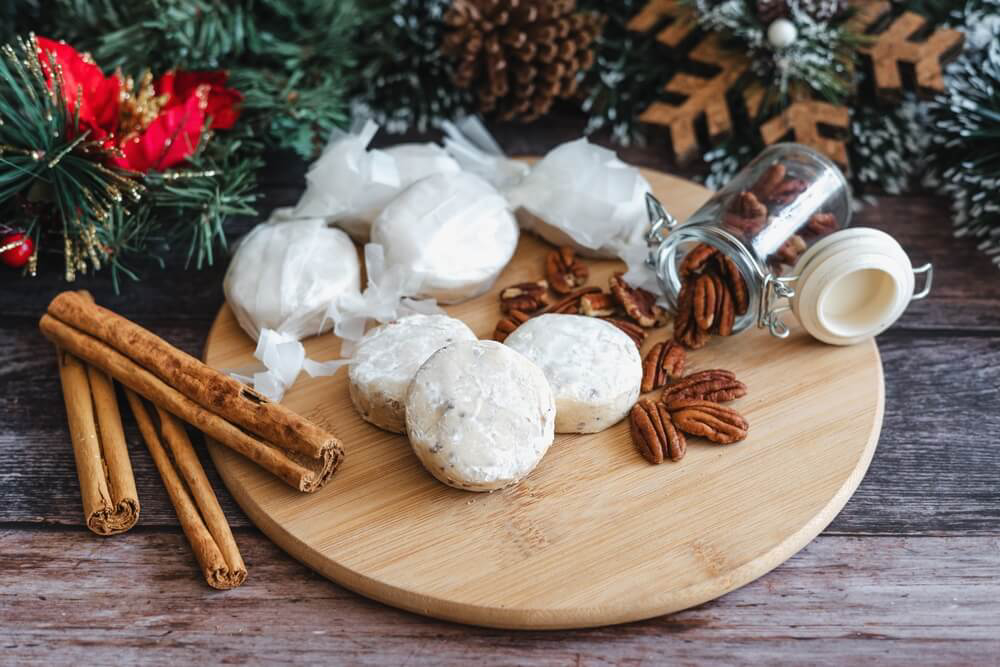
Mantecado biscuits
Head to Seville for roscas del vino
If you happen to be on holiday in Seville during December, you will notice the scent of sweet wine lingers through the city. This tantalising smell comes from the traditional bakeries where roscas, small ring-shaped biscuits dusted with powdered sugar, are being pulled from ovens. Their allure comes from their complex flavour profile that delivers a whisper of anise, a breath of wine, a faint crackle of sugar with each bite. Of course, they are not aggressively sweet with their taste, a nod to fermented grapes, warm ovens and perhaps a trace of olive wood used to fire up the ovens. Don’t waste your time with industrial versions; this is one of the Spanish Christmas sweets you must buy in situ, ideally in the Seville Christmas market, before enjoying some local tapas.
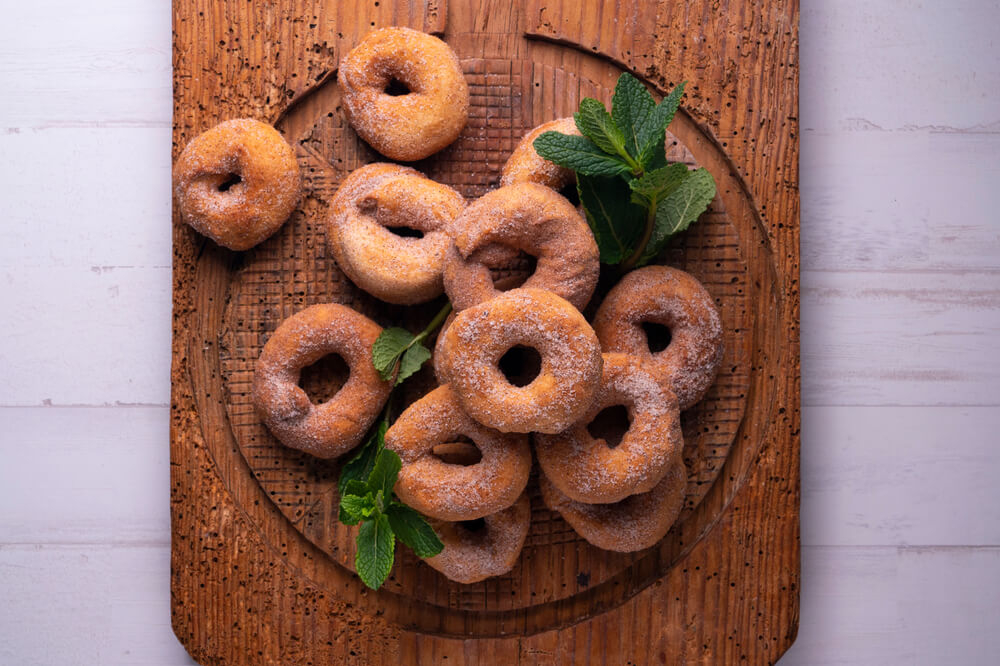
Roscones del Vino, a traditional sweet in Seville
Tuck into almendrucos in Aragón
Aragón’s climate produces almonds with a dramatic intensity, which is why almendrucos, almonds dipped in hard sugar shells, are a popular sweet treat in this region. Almendrucos rely entirely on the quality of the nut. When the almond is good, an almendruco snaps cleanly with a distinctive brittle crack that sounds like the festive season. The sugar coating should be thin, clear and just enough to gloss the almond without hiding it. Almendrucos are worth trying when on holiday in Aragón. You will know when you have tasted a bad one as instead of cleanly snapping it will taste like flavoured chalk. A top tip? Seek out specialist nut roasters, avoiding souvenir shops and savour the Spanish taste of Christmas like a local.
It isn’t Christmas without mazapán
Mazapán has a reputation problem. Too often, tourists encounter dry, dense, over-sweetened blocks masquerading as Toledo’s heritage. But the real thing, handmade by master artisans in traditional bakeries, is mouthwateringly good. Its finesse comes from freshly ground almonds, delicate honey and the absence of fillers. The texture should be soft, light, but structured and the flavour should be deep but not cloying. You want to find a balance of warm toasted almonds and subtle sweetness. Typically shaped into a range of forms varying from moons, marzipan fruits or simple plain slabs, mazapán is treated like a mini sculpture, earning its place among the finest Spanish dessert turrón alternatives.

Spanish marzipan treats
Add hojaldrinas to your shopping list
Is there anything better than a buttery, winter puff pastry when the temperatures drop? Hojaldrinas are Spain’s answer to festive comfort food: feather-light, orange-scented, and sugar-dusted puff pastry that can disappear all too quickly. At first bite, the layers begin to melt in your mouth, releasing delicate citrus notes. But the texture is a labour of love. Butter is folded into the dough, rested, folded again and chilled. Today, only a handful of Andalusian producers still traditionally make them. Industrial versions taste oddly stale in comparison, but when trying the authentic version, hojaldrinas are the kind of Spanish Christmas pastries that make you fall in love with their delicate, aromatic and almost melancholic taste.

Hojaldrina pastries
Don’t forget about pan de Cádiz
If you happen to be spending your Christmas holidays in Cádiz, you will want to discover the local sweet treat, pan de Cádiz. Decadent even by Andalusian standards, this layered confection of marzipan, candied fruit and sweet egg threads is a nostalgic and sophisticated treat. You will often spot this in specialist shops in Cádiz where recipes follow convent tradition. This is best paired with a glass of sherry to enjoy it like a true local.
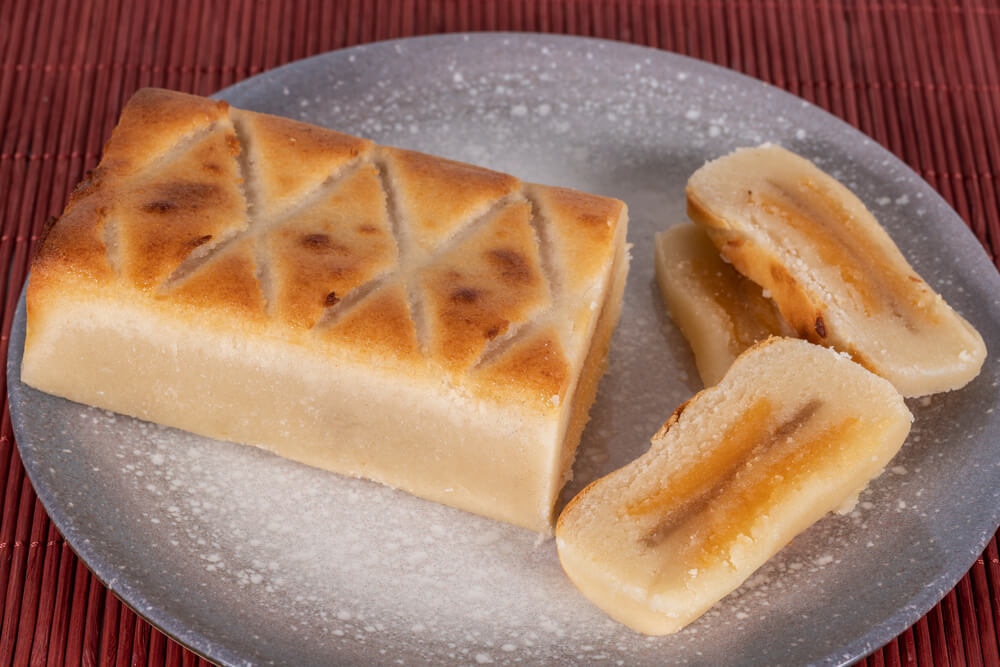
Pan de Cádiz
Try intxaursaltsa in the Basque Country
Often overlooked when it comes to Spanish Christmas sweets, intxaursaltsa is a Basque delicacy. This walnut cream dessert is traditionally served in Basque households for Christmas Eve. The cream should be velvety with a deep, nutty bitterness that is delicately softened by sugar and just enough cream to make it smooth. Be sure to try it when on holiday in the Basque Country, as outside this region it is almost impossible to find.

Intxaursaltsa, a Basque Christmas treat
Yemas de Santa Teresa, a Christmas classic
Looking for an alternative to turrón? Try Ávila’s signature sweet, tiny spheres of egg yolk and sugar, known as yemas de Santa Teresa. While closely associated with the feast day of Saint Teresa on the 15th of October, these Spanish Christmas sweets are a longstanding tradition throughout the festive season. It is thought that historically, nuns in Ávila’s convents created this sweet from leftover yolks given to the convent by the local winemakers. Today, the city’s bakeries still shape each piece by hand, presenting the yemas in paper cases. The final result should hold its shape, have a warm golden hue and taste buttery and eggy in the best possible way.
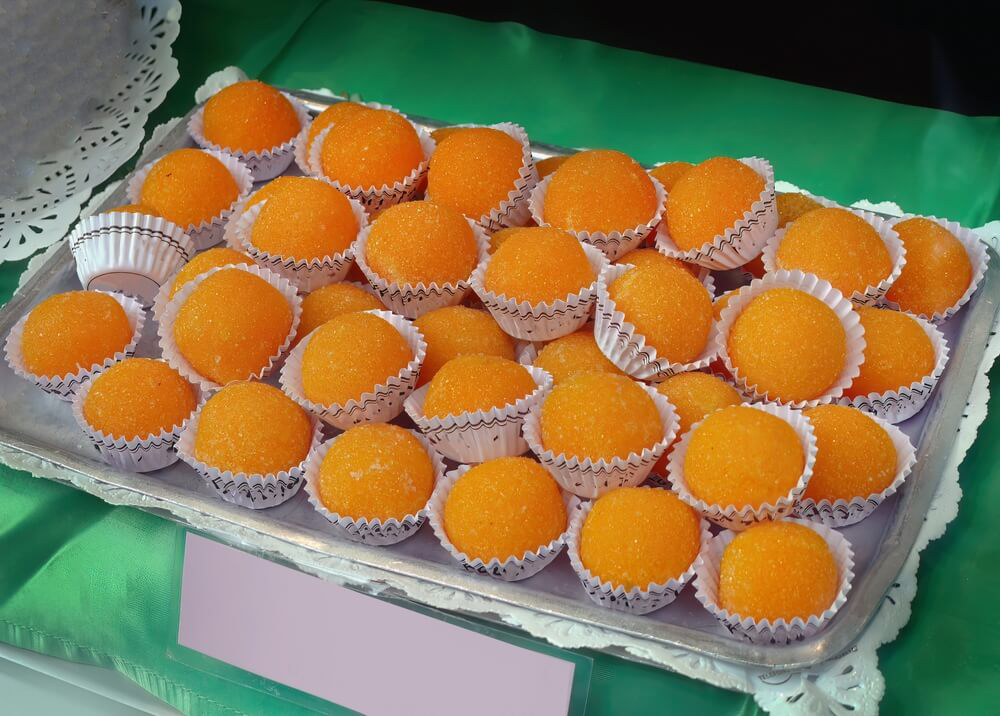
Intxaursaltsa: A ramekin with a cream liquid inside and sesame seeds in a bottle
Pestiños are a sign that it is Christmas
Looking for a taste of Andalusia at Christmas? Pestiños are the answer. This orange blossom dough is fried until blistered and glazed in honey. Humble, homemade and a taste of Spain’s southern roots. Some are dusted in sesame, others dipped in sugar. The very best shine with a light sticky glaze that clings to your fingers. Buy them in the local markets, small bakeries or even from the women selling them outside churches.
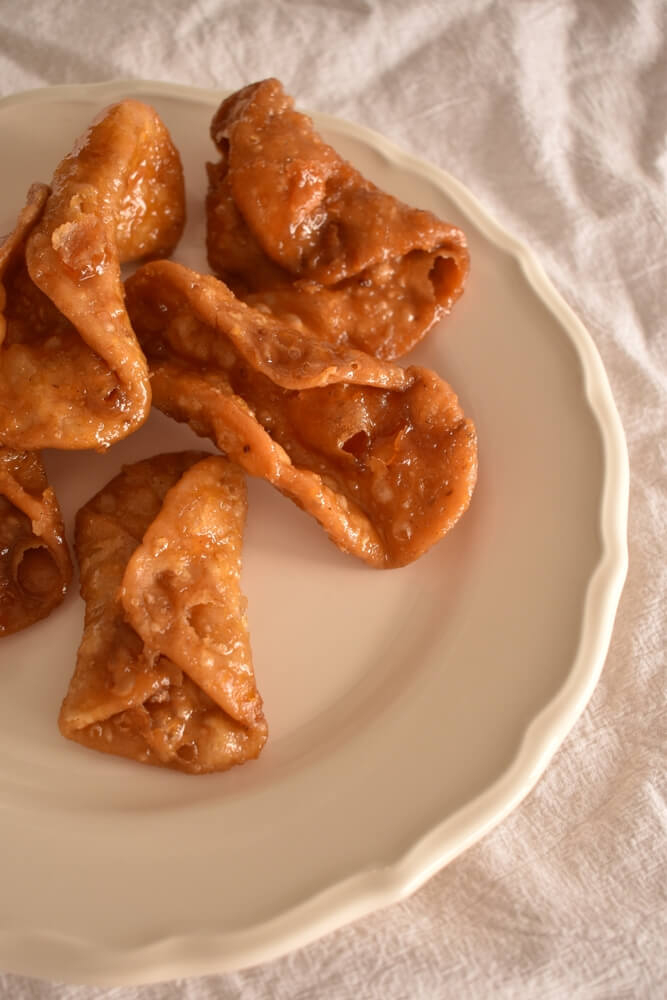
Pestiños, an Andalusian Christmas special