

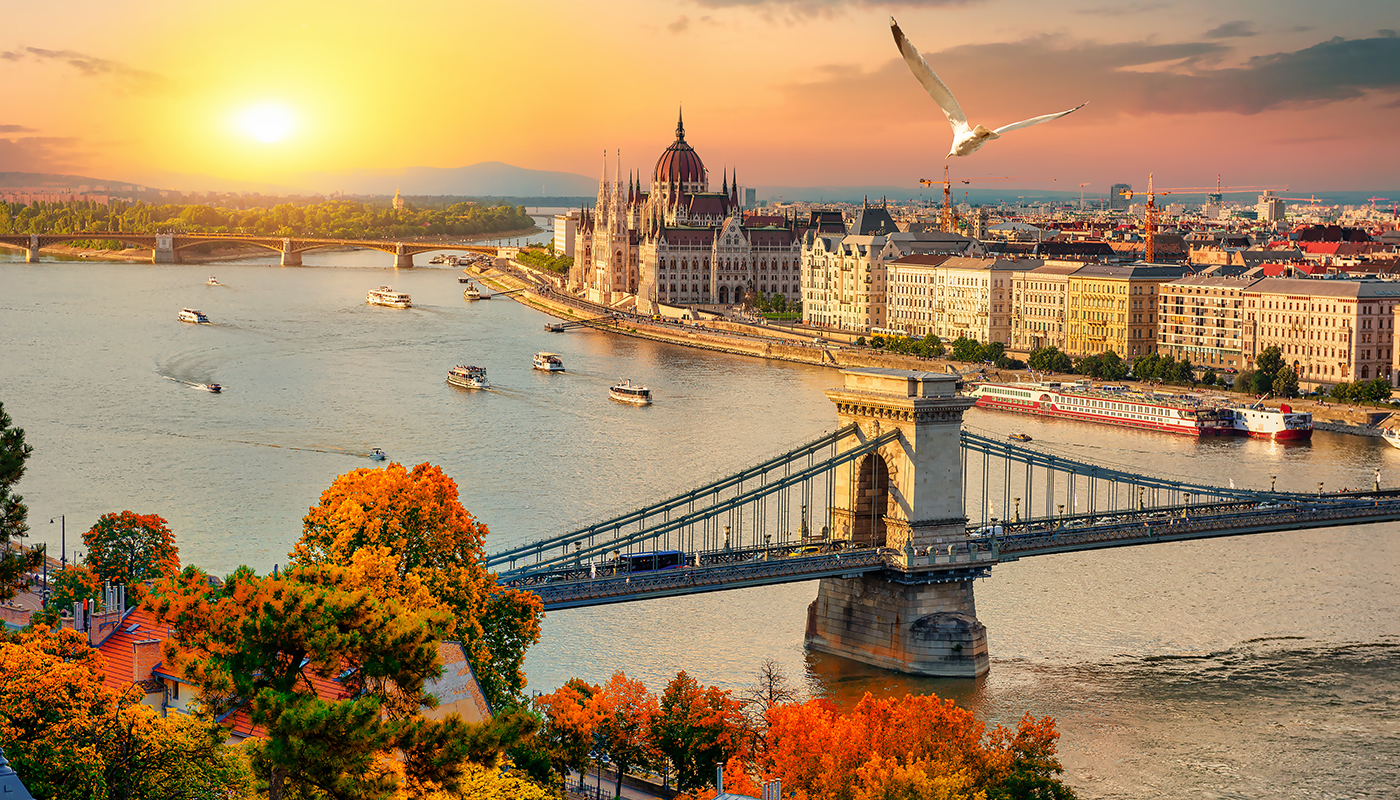












One of the most famous viewpoints in Budapest is Fisherman’s Bastion. This curious monument stands on Castle Hill overlooking the Danube and Pest, the eastern half of the Hungarian capital. It is clearly a must when visiting Budapest.
Climbing a hill like Castle Hill is often rewarding. The view of the Hungarian Parliament, the Danube and its bridges, and the rest of the city from there is truly magical. That is why it has become one of the most popular places in Budapest.
Budapest viewpoint
There are many viewpoints in Budapest, especially from the Buda side, the upper part of the city. Whether it is Gellert Hill, Buda Castle itself, the Danube quays, the Buda funicular or the Várkert Bazaar, there are plenty of options in Budapest to enjoy beautiful views and take photos to show off on social media.
Nevertheless, Fisherman’s Bastion is perhaps the best viewpoint in Budapest. Its aesthetics, location and views offer the best possible combination.
With the aesthetics of a monument built for this purpose, its vocation is to be a lookout terrace.
It has a perfect location, right in the middle of Castle Hill, next to the castle and its picturesque quarter.
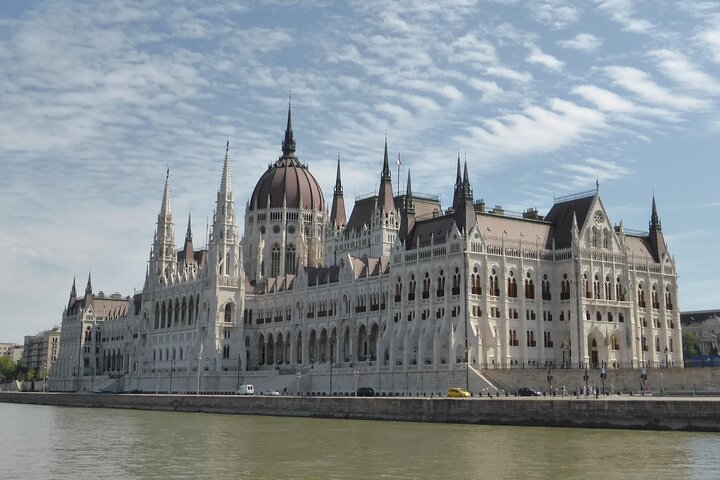
It also has an incomparable view: it faces the imposing Hungarian Parliament, an architectural jewel which seems to be bathed in gold when lit at night.
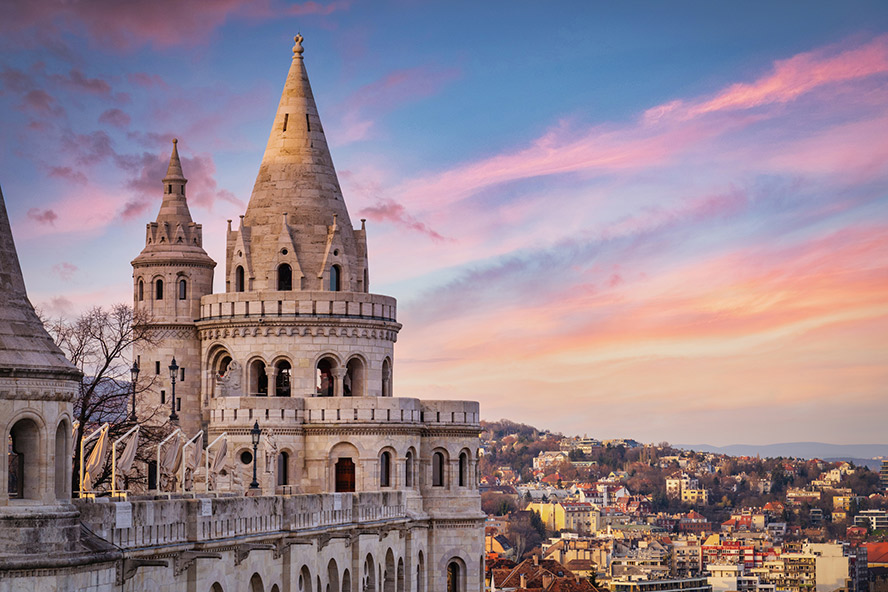
History of Fisherman’s Bastion
Despite the grandiloquence of its name, Fisherman’s Bastion was built for the sole purpose of being a monument overlooking the city, i.e. a late 19th century romantic and eclectic space from which to view Budapest.
Nevertheless, this lookout is neither a defensive bastion nor a fishermen’s bastion. The fishermen’s guild defended this part of the old city walls in the Middle Ages. This explains the name: Fisherman’s Bastion. Fisherman’s Bastion was built between 1899 and 1905 based on the design of architect Frigyes Schulek. His son János was in charge of the renovation works after the damage suffered by the monument during World War II.
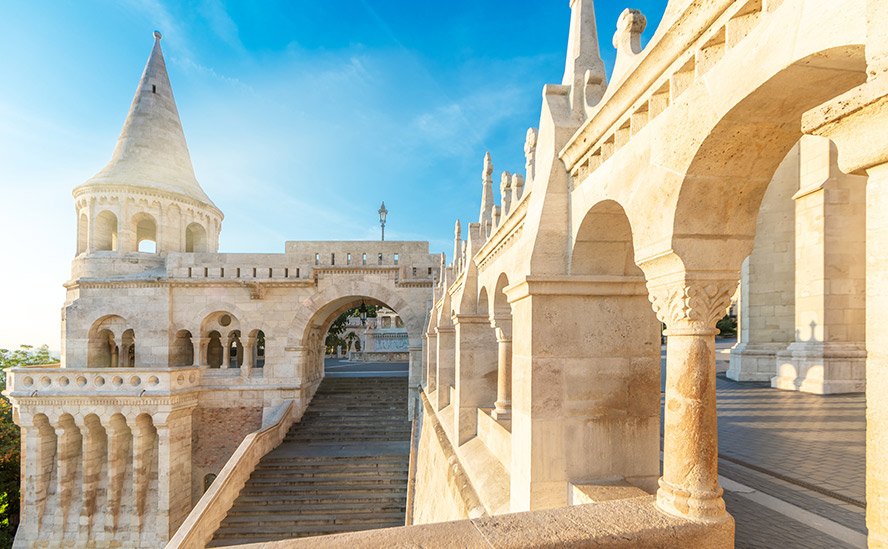
The Bastion is 140 metres long and has seven stone towers symbolising the seven chieftains of the Magyar tribes that made up the Principality of Hungary, the seed of today’s Hungary in the 9th century.
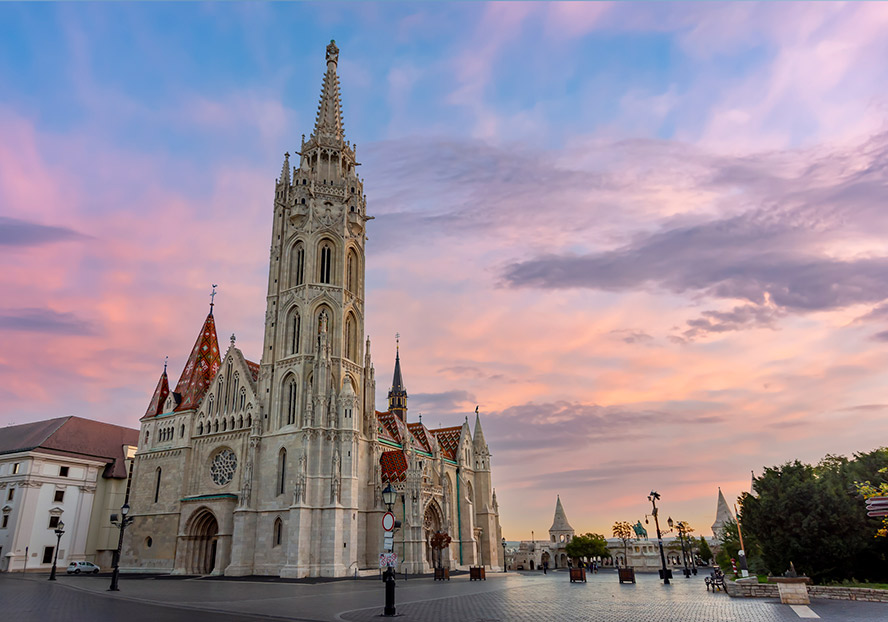
On the esplanade in front of the Bastion is Matthias Church and the equestrian statue of Stephen I of Hungary, the first monarch of the now defunct Hungarian kingdom.
The lookout’s aesthetics and views have made it a popular spot for locals, outsiders and even celebrities. For example, international artists have filmed videos there.
Matthias Church
Matthias Church precedes the Bastion. This Catholic church is one of the best known and most admired in Budapest. Officially called the Church of Our Lady, it was built between the 13th and 15th centuries, although it was later reformed at the end of the 19th century when it took on its current neo-Gothic and eclectic style. It even became a mosque during the Turkish rule of Hungary in the 16th century.
It owes its name Matthias to Matthias Corvinus, or Matthias I, King of Hungary in the 15th century, one of the country’s main monarchs.
Royal weddings and coronations have been held at Matthias Church. Today it is a magnificent place for classical music concerts.