













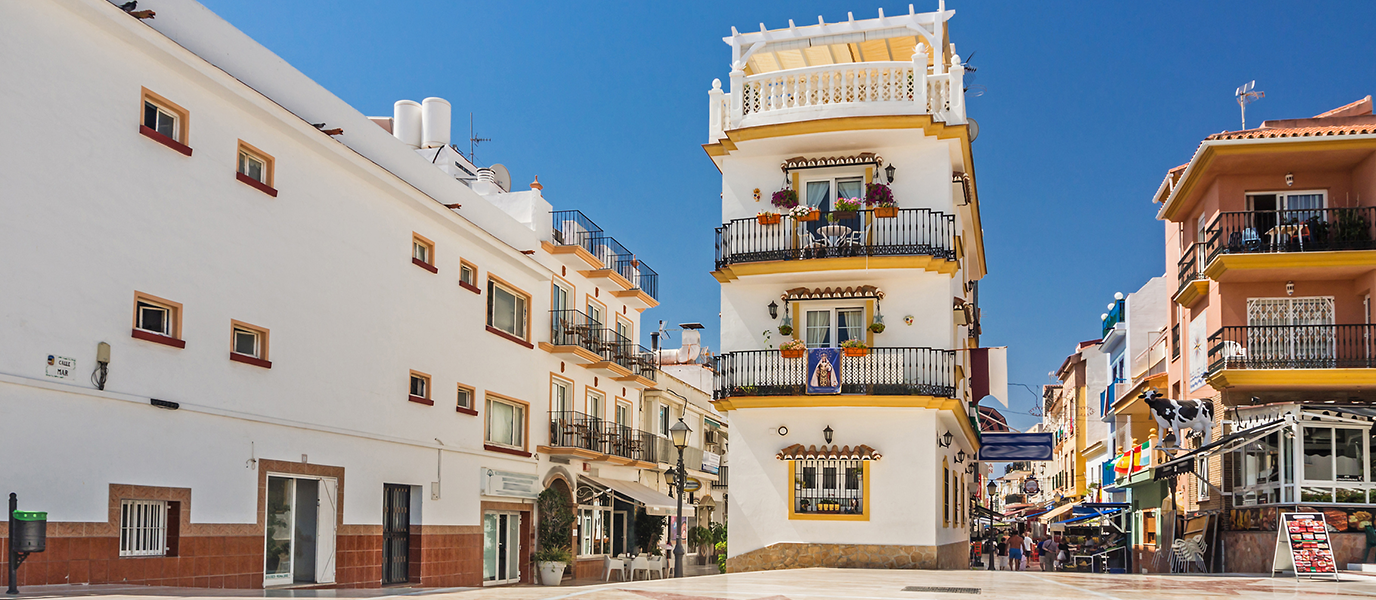
Torremolinos which, according to some experts and historians, takes its name from the tower [torre] of the windmills [molinos] built during the fourteenth century, has a centuries-old history as a human settlement. The tower in question is also known as Torre Pimentel — the name it was given later — stands in the very heart of this Málaga town, between Calle San Miguel and the Cuesta del Tajo.
Torremolinos borders the El Calvario neighbourhood to the north and south, El Bajondillo to the south, and the Playamar area to the east. The main streets and squares in the old quarter of this popular Andalusian town, and its many shops, bars and restaurants are buzzing with life all year round.
For visitors who like traditional food and seafood, there is a great range on offer. For those looking for cultural activities, the centre of the white town of Torremolinos holds open-air cultural events. And those who like to go out at night after returning from a beach club, or vice-versa, can start their party in the centre of this Málaga town, whose historic quarter is home to lots of night clubs and bars.
- The history of the town of Torremolinos
- What to see and do in the centre of Torremolinos
- Plaza Costa del Sol
- Calle San Miguel
- Plaza de La Nogalera
- Where to eat in the centre of Torremolinos
The history of the town of Torremolinos
Around the fourteenth-century Torre de los Molinos (or Torre Pimentel), there grew a settlement that was the origin of the present historic quarter — it had previously been inhabited by both the Romans and the Phoenicians. Early on, and for centuries, this was a town of fishermen and farmers, and was famous for its mills; the arrival of the Arabs saw a proliferation of windmills — this part of Andalusia has always enjoyed a supply of water drawn from springs high up in the mountains.
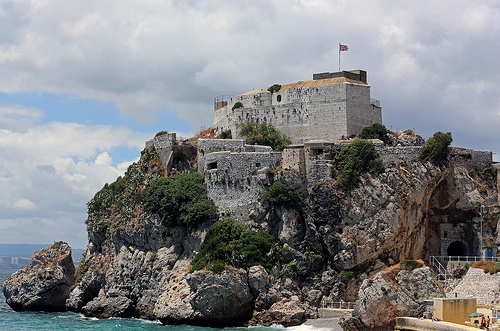
With the conquest of the Kingdom of Granada, Torremolinos faced incursions by Arab, English and Dutch pirates. To protect the town, in 1763 the castle of Santa Clara was built, a defensive fortification that was sited in El Morro, the natural protrusion that divides Torremolinos’ coastline in two.
During the first half of the nineteenth century, the town was almost entirely rebuilt, according to the 1849 Geographical, Statistical and Historic Dictionary of Spain and its Overseas Possessions. At that time, there existed 14 flour mills.
During the twentieth century, in the early 1920s to be exact, Torremolinos experienced an economic downturn resulting from the decline of the mills, and became a fishing town.
The late 1950s, and particularly in the 60s and 70s, saw a booming growth in the tourism industry, and Torremolinos became the tourism mecca of the Costa del Sol. Hollywood stars, intellectuals, artists, aristocrats and celebrities who adorned the pages of glossy magazines chose Torremolinos as the destination for their holidays and leisure. Tower blocks, hotel complexes, restaurants and nightlife venues were all built during those years.
In 1988 Torremolinos became a town in its own right, separate from Málaga.
What to see and do in the centre of Torremolinos
Torremolinos’ old town is the perfect place to wander and soak up the vibrancy and bustle of its streets full of tourists and residents, to sit down and eat in one of the restaurants serving local cuisine, or to go shopping in establishments owned by natives or foreigners. Visitors can also admire historic buildings such as the Torre de los Molinos and the church of San Miguel.
The centre of this legendary town in Málaga is home to many night spots where you can keep the party going until dawn.
Plaza Costa del Sol
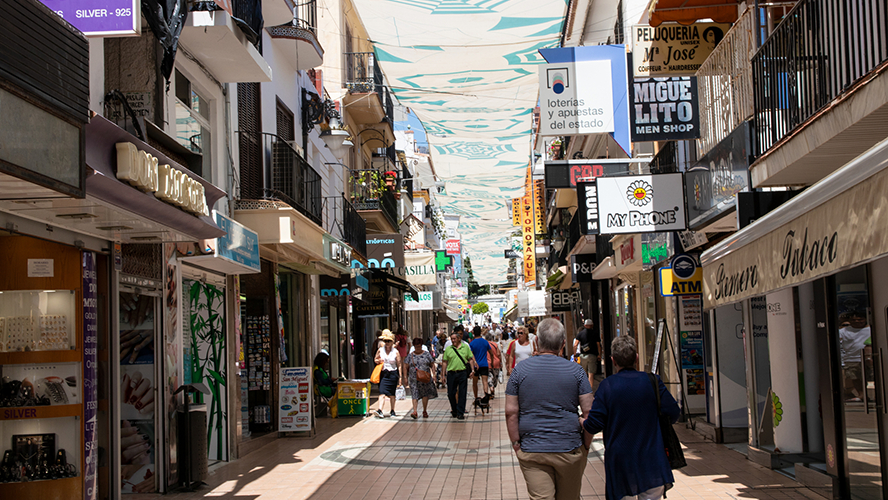
In the very centre of Torremolinos you will find the Plaza Costa del Sol, which catches the eye due to the long pergola designed by the artist Salvador Moreno Peralta, in a shape inspired by the waves of the sea, and which offers shade from the sun, all things being equal. The sculptures in this busy square are also worth noting, including the bronze figures known as ‘Los Oficios’ and ‘The birth of Eve’ by the Ceuta artist Elena Laverón.
The Plaza del Costa del Sol has green areas where visitors can stroll, as it has been pedestrianised since 2019. It’s also a good place to catch up with the news at one of the cafés or restaurants, or to enjoy one of Málaga’s famous ice creams.
Calle San Miguel
Also in the heart of Torremolinos, beginning at Avenida Palma de Mallorca and ending at the seafront promenade as you walk down the popular slope known as the Cuesta del Tajo, Calle San Miguel is this town’s principal and busiest thoroughfare.
Calle San Miguel is home to Torremolinos’ most emblematic establishments, and is packed with bars, restaurants and hotels.
Two of the town’s most important buildings are in the area of this street: the Torre de los Molinos (or Torre Pimentel), which stands at the end of the street, and the eighteenth-century church of San Miguel, Arcángel, which you will find in the Plaza de los Santos Arcángeles..
Plaza de La Nogalera
Another well-known and busy area of Torremolinos is the Plaza de La Nogalera, where a project is currently being undertaken to facilitate the movement of pedestrians. Pergolas illuminated in different colours provide shade for pedestrians, green spaces and fountains are some of the new elements that, in theory, should be in place by summer 2025.
Also located in the heart of Torremolinos, and very close to Calle San Miguel and Plaza Costa del Sol, is Plaza de La Nogalera, home to the La Nogalera complex. This is an area famous for its party atmosphere, during the day, but even more at night, and is vey popular among LGBTQ+ tourists (it is known by many as Torremolinos’ version of La Chueca — the area of Madrid long famed for its party vibe).
This square is where you will find the ‘Cercanías’ [local] railway station, which links the area with destinations including the centre of Málaga, the airport, and Fuengirola.
Where to eat in the centre of Torremolinos
Visitors are spoilt for choice, but below you will find a selection to suit various tastes and budgets.
At number 17, Calle San Miguel, the Toro Azul restauranthas received good recommendations and reviews on the Tripadvisor website. This establishment has been serving value-for-money, traditional fare since 1976.
Two minutes’ walk from the Plaza Costa del Sol, at number 10 Calle de la Cruz, is Zabor Fetén, a gastro-bar where you can enjoy a Málaga sausage tartare, Cordovan flamenquines [ham and cheese fried roll-ups] or a good grilled sea bream with a serving of chips.
And if you fancy a meal in an Italian restaurant with an outdoor terrace, a good choice is Ristorante Alby’s (No. 3, Calle Nogalera). Tripadvisor users praise the combination of flavours and the authentic Italian-cooked food.