









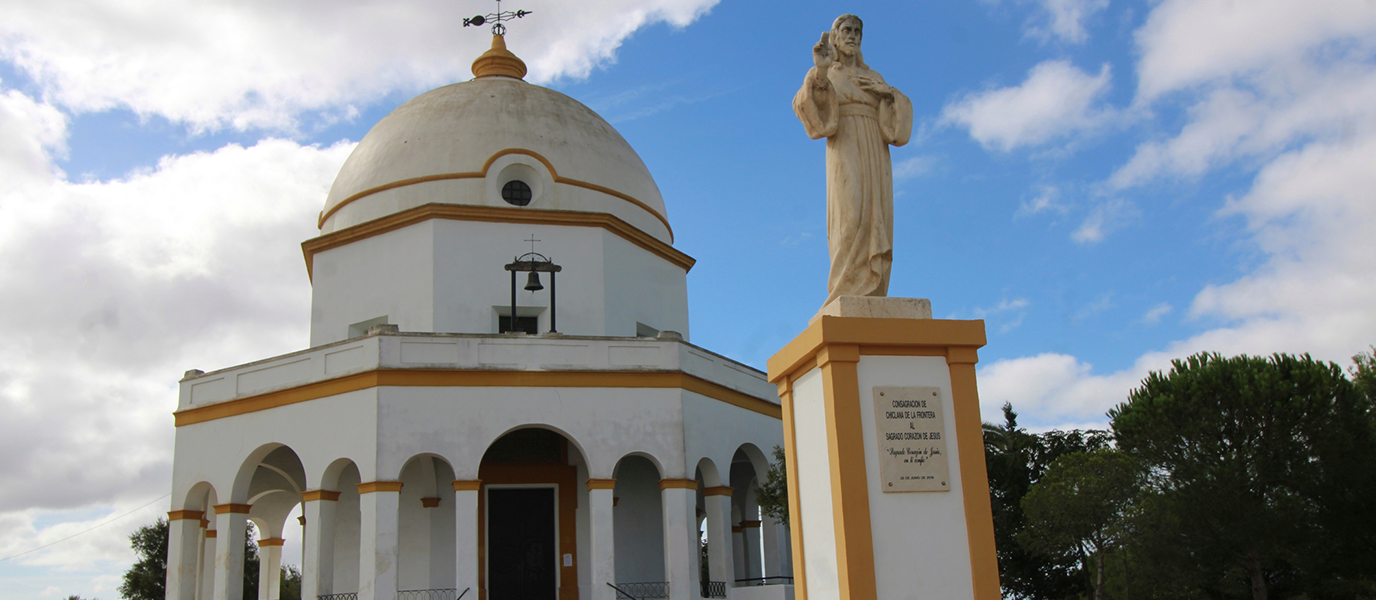
Built during the eighteenth century, the Santa Ana Hermitage is a very important pilgrimage and devotion centre for the area around Chiclana de la Frontera. It houses the image of Santa Ana and the Child Virgin, a work by the Genovese sculptor Domingo Giscardi, who made his home in Cádiz. The hermitage overlooks the Bay of Cádiz, and is an essential stop for Cádiz residents visiting this original structure with its octagonal floor plan and its great semi-spherical cupola.
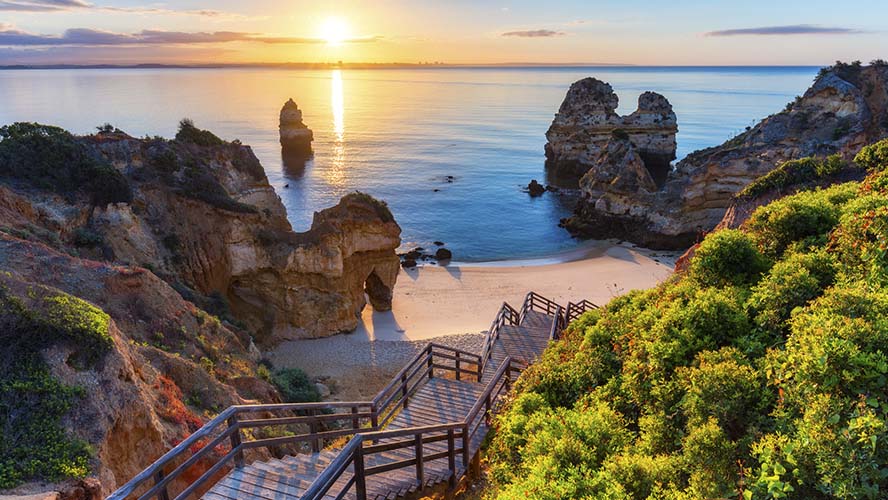
The Santa Ana Hermitage has a double significance: its religious and architectural standing on one hand, and its aesthetic and social value on the other. The Hermitage is located in a very lovely setting, on a natural balcony from which visitors can appreciate an infinite palette of blues, whites and intense greens overlooking the Atlantic Ocean.
Open to the public every Tuesday from 10.00 a.m. until 2.00 p.m. and from 4.00 p.m. until 8.00 p.m., the Santa Ana Hermitage stands at the highest point of the town of Chiclana, on the hill that now bears the saint’s name.
History of the Santa Ana Hermitage
Construction of the Hermitage of Santa Ana (Chiclana) was completed between 1772 and 1774, and was a project by the Cádiz architect Torcuato Cayón de la Vega. To build the hermitage, it was first necessary to demolish a windmill that stood on the site, and to obtain the permission of the military authorities, as the site was a strategic enclave for the defence of the local area. The building project was an initiative by the brothers Francisco de Paula and José Manjón.
We should mention that the Santa Ana hermitage was partially destroyed by Napoleon’s troops as they passed through Chiclana.
Visible from kilometres around, the hermitage was planned to be a private chapel with an octagonal structure and a great semi-spherical dome with four chambers to light the inside Its shape is reminiscent of ancient Byzantine and Hispano-Roman models.
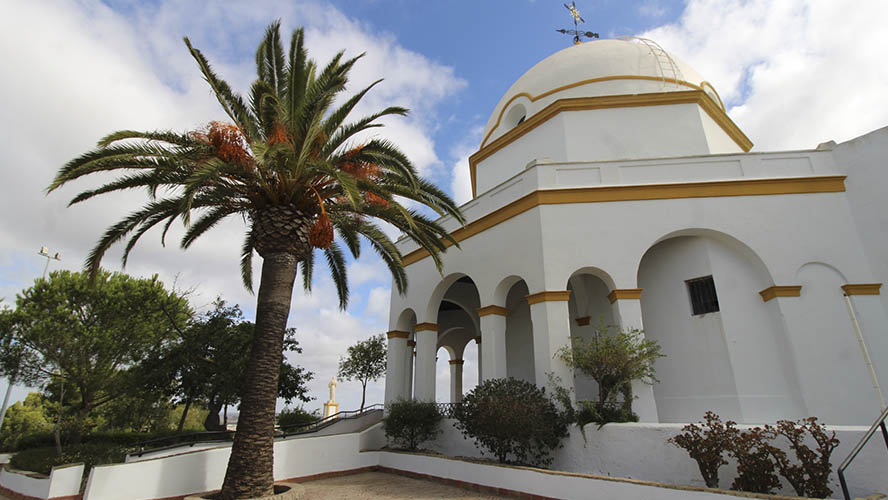
Although it was constructed during the neo-Classical period, the Santa Ana Hermitage is in the Mozarabic style. Inside, there is a small altar, with a niche containing the image of Santa Ana with the Child Virgin, the work of the Genovese sculptor Domingo Giscardi who had settled in Cádiz.
In August 1990, the Santa Ana hermitage underwent a significant remodelling project, including work to restore the beams, install an external lighting system, and develop the hill on which the hermitage stands.
Visiting the Santa Ana hermitage
The Santa Ana Hermitage is open to the public throughout the year, every Tuesday from 9.00 a.m. until 2.00 p.m. and from 4.00 p.m. until 8.00 p.m. It is also open to visitors on the 26th of July, for the celebration of Santa Ana’s Day.
On Santa Ana’s Day, there is a traditional pilgrimage to the saint, who is held in great affection by the people of Chiclana. The faithful go up to the hermitage to show their devotion to Santa Ana, and to attend a eucharist on the hermitage’s forecourt. On the previous evening, a procession will have taken place to transport the image, surrounded by flaming torches, to the church of Saint John the Baptist for the novena. Later, the image is returned to the hermitage at the top of the hill.
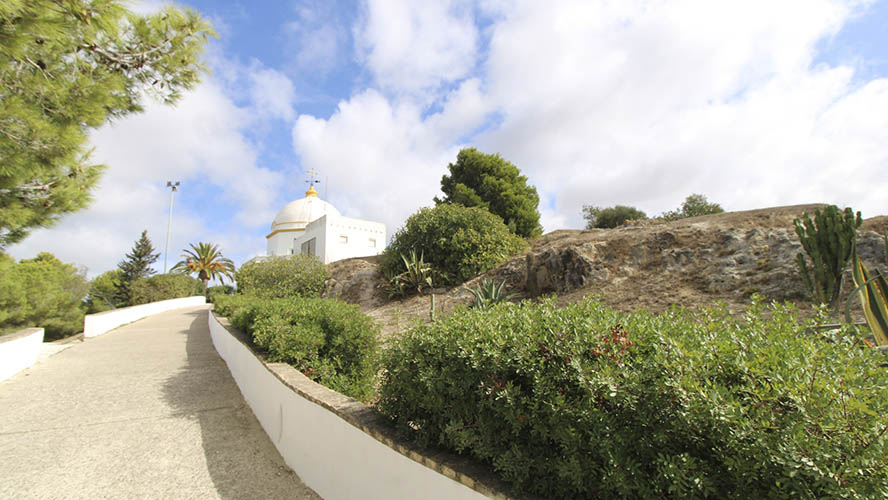
Thanks to an accord signed with the diocese, the public park in which the hermitage stands has been open to visitors every day except Sundays since 2008. Opening times for the Santa Ana Chiclana park are from 8.00 a.m. until 10.00 p.m. (except for Saturdays, when it closes at 2.00 p.m.)
Santa Ana’s hill
“A monument with views”. That is how the people of Chiclana describe the Santa Ana hermitage, thanks to its beautiful setting and the spectacular views offered from this hill which has been named after the saint.
Both the hill and the Santa Ana hermitage are depicted in a famous canvas by the German artist Franz Xavier Riedmayer, who settled in Cádiz. Riedmayer was commissioned by the first Count of Maule Nicolás de la Cruz y Bahamonde, and the painting has become known as “The Count of Maule and the painter Riedmayer gazing at a scene in Chiclana de la Frontera”. This is a view of Chiclana crowned by the Santa Ana Hermitage, in which the artist and his patron also appear.