
















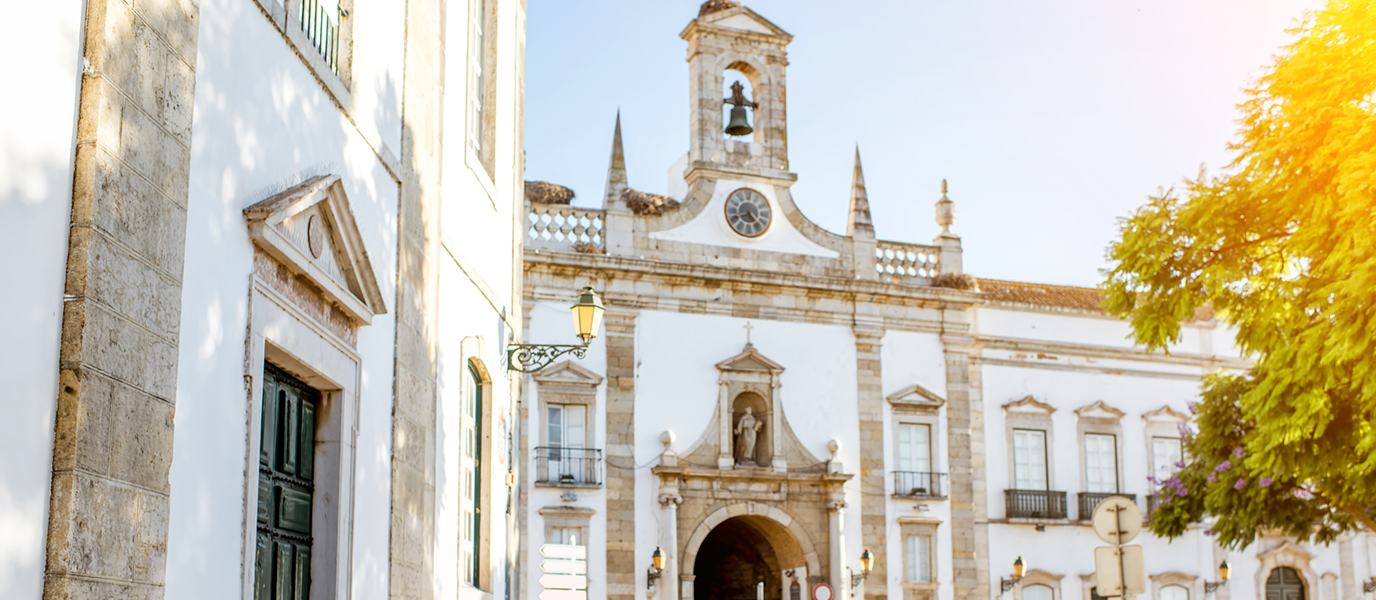
The history of Faro’s Porta da Vila is long. It was built in 1812 by order of Bishop Francisco Gomes de Avelar, who commissioned its design to the Italian architect Francisco Xavier Fabri, following the devastating effects of the earthquake that devastated Portugal in 1755. In fact, this monument occupied the space formerly occupied by a medieval gate known as Porta Nova, which formed part of the Moorish walls surrounding Faro’s old town.
Also known as Arco da Vila, this monument is a seemingly neoclassical triumphal arch that stands out in its surroundings. In addition to providing access to the old town, it is a faithful testament to Faro’s resilience in the face of natural disasters.
Located next to Largo de Sé square, the Arco da Vila has a unique characteristic: while its exterior reveals a neoclassical style, its interior is Moorish. Between the two areas, there is a small courtyard with an ornamental pond.
- History and importance of the Arco da Vila
- What type of architecture does the Porta da Vila façade have?
- Can I climb up to the top of the Porta da Vila?
- What can I see near the Arco da Vila?
History and importance of the Arco da Vila
The bishop of Faro’s initiative to have the Arco da Vila built could not have been more successful because today it has become one of the architectural wonders that you can enjoy on a getaway to Faro in the Portuguese Algarve. Its importance lies in its fusion of architectural styles since, in addition to the gate’s neoclassical elements, there are also the remains of an earlier Moorish gate that formed part of the old city walls. Also, the façade facing Rua de Santo Antonio has a rococo balcony supported by Doric columns.
You should pay attention to the meticulous stonework plus the remains of the medieval walls inside, which tell us about the city’s Moorish past. You may even see a stork’s nest at the top of the arch or in the surrounding area.
Therefore, this monument serves as a gateway to Faro’s past (Vila Adentro) and is also the starting point to admire the more contemporary city. In any case, the gate is a must when visiting Faro.
What type of architecture does the Porta da Vila façade have?
The Porta da Vila is an architectural wonder that has been integrated into Faro’s very long history. It forms part of the great journey through time that characterises historical spaces. The Arco da Vila stands next to the remains of the original Moorish wall, which dates back to the 9th century, when the Arabs ruled the Iberian Peninsula.
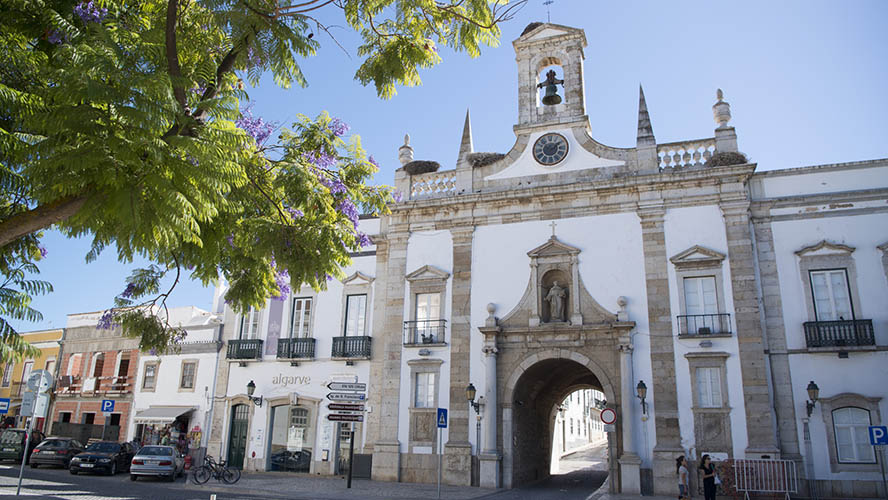
Its façade is adorned with pilasters and, at the top of the gate, there is a triangular pediment with the coat of arms of the Bishop Francisco Gomes de Avelar and inscriptions paying homage to him. The arch also has a statue of Saint Thomas Aquinas, who was declared patron saint of Faro by the bishop who commissioned the gate.
Since the monument is located on a public road, there is no entrance fee. Once you pass through this historic gate, you can stroll through the narrow cobbled streets and visit the charming cafés and traditional shops.
Can I climb up to the top of the Porta da Vila?
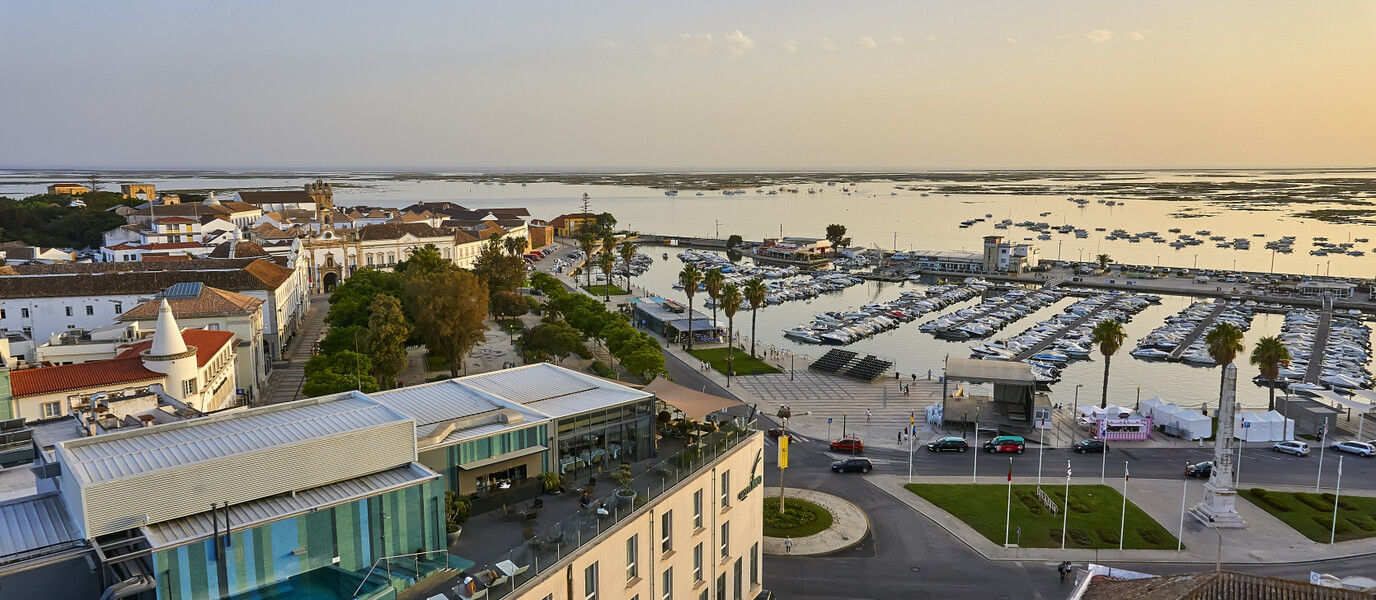
The Porta da Vila is very impressive at ground level, but it is also stunning from above. You will notice this if you are willing to climb the narrow staircase inside the arch. The effort is worth it since from the top you will enjoy a beautiful panoramic view of Faro’s old town and the lagoon in the Ria Formosa natural park, which is dotted with several islands. It is the ideal place to capture your best photograph of this historic town in the Portuguese Algarve.
From that unique vantage point, you will also see the spectacular roofs of Faro’s houses, which seem like an immense terracotta-tinted sea.
What can I see near the Arco da Vila?
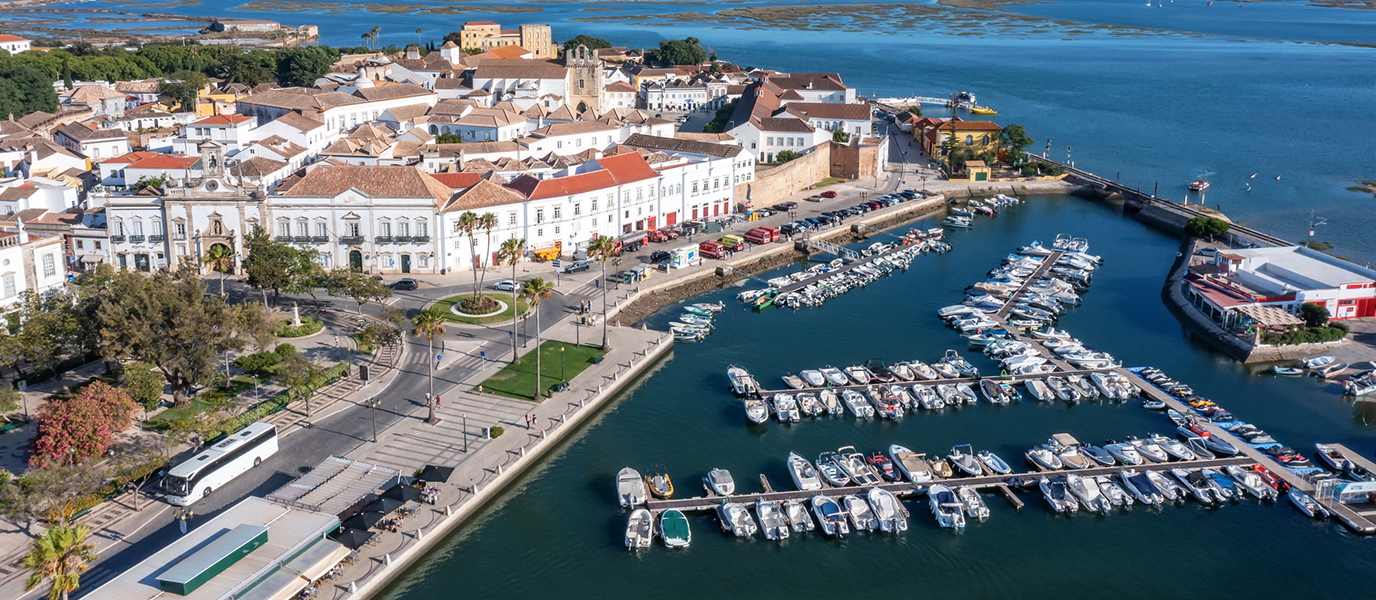
Faro’s historic centre has many attractions for travellers who go to admire the Arco da Vila. You must, of course, visit Faro Cathedral (Sé de Faro), stroll among the orange trees in Largo da Sé Square and enter the Faro Municipal Museum. You should also relax in one of the charming cafés or restaurants scattered around Faro’s old town, where you can try some of the local Algarve cuisine.