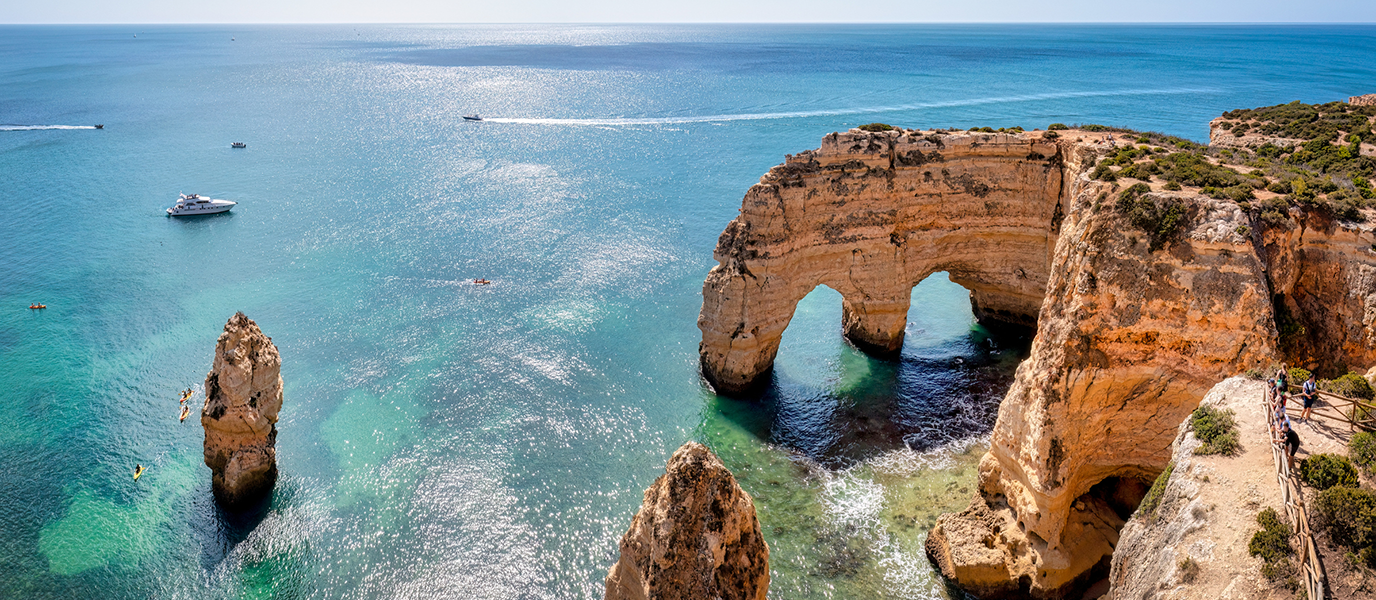














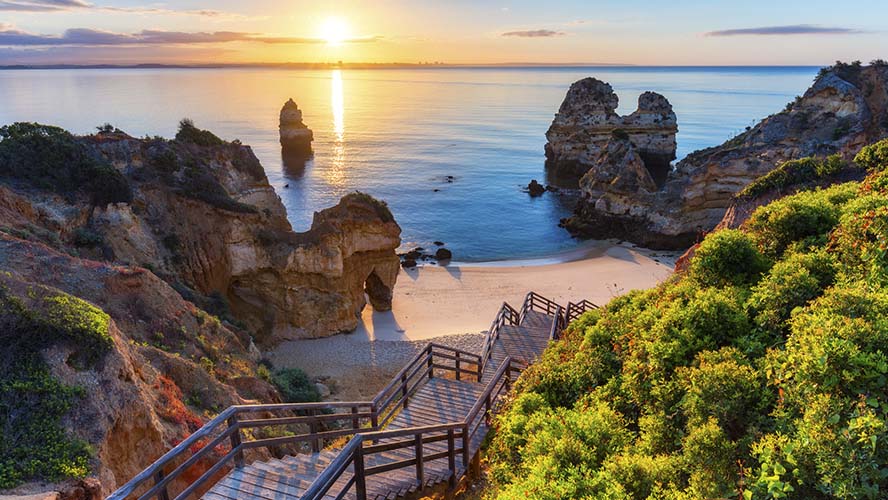










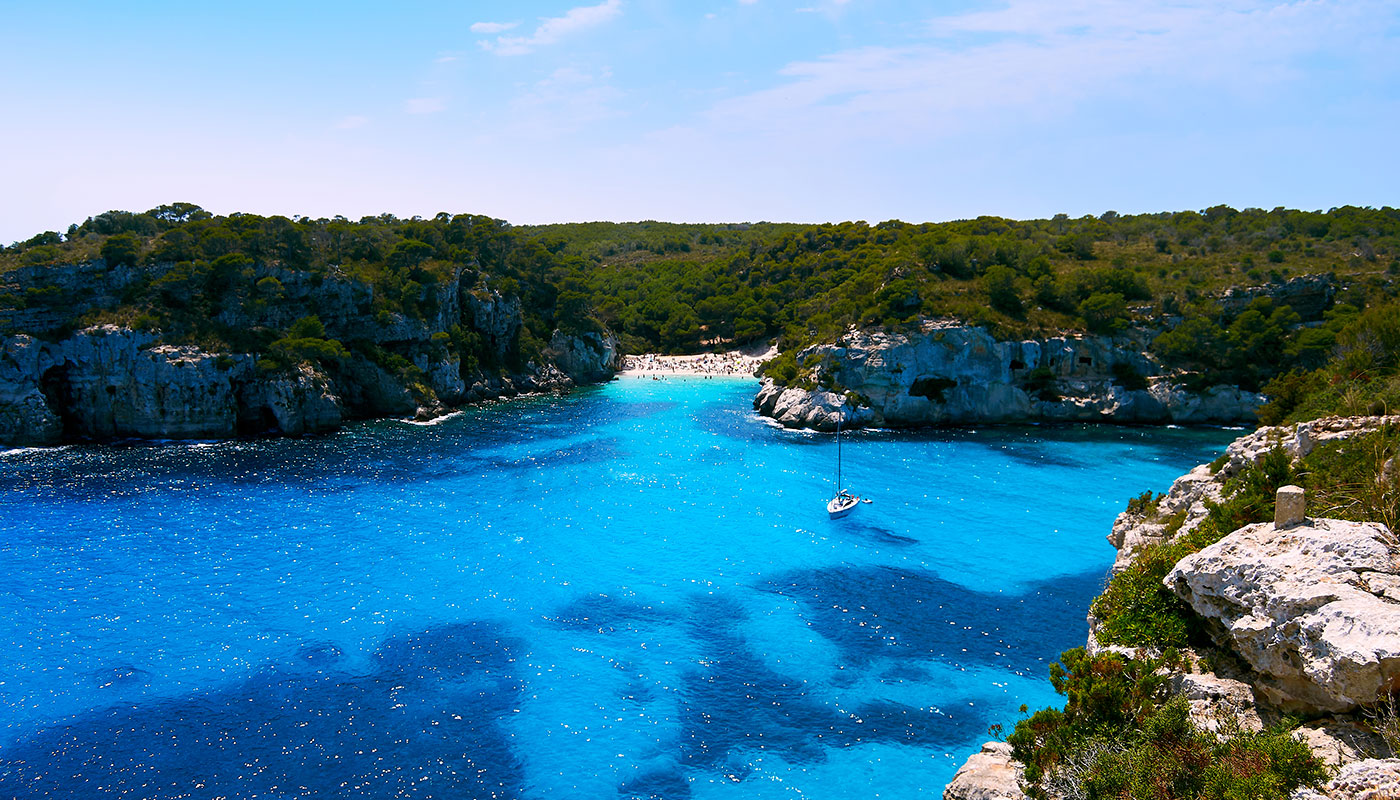




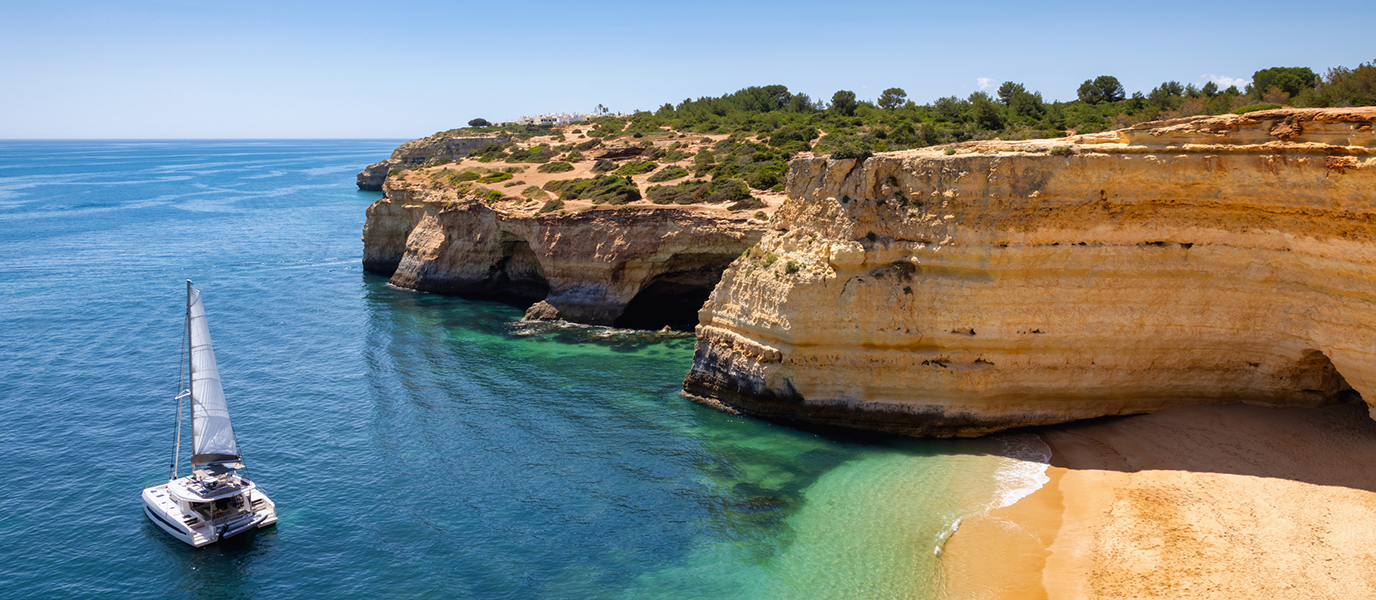
Benagil beach, which lies between Carvoeiro and Armação de Pêra, is much more than just another cove along the Algarve coastline: it is an enclave chiselled into the limestone rock by the continual action of the Atlantic Ocean. This enclave, which can only be reached from the sea, is famous for the Benagil grotto — an enormous marine cave with an opening in the roof that allows the light to enter as if through a natural cupola — one of the most photographed scenes in southern Portugal. Surrounded by cliffs that reach over twenty metres in height, the beach appears as a clearing of golden sand hidden among vertical walls. Every day, dozens of kayaks, paddle boarders and small boats leave nearby beaches such as Praia de Vale Centeanes and Praia do Carvalho to come here, where the tides and the light make each visit unique.
- The natural context: a geological marvel carved over millions of years
- How to get to Benagil Beach: a destination accessible only from the sea
- What services does Benagil Beach offer? — a natural refuge with no added extras
- Activities at Benagil Beach: aquatic adventures beneath the stone cupola
- Advice for visitors to Benagil Beach: tips for experiencing its beauty without missing anything
The natural context: a geological marvel carved over millions of years
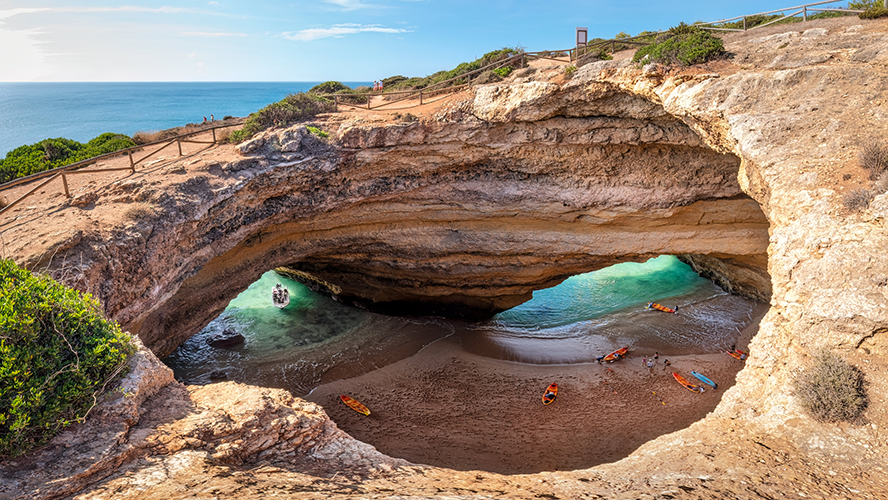
Benagil beach lies next to the famous Algar de Benagil, a vast sea cave formed by erosion of the limestone rock by water over the last twenty million years. These kinds of formations are common in the Barlavento Algarvio, where the sea has carved caves, grottoes and cliffs with amazing shapes. The outstanding feature of the Algar de Benagil is its oculus: a circular opening in the cave’s roof that allows direct sunlight to stream in, creating a play of shadows and reflections that transforms the experience into something almost mystical.
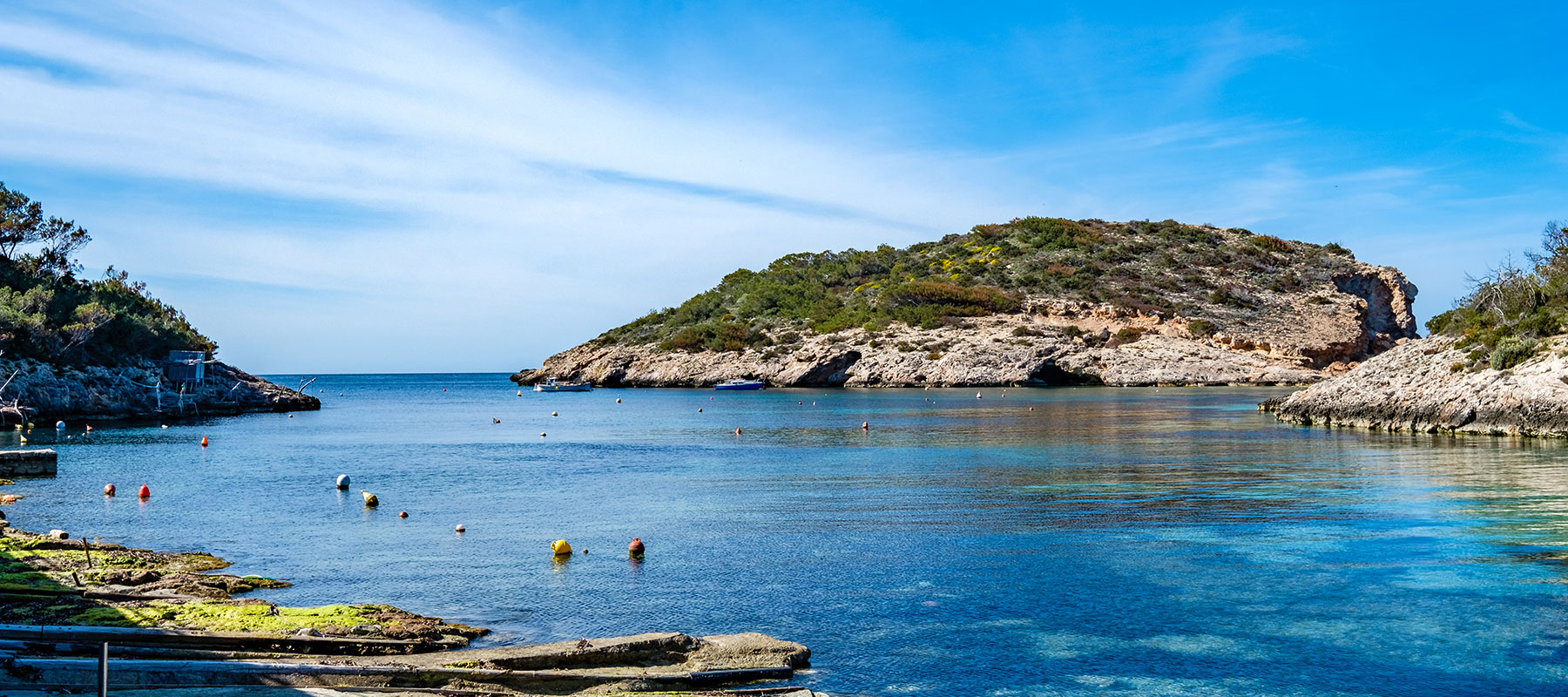
Geographically, the beach is located in the town of Lagoa (between Praia da Marinha and Praia do Carvalho, and it forms part of a dramatic coastline marked by crags and caves. The area is considered valuable from both a scenic and a geological perspective, and has been studied by geologists because of its unique characteristics. It is often described as one of Europe’s most photogenic points, not only because of the beach itself, but also because of the formations that surround it: columns of rock, natural arches, and marine tunnels that connect some coves with others.
How to get to Benagil Beach: a destination accessible only from the sea
The most striking characteristic of Benagil Beach is its inaccessibility from land: there is no road, flight of steps or path leading to the inside of the cave from dry land. It can only be reached from the sea. The most usual way to get there is by booking a boat trip from the nearby port of Benagil, a small coastal village with only basic services. These vessels do 15-minute trips there and back, allowing visitors to see several of the nearby caves.
Another option, which is more popular with independent travellers, is to hire a kaya or paddle board. This way you can reach the inner beach and spend time on the sand, something motor vessels are not allowed to do. However, it is very important to take into account the sea conditions: the currents can be strong, and the swell, particularly on windy days, can make access difficult. The distance from the outer Benagil beach to the entrance of the Algar is scarcely 200 metres, but it is recommended to take great care and to check the weather conditions before setting out.
What services does Benagil Beach offer? — a natural refuge with no added extras
As Benagil Beach is completely isolated inside the cave, it does not offer any type of direct service: no toilets, no showers, no lifeguards, and no food and drink stalls. This is a totally natural enclave with no infrastructure, something that contributes to its beauty as well as to the risks. This means that visitors need to prepare before setting out by taking water, sunscreen, a cap or a hat, and footwear suitable for clambering over wet rocks.
The nearest services are to be found in the village of Benagil, where there is a car park, a few restaurants serving fresh fish, tourist information points, and businesses that hire out kayaks and boards, and organise boat trips. In summer, the place soon becomes overcrowded, and access for vehicles is limited, so lots of visitors opt to leave their car in Carvoeiro or Lagoa and travel here by taxi or bus. The local authorities have begun to limit the number of daily visitors in order to protect the ecosystem and to avoid accidents inside the cave, so it is worth checking before setting out on any activity.
Activities at Benagil Beach: aquatic adventures beneath the stone cupola
A visit to the Algar de Benagil is an unforgettable experience in its own right. As you enter the cave, you will notice the change in temperature and in the sounds: the echo of the waves bouncing off the rock, the humidity, the light striking like a stage spotlight from the opening in the roof. Sitting on the sand and looking up is one of the Algarve’s most sought-after images. Many tourists bring waterproof cameras or drones to capture the cupola from the inside.
Apart from simply contemplating the scene, you could visit other, nearby caves (such as Praia da Corredoura, which can also only be reached from the sea) or the marine tunnels that stretch along the coast to Praia da Marinha. The more daring visitors attempt coasteering circuits combining swimming, rock climbing and jumping from the rocks, although this activity should always be undertaken with a specialist guide.
Another possibility is a guided kayak trip, which includes explanations of the geology and local history with stops at strategic points. Lastly, anyone who does not want to go into the sea can enjoy the views from the upper cliffs: there are signposted natural viewing points from which you can see the entrance to the cave and the contrasts in the colours of the water.
Advice for visitors to Benagil Beach: tips for experiencing its beauty without missing anything
The best time to visit the cave is early in the morning, between 7.30 and 9.00 a.m., when the sun’s rays are just beginning to filter through the oculus and the crowds of visitors are yet to arrive. Another good time is in the late afternoon, when the sun goes down and bathes the cave in amber light. Between 11.00 a.m. and 4.00 p.m., especially during the peak season, the place can become overcrowded and loses some of its charm.
It is essential to check the tides: at high tide, the sandy area can shrink or even disappear, making it difficult to stay inside the cave. Visitors also need to bear in mind that on days of high swell the sea can enter the cave with some force, so it is imperative to check the weather forecast and the sea conditions. For safety reasons, it is inadvisable to try to swim to the cave if you are not physically fit and have no experience of swimming in open waters.
Finally, it is important to remember that this is a fragile natural environment: visitors must not leave rubbish behind, paint the rocks or carry out unauthorised activities. The future of this place depends on visitors behaving responsibly.