

















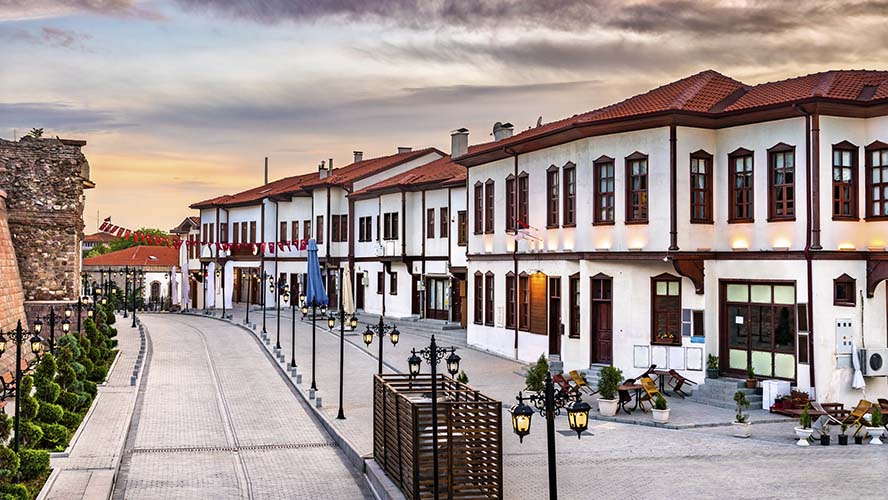


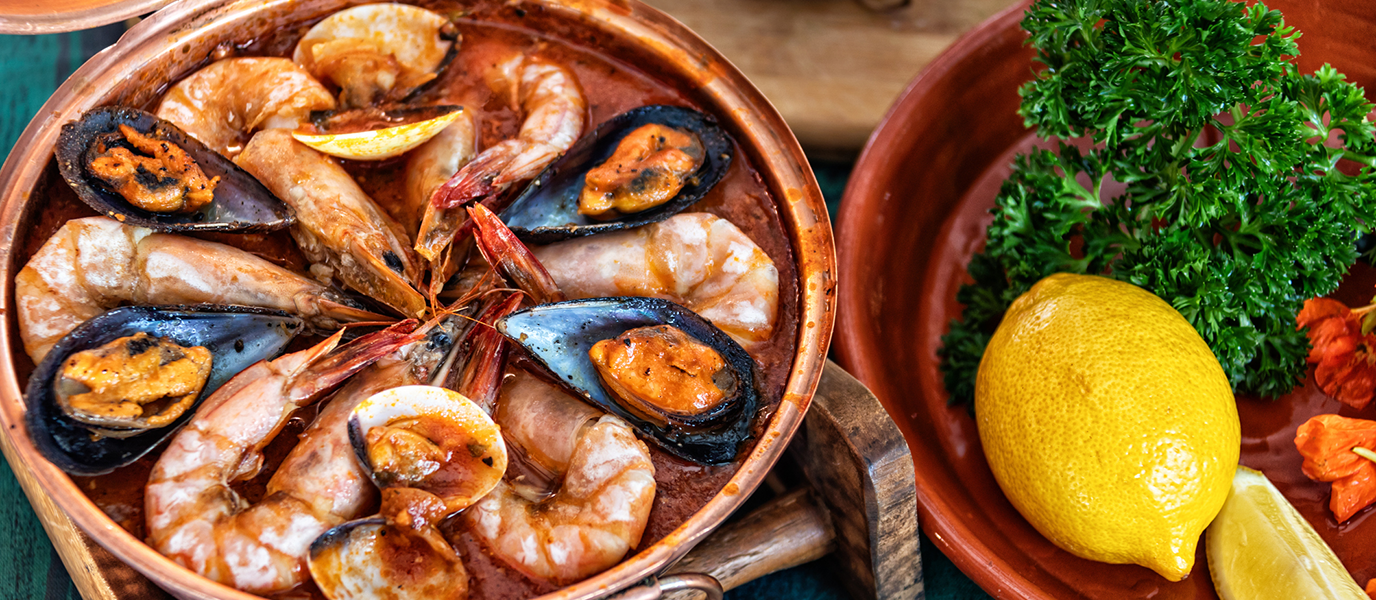
Traditional Algarve dishes, for the most part, are based on the region’s most important ingredient: the sea. The Atlantic, the ocean that washes against the Algarve’s shores, has a strong influence on the local food, offering it a wide range of species to create succulent, tasty and, of course, highly varied cuisine.
Evolving over the centuries, the food harnesses the knowledge of all the peoples and civilisations that have inhabited the area. Read on to discover its most representative dishes, which we encourage you to try:
- Fish and seafood cataplana: a precursor to the pressure cooker
- Cod: the king of Portugal
- Piri piri chicken: fiery emotions
- Cozido à portuguesa
- Seasonal seafood rice
- Grilled sardines: a true classic
- Grilled meat and fish: pure flavour
- Marinated carrots: a delicious appetiser
- Sardine pate: a staple
- Traditional desserts in the Algarve: Moorish memories
- Doce fino: sweet creativity
- Dom Rodrigo: just like candy
- Figos cheios: energy-boosting snacks
- Florados de Lagoa: wedding guest surprises
- Queijinhos de figo: a delicious zero-waste treat
- Morgado: a decorative dessert
Fish and seafood cataplana: a precursor to the pressure cooker
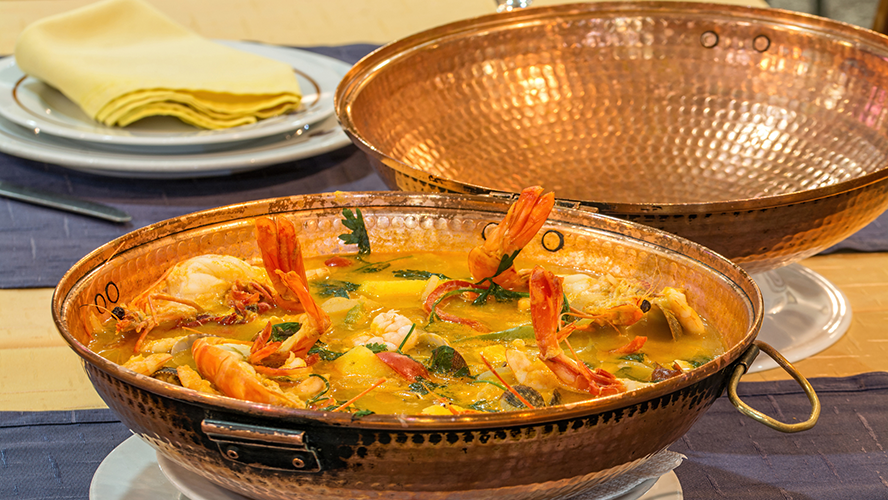
The Algarve’s most typical dish and a true star of Portuguese gastronomy is the fish and seafood cataplana. The name also refers to the pot in which it is cooked, which is key to achieving appetising results (much like a Valencian paella pan).
Traditionally made of copper and these days of inert metals, the pot has a lid that can almost be sealed tight while the ingredients are cooking. As previously mentioned, the best known (and most delicious) cataplana is the fish and seafood cataplana, which is also made with vegetables, potatoes, rice, garlic, onion and coriander, among other things, depending on the version being made and the preferences of the diners.
Cod: the king of Portugal
Although the Algarve’s traditional dishes are, above all, based on fresh, local produce, it is important not to lose sight of the fact that we are in Portugal. And that means that you are never far away from some dried and salted cod, an ubiquitous ingredient in Portuguese gastronomy.
In the Algarve it is prepared in a range of different ways. One of the most popular is bacalhau à bras, crumbled cod with egg and thinly fried potatoes. As you would expect, succulent cataplanas are also made with cod. And, finally, an equally popular dish is bacalhau com natas.
Piri piri chicken: fiery emotions
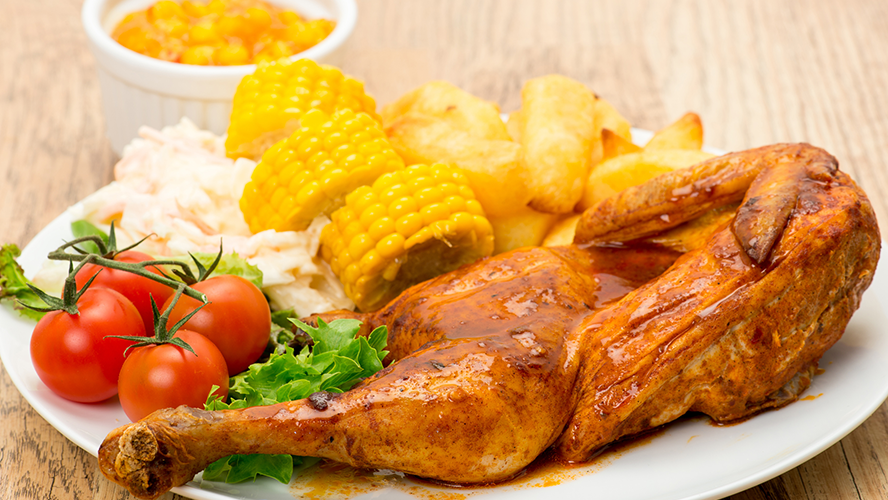
Piri piri chicken is one of the Algarve’s best known and most appreciated dishes, both in Portugal and abroad. A tasty way to cook chicken, it is roasted over charcoal or wood embers and basted with piri piri sauce, which has its roots in the country’s African colonies.
Piri piri sauce is a dressing with lots of personality and a spicy kick that can be quite fiery for those who are not used to it. In actual fact, it is made with a chilli from Uganda, Zimbabwe and Malawi.
Cozido à portuguesa
The quintessential winter dish both in the Algarve and in other regions of Portugal, is very similar in essence to Spain’s cocido, except for one detail: the chickpeas are replaced by pinto beans.
The beans are simmered for hours with vegetables such as turnips, potato, carrot, cabbage and onion as well as pork (snout, trotters, bacon, chorizo and black pudding), veal and/or lamb. Once everything is cooked, it is served with a generous portion of rice, boiled in part of the broth.
Seasonal seafood rice
Despite the fact that the Atlantic washes against its shores, Portuguese cuisine has always fallen under the umbrella of Mediterranean cuisine. Thus, with such plentiful and varied marine species, it makes perfect sense that one of the Algarve’s most succulent dishes is seafood rice, even though it originates from Marinha Grande, in the centre of the country.
The dish consists of a rice broth, made from a variety of long grain rice and a wide range of seafood, depending on the season. To this, white wine and plenty of coriander or parsley is added according to taste.
Grilled sardines: a true classic
To speak of Portugal and the cuisine of the Algarve is to speak of the passion of its inhabitants for sardines, especially those cooked on wood or charcoal embers around the feast of St Anthony, at the beginning of summer. In fact, it is during this season that the small fish, caught in Atlantic fishing grounds, are at their best.
The sardines are usually eaten with a generous portion of boiled or fried potatoes and salad.
Grilled meat and fish: pure flavour
The good weather that characterises the Portuguese region for a good part of the year prompts people to head outdoors to do their cooking. Which is why the people of the Algarve love grilled dishes (or grelhados in Portuguese), especially fish and meat.
Among the former, the most common fish to be found on the region’s grills are the aforementioned sardines, sea bream, squid, sea bass and horse mackerel. When it comes to grilled meat, chickens reigns supreme, especially chicken seasoned with piri piri sauce, as well as different cuts of pork and sausages made from less desirable parts of the animal.
Marinated carrots: a delicious appetiser
A fresh and very pleasant dish, especially during the warmer months of the year, it is one of the most common starters in bars and restaurants in the Algarve. To make it, finely chopped carrots are accompanied by chopped garlic and aromatic herbs, which are then seasoned with salt, vinegar and plenty of olive oil.
Sardine pate: a staple
Like the marinated carrots, a small portion of sardine pate, whether spicy or not, can often be found on the tables of restaurants in the Algarve as well as the rest of Portugal. Combined with the ever-present bread made in this part of the country, it is the best way to stave off hunger while waiting for your main meal to arrive.
Traditional desserts in the Algarve: Moorish memories
It is well known that a large part of Spanish confectionery has its origin in convent sweets and these, in turn, in Moorish tradition. The same is true of the Algarve’s traditional desserts.
Many of them already sweetened the banquets and daily meals of Algarvian homes during the period of Muslim rule. Some have evolved over the centuries while other are still relatively recent creations. These are the classics:
Doce fino: sweet creativity
A classic piece of Algarve confectionery, doce fino is the Portuguese equivalent of Spain’s well-known marzipan and panellets, made from chopped almonds, sugar and egg white and filled with jam, candied egg yolk and other delicacies. The unusual thing about doce fino is that they are shaped like fruits, flowers, animals and other symbolic figures and dyed in bright colours to make them more realistic.
Dom Rodrigo: just like candy
A classic dessert from the city of Lagos, although it is said to have been created in the the town of Tavira. Made from egg yolk, grated almonds, sugar and butter, it is usually presented wrapped in coloured aluminium foil, as if it were candy.
Figos cheios: energy-boosting snacks
This sweet treat consists of figs stuffed with almond pieces, chocolate, cinnamon, lemon, fennel and other aromatic ingredients, much like the ones made in some parts of Extremadura. Typically found in Olhão, they are said to have started with the area’s fishermen, who carried them in their boats as energy snacks that were easy to eat during their long days at sea.
Florados de Lagoa: wedding guest surprises
Another one of the sweet carob desserts made from almonds and sugar, in this case, they are decorated with sweet egg yolk threads and sometimes edible décor made to look like almond blossoms.
Originating in convents, due to their delicate and laborious nature, they were nonetheless reserved for large celebrations such as weddings. Today it is very common to find them on the counters of confectioneries and pastry shops in the city of Lagoa and beyond.
Queijinhos de figo: a delicious zero-waste treat
This sweet treat was created as a way to use up dried figs, after being placed in the sun alongside almonds at the end of summer. The figs are soaked in brandy and water and ground together with the ubiquitous almonds, sugar, chocolate, cinnamon and fennel to form a paste, which is then chopped and shaped into balls or cakes. It has a similar flavour to fig cake.
Morgado: a decorative dessert
Also known as morgadinho, this dessert is typically found in Portimão and Silves. Made with almonds and filled with beaten egg, sweet egg yolks and bell pepper jam. To decorate it, it is dipped in a glazed sugar coating and different motifs made from marzipan and/or silver balls are placed on top.