










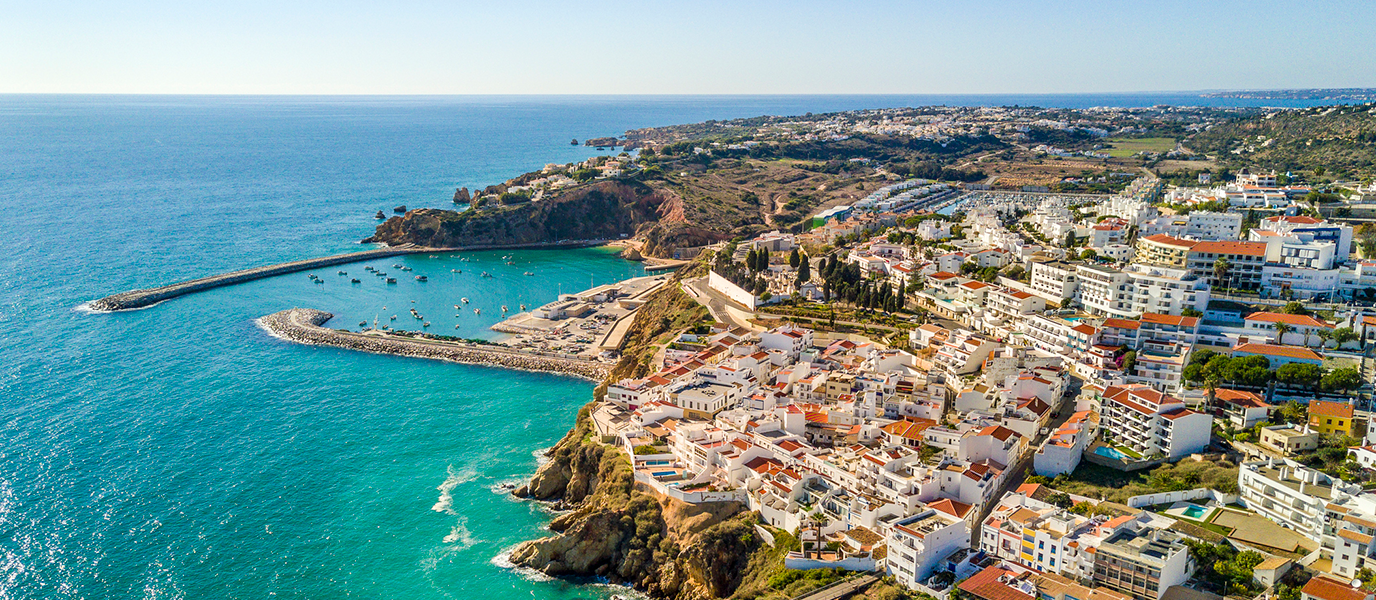
Albufeira is not merely a popular beach destination in the Portuguese Algarve: it is a city with a multi-layered history, a geography dominated by the sea and a traditional seafaring lifestyle that still survives in the whitewashed streets, fishing nets, and smell of roasting sardines. From the remains of a Roman port to the devastation of the 1755 earthquake, Albufeira has been reborn many times without losing its Atlantic, southern outlook. With a historic quarter where the Arab legacy echoes from every corner, and a shoreline where lively beaches alternate with coves sheltered by golden cliffs, the city strikes a remarkable balance between tourism, authenticity and natural beauty. Come with us on this this tour of one of the treasures of southern Portugal.
- The context and history of this popular Algarve destination: from the Roman port of Baltum to the Reconquest and the great earthquake
- What you can see in Albufeira: a walk among whitewashed streets, the shore and boats
- The best beaches in Albufeira: from the urban centre to hidden coves
- Activities to enjoy: from Atlantic expeditions to hiking among vineyards and carob trees
- Where to eat in Albufeira: from seafood cataplana to skewered octopus
- Nearby places to visit: Islamic fortresses, Neo-Moorish markets, and the Ria Formosa
The context and history of this popular Algarve destination: from the Roman port of Baltum to the Reconquest and the great earthquake
The origins of Albufeira date back to prehistoric settlements that over time developed to become the Roman port of Baltum. Here the Romans built aqueducts, thermal baths, and roads that linked with other towns in the Algarve. With the arrival of the Muslims in the eighth century, the town came to be called al-Buħayra (lake or little sea), because of the pools of still water trapped among its hills. It was then that the town was fortified and became a centre of trade and maritime defence.
In 1249, during the Christian Reconquest, the town was captured by Alfonso III’s troops. Many mosques were converted into churches, and a new urban structure developed, with defensive placements, a network of streets adapted to the topography of the land, and new systems of raising crops. In 1504, the town received its municipal charter, and became a coastal ‘villa’ with an economy based on fishing and trade in salt, olive oil and wine.
The most devastating episode in the city’s history was in 1755, when an earthquake followed by a tsunami destroyed the port and a good part of its infrastructure. Only 27 buildings survived this disaster, and the city had to be almost completely rebuilt. New, straighter streets were designed, churches and dwellings were built in a Neo-Classical design, and little by little, the port was brought back to life. Nevertheless, some vestiges of the Muslim town remain in certain streets in the old town and in archaeological remains scattered around the area.
What you can see in Albufeira: a walk among whitewashed streets, the shore and boats
The historic quarter: Arab Al-Buħayra reinvented in whitewashed streets
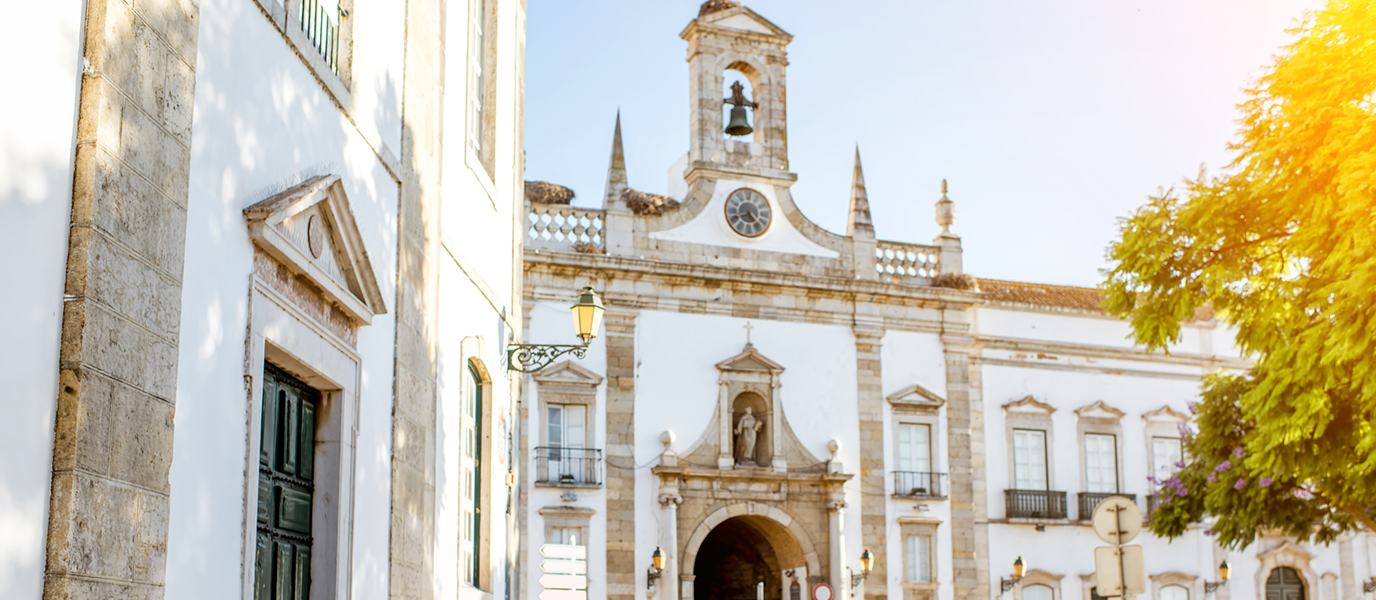
The Vila Velha, the historic heart of Albufeira, preserves the charm of Portugal’s southern fishing towns. Its narrow, cobbled streets (many of which have been pedestrianised) wind around whitewashed houses with indigo blue or ochre window frames. In the most lively square (the Largo Engenheiro Duarte Pacheco), you will find terrace bars, street artists, and stalls selling local crafts.
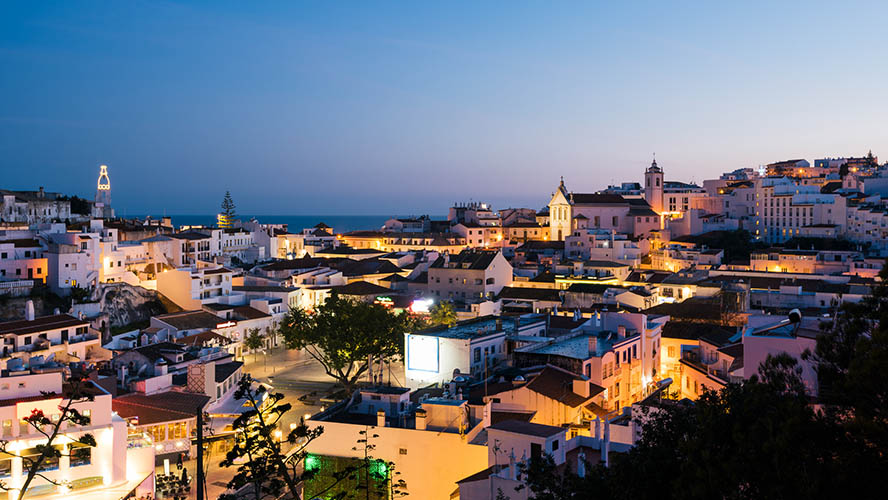
One of the major points of interest is Albufeira’s principal church, built in the eighteenth century in a Neo-Classical style on the site of a former mosque. Inside there are gilded altarpieces and the image of the city’s patron saint, Nossa Senhora da Conceição. In the Rua da Igreja Nova stands a small chapel dedicated to Saint Sebastian, with an unusual painted altar. Near there, several natural viewing points overlook the Atlantic, and views on the horizon that range from Praia dos Pescadores to the western cliffs.
Beaches: from workplaces to iconic postcard scenes
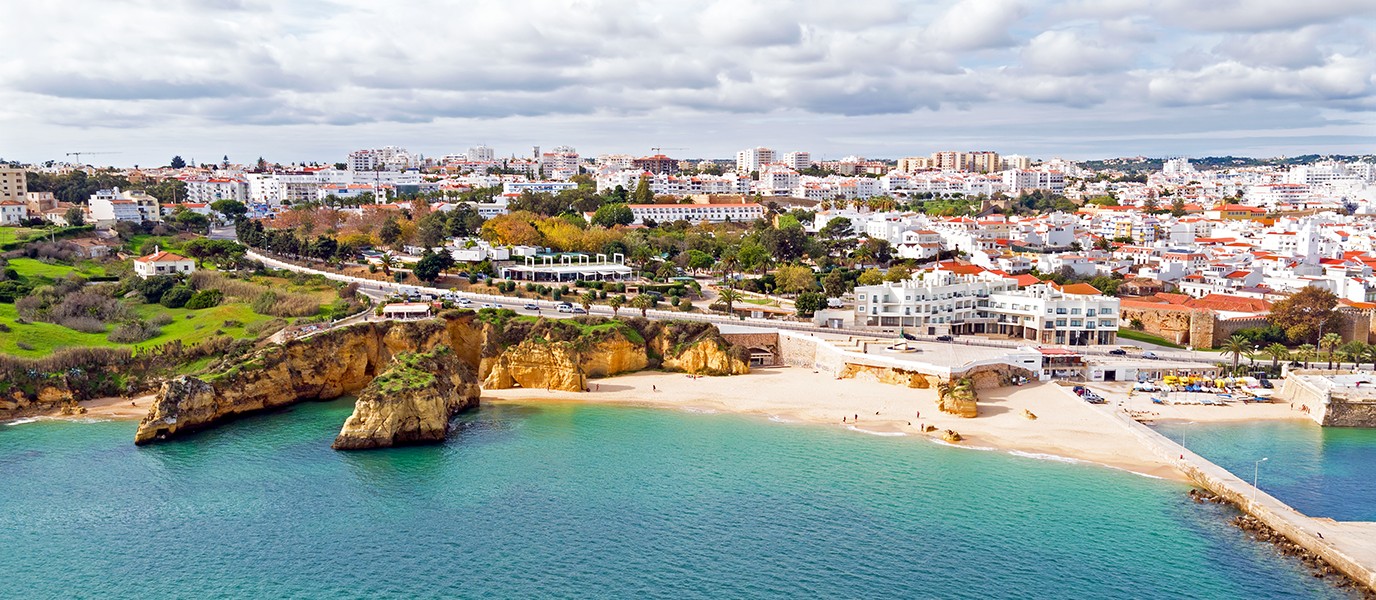
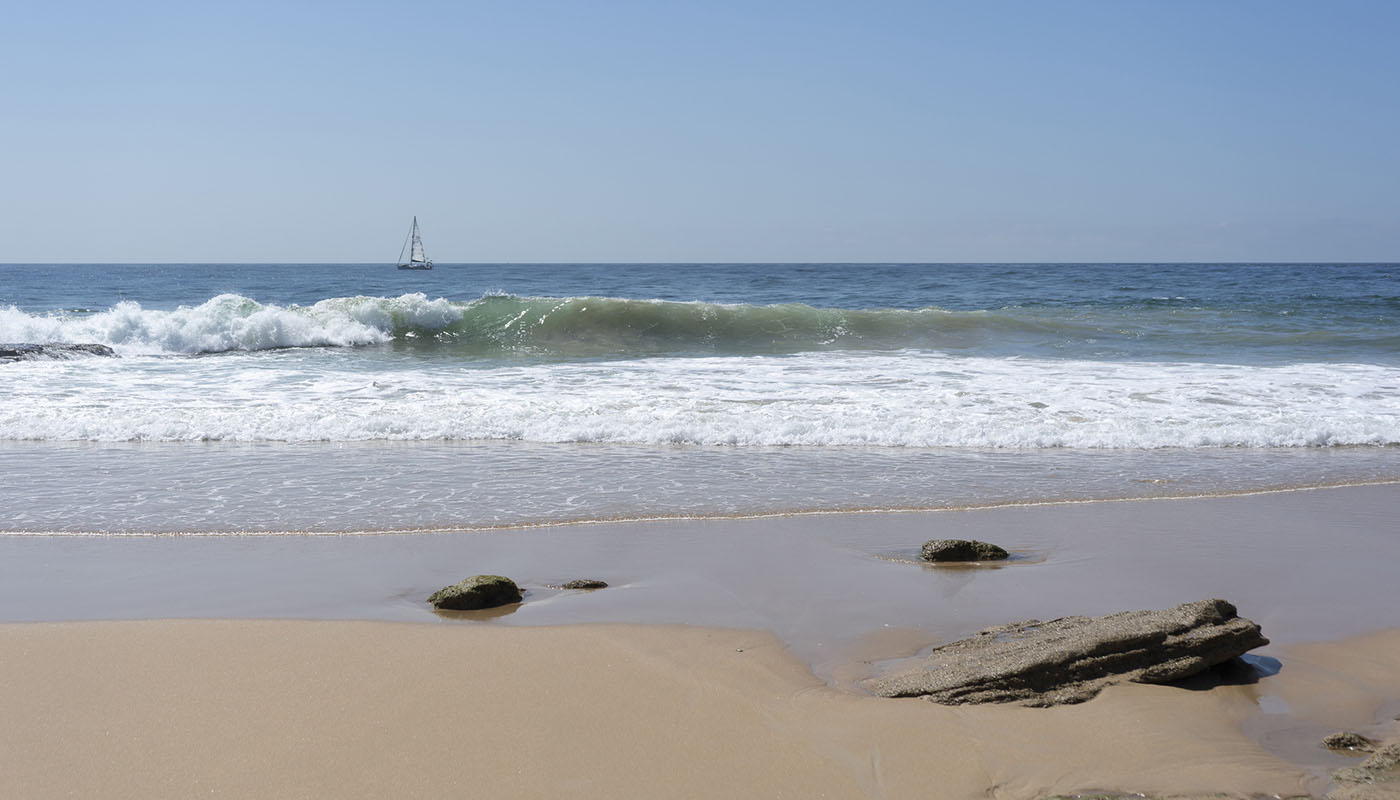
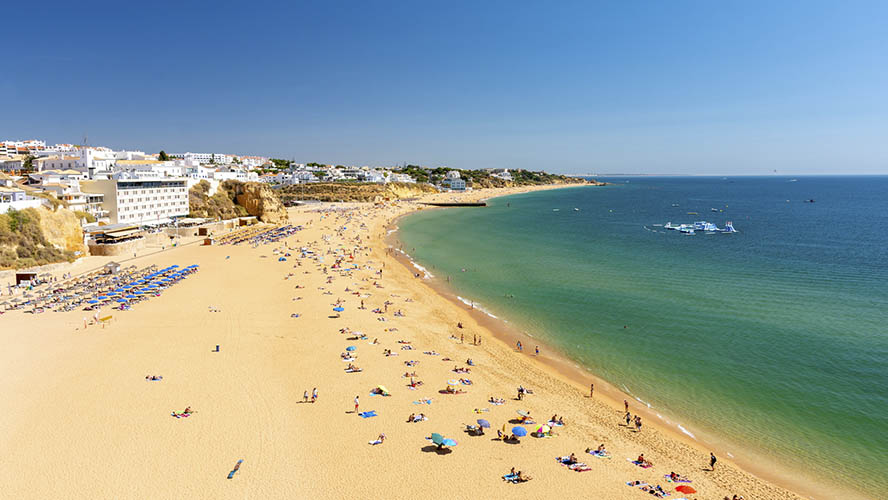
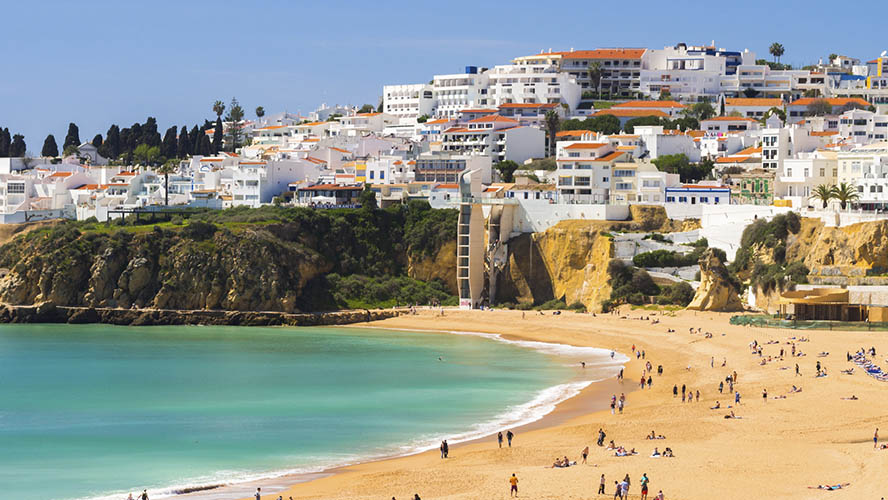
Praia dos Pescadores is Albufeira’s main, and most popular, beach. Its name recalls the times when fishing boats lined up on the sand at the end of every working day. Now, it is an extensive urban beach, equipped with walkways, showers and restaurants, and providing activities for the whole family. In the early hours of the morning, however, you can still see the fishermen repairing their nets or selling the fish they caught overnight.
Further east, Praia da Oura offers calmer waters and a complete package of leisure and accommodation. Between the two, Praia dos Alemães is more isolated, and flanked by rock formations that allow a degree of privacy. In the opposite direction, Praia do Castelo’s main feature is its half-ruined medieval watchtower, a testament to the times when this coast needed to protect itself against pirates and enemy ships. Further away, at Praia de São Rafael and Praia da Coelha, you can discover sea caves and go snorkelling in crystal-clear waters.
The Marina: a multicoloured, lively stroll to end the day
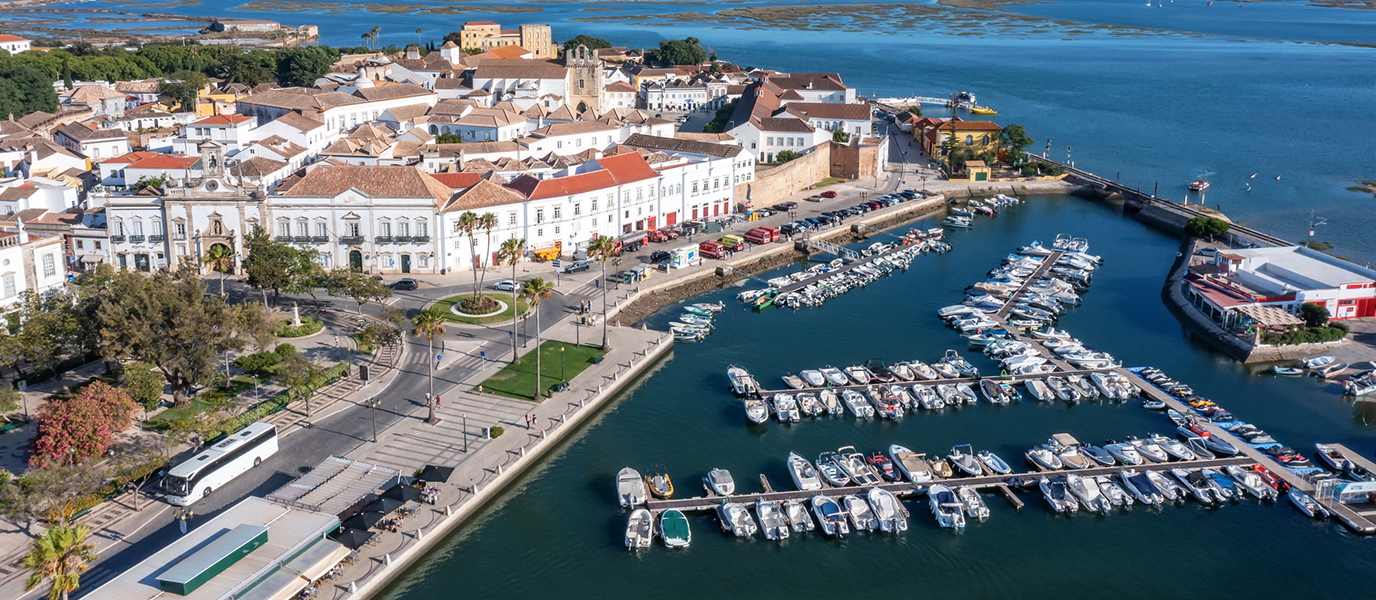
Albufeira Marina, just a few minutes from the city centre, has a striking architectural design: cube-shaped houses in pastel colours that lend the town an almost Caribbean air. This leisure port offers mooring services, boat repair and hire, and a comprehensive leisure infrastructure. Its docks are a departure point for boat trips to caves and cliffs, dolphin spotting trips, and panoramic crossings to Benagil and Portimão.
Apart from sailing, the Marina has become a hub for those seeking a relaxing experience at the end of the day. Here you can have dinner looking out over the sea, enjoy an artisan ice cream, play bowls, or sip a cocktail at one of the terrace bars. In the high season, there are street markets every evening and free concerts to add another interest to a walk, apart from the yachts.
The best beaches in Albufeira: from the urban centre to hidden coves
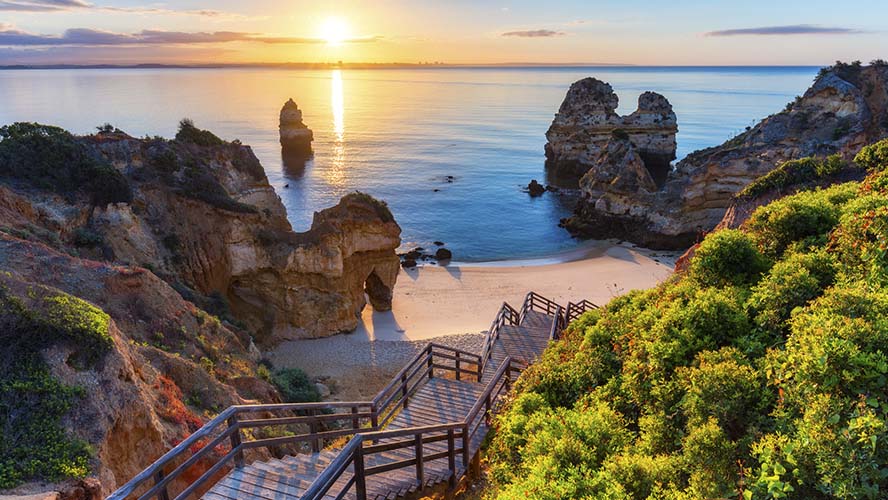
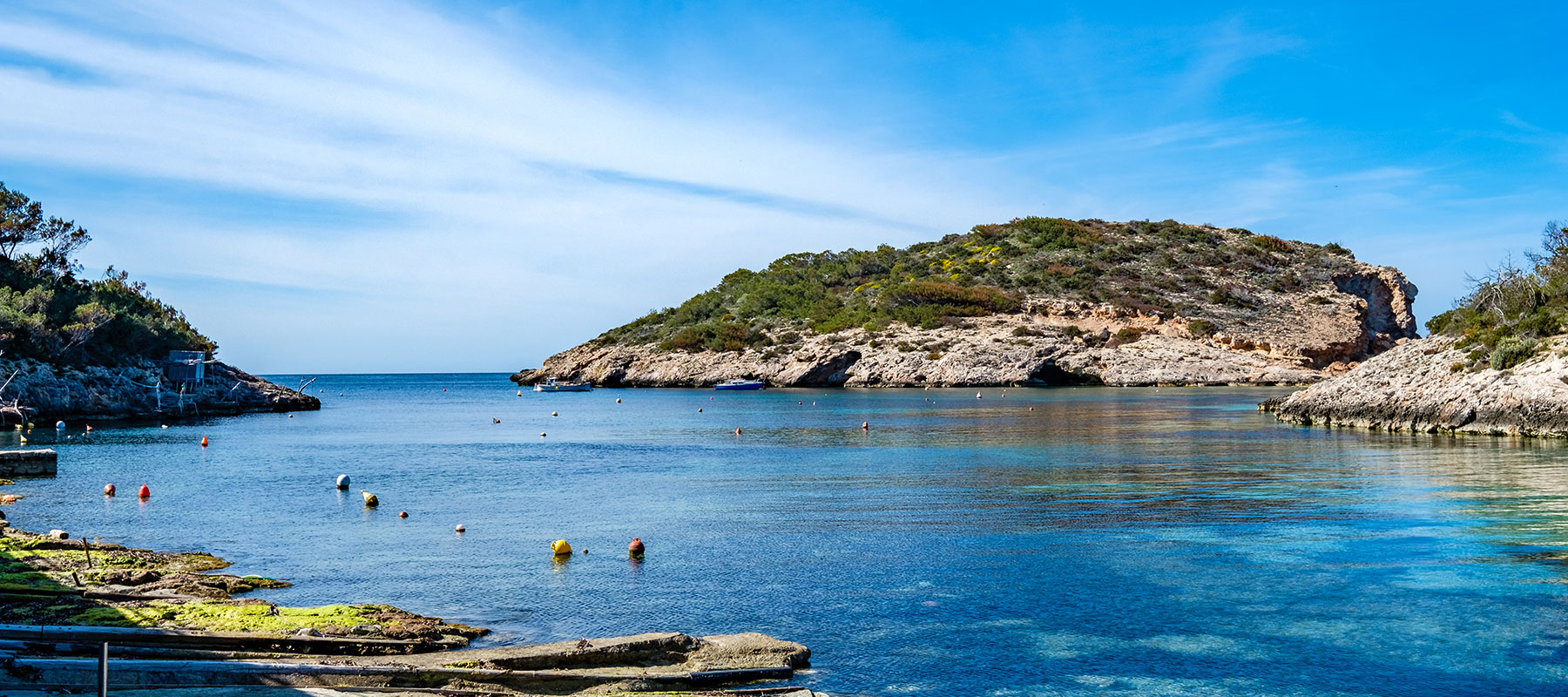
Apart from the beaches we have already mentioned — Praia dos Pescadores, Oura and Castelo — it is worth highlighting Praia de Santa Eulália, a beach surrounded by native plant life, where pines and coastal shrubs thrive on the slope down to the sea. It is perfect for anyone seeking peace and tranquility without sacrificing services. Praia da Falésia, on the border with Vilamoura, offers a kilometre-long stretch of sand beneath impressive reddish cliffs, and is perfect for a stroll at sunset.
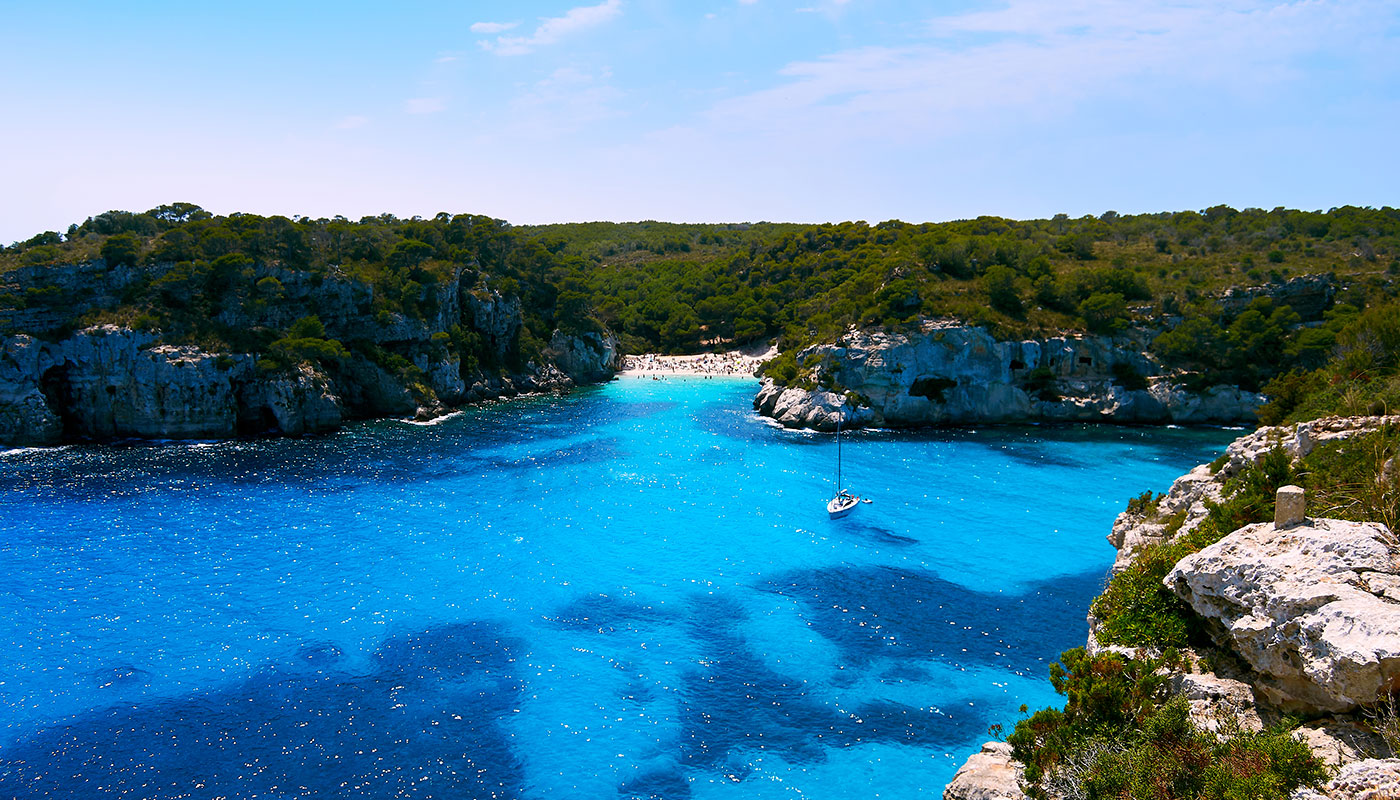
Praia da Coelha and Praia do Evaristo are smaller coves, hidden among rock formations. Access to these is rather more difficult, but this does guarantee fewer crowds and more contact with nature. The water here is particularly clear, with rocky depths that are an invitation to go snorkelling. The limestone rock formations that surround these beaches take on quirky shapes that seem to change with the light.
Activities to enjoy: from Atlantic expeditions to hiking among vineyards and carob trees
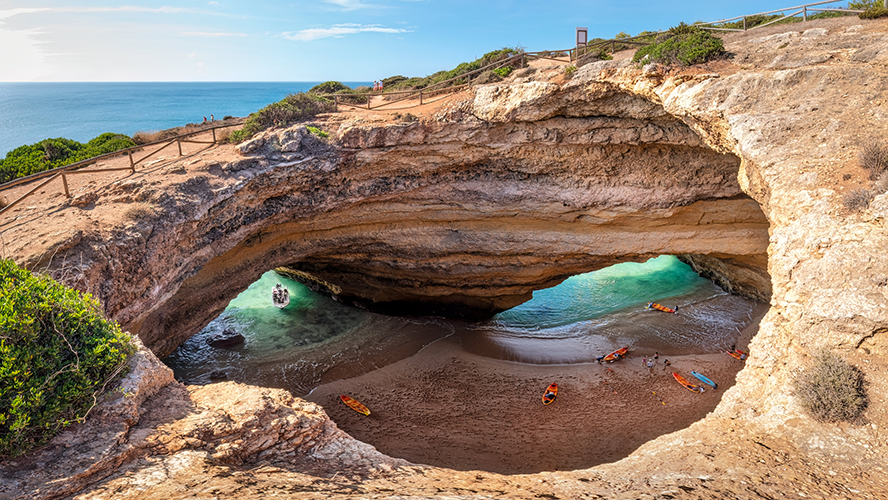
One of the most popular activities is a sailing trip to the Benagil cave, a natural cave with a space in the roof that allows the sun to shine a beam of light directly on to the sand. Most of these trips include dolphin spotting and stops for swimming in coves that are inaccessible from dry land. For the boldest travellers there is kayaking, surfing or jet skiing along the coast, especially in the area around São Rafael.
Inland, hiking trails meander over hills of Mediterranean scrubland, vineyards, olive groves, and carob plantations. From Albufeira, you can also visit Paderne castle, a twelfth-century Almohad fortification built from ‘taipa’, or rammed earth, a building technique typical in Islamic countries. Access is on foot along a signposted path that crosses a medieval bridge.
As night falls, The Strip is an area of bars, restaurants and nightclubs with live music and a festive atmosphere. For a quieter evening, you could have dinner in the historic quarter in one of the old, refurbished houses, may of which have terraces and live Fado.
Where to eat in Albufeira: from seafood cataplana to skewered octopus
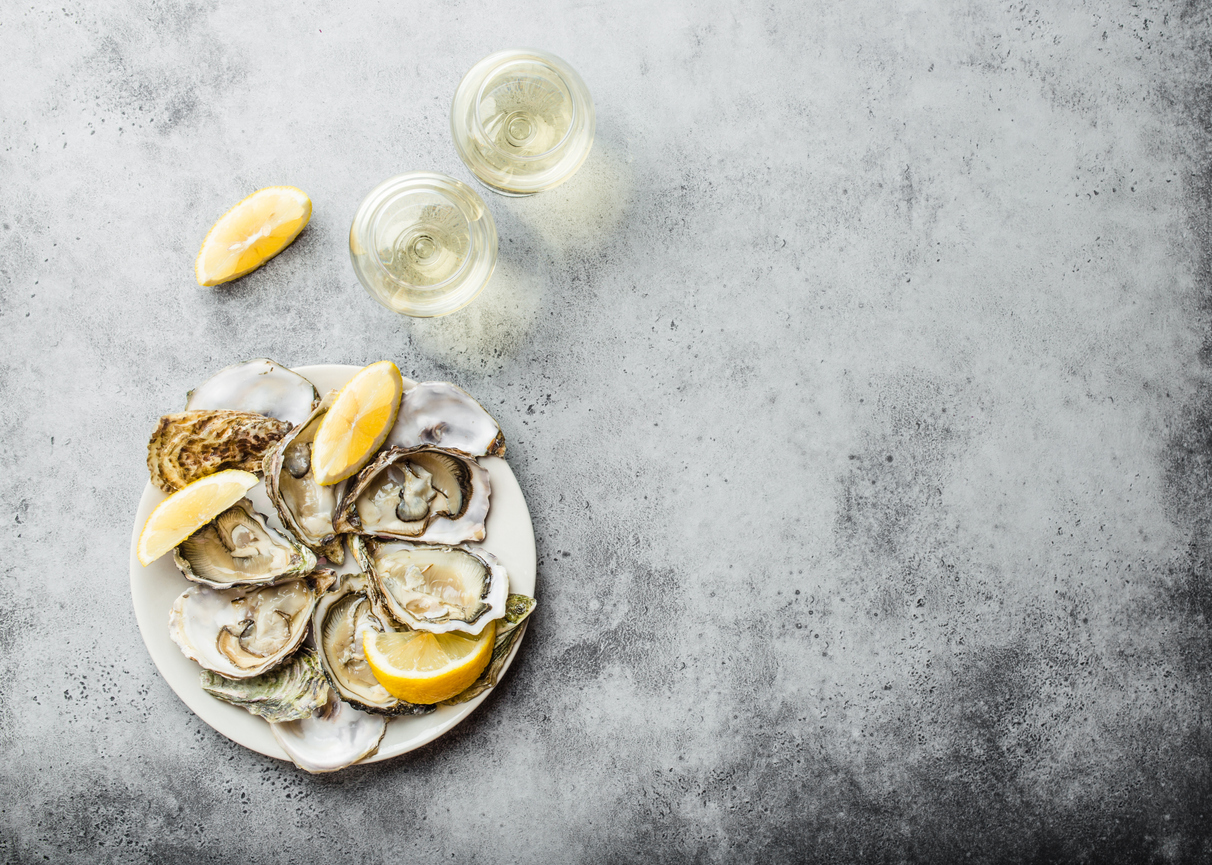
Algarve cuisine is simple but very tasty, based on fresh ingredients. Specialities include cataplana (a seafood stew cooked in a copper pot), monkfish with rice, and skewered squid or octopus. In the municipal market, open during the mornings, you can buy freshly-caught fish, fruit grown inland and traditional sweets such as dom-rodrigos and carob cake.
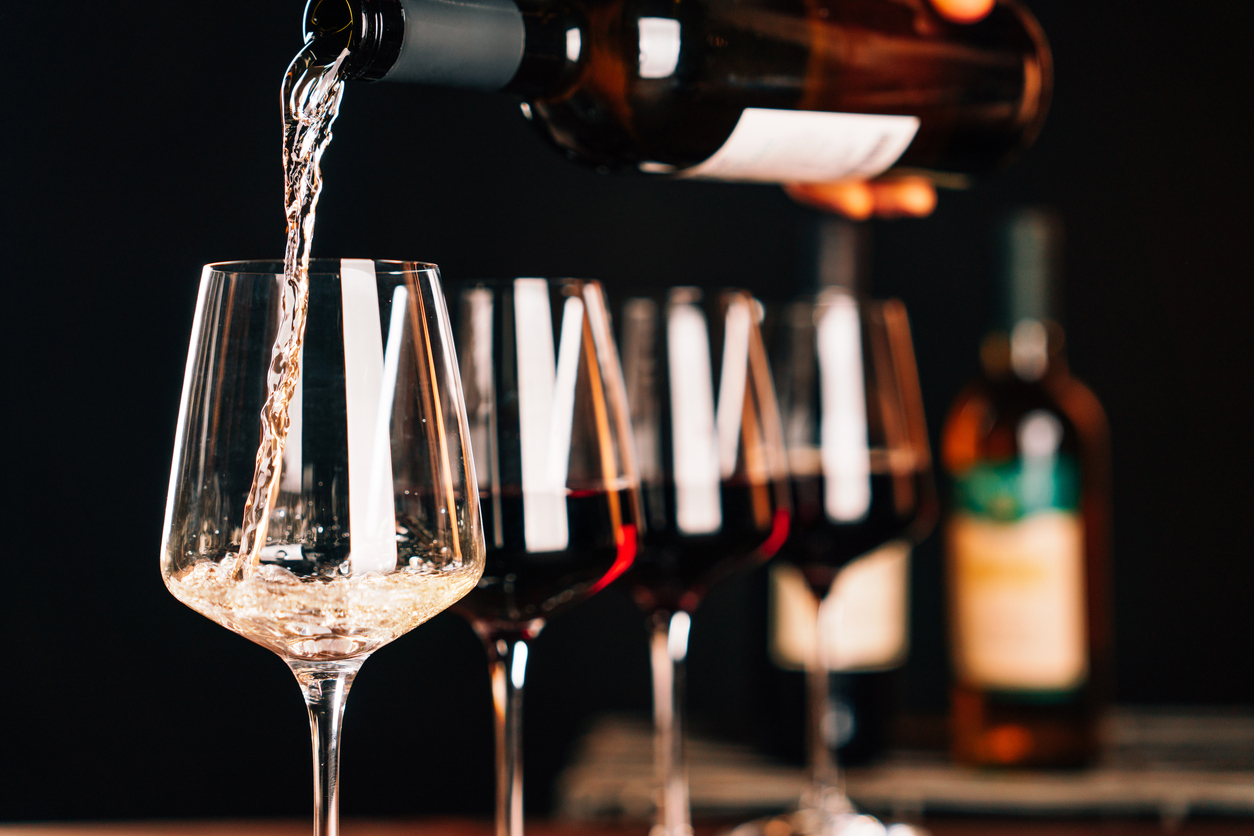
In the historic quarter, small family restaurants offer daily set menus with traditional dishes at very reasonable prices. The Marina, with its sea views, is perfect for more sophisticated dinners. Some establishments serve a fusion of Portuguese cuisine with Asian or Mediterranean influences. There are also wine cellars that offer tastings of Algarve wines, especially fresh whites and light rosés. A few of the most highly recommended establishments are Tasca Portuguesa, near the historic quarter, which serves an excellent seafood rice dish; and O Marinheiro, in Sesmarias, which combines tradition and creativity in an intimate atmosphere. Restaurante Augusto’s is a good choice if you want to try a cataplana of monkfish, prawns and clams at a good price.
Nearby places to visit: Islamic fortresses, Neo-Moorish markets, and the Ria Formosa
Paderne castle, about 8 kilometres from Albufeira, is one of the seven fortresses depicted on the Portuguese flag. This partly-restored, walled complex offers a unique perspective on Islamic military architecture. The walk to the castle, across orange and olive groves, is as interesting as the visit itself.
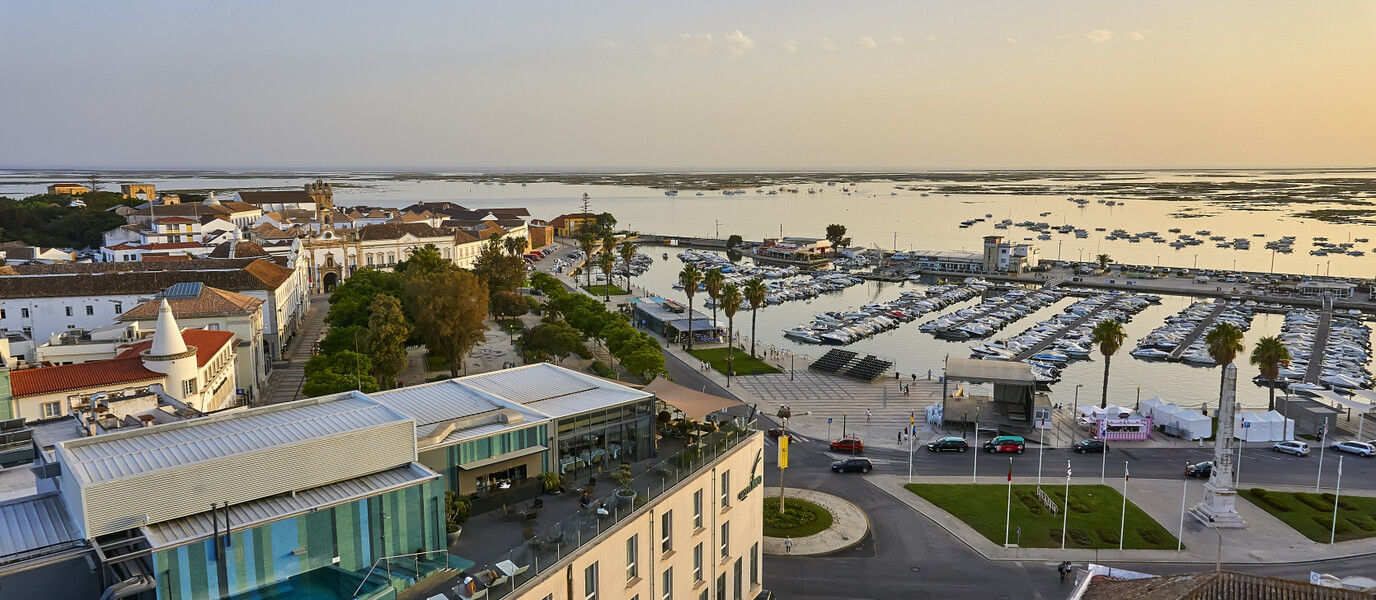
Another recommended excursion is to Loulé, with is Neo-Moorish market and its medieval castle woven into the urban infrastructure. Also worth exploring is Alte, an inland white town where natural springs, waterwheels, and whitewashed houses present an image of the Algarve before the arrival of tourism. From Albufeira it is easy to organise excursions to the Ria Formosa, to Faro’s historic quarter or to Tavira, one of southern Portugal’s most photogenic cities.