


















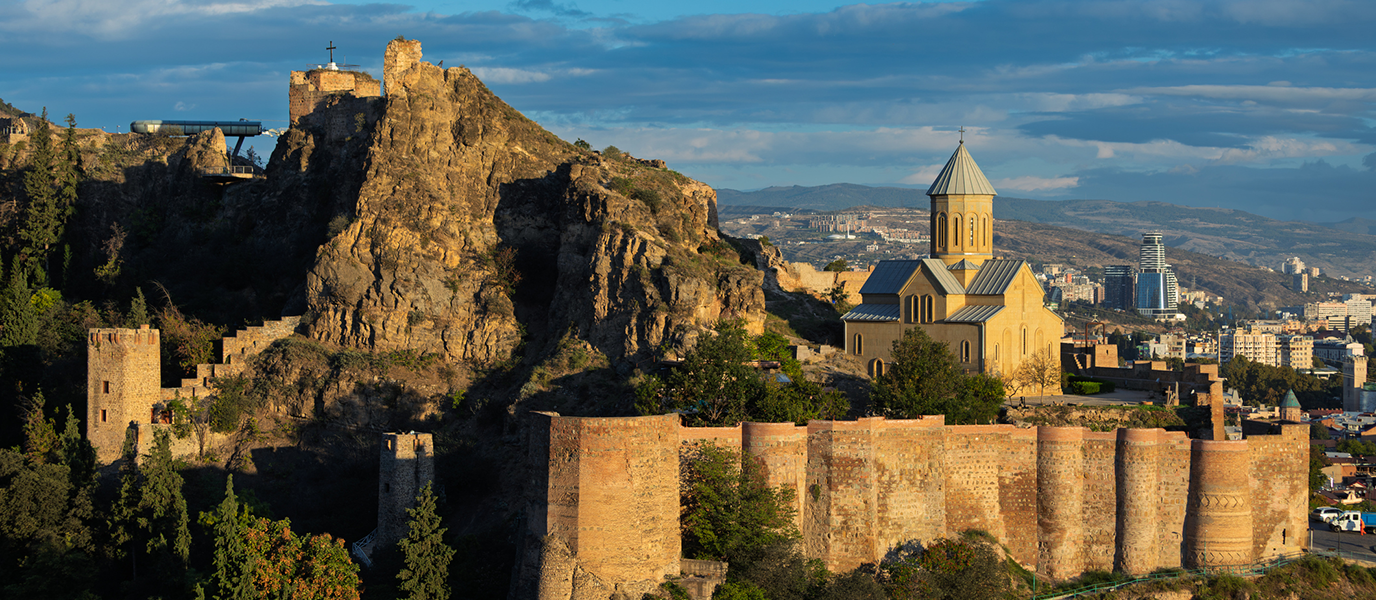
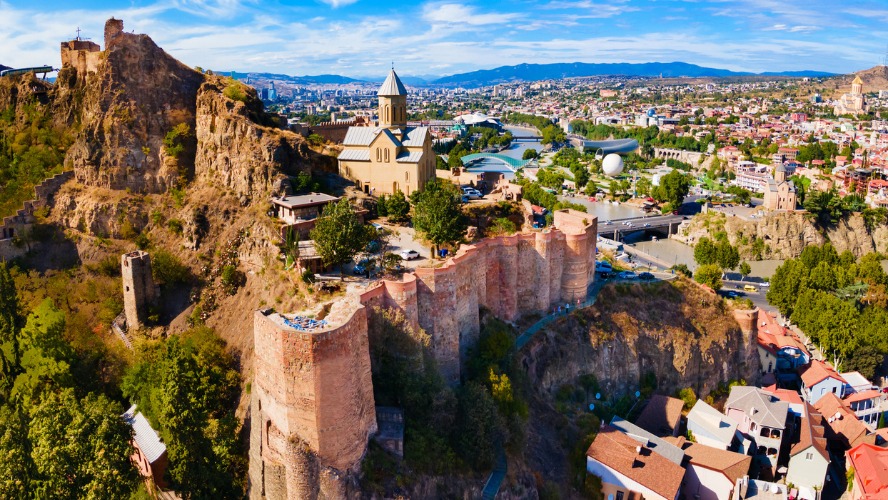
Situated at the summit of the sacred Mount Mtatsminda, in the heart of Tbilisi, lie the ruins of Narikala Fortress, one of the icons of Georgia’s capital and an essential destination for anyone visiting the city. With imposing walls and ancient towers, this defensive structure has witnessed the city’s turbulent history throughout the centuries.
Narikala Fortress is a striking example of medieval defensive architecture, with its thick defensive walls and strategic watchtowers. Inside, a small church, St Nicholas’s, has been recently restored.
But beyond its significant defensive structure, Narikala Fortress is a true symbol of Tbilisi’s resilience, sovereignty and identity. Throughout history, it’s played a vital role in controlling trade routes and as a centre of power, having served, at certain times, as the seat of rulers and military commanders.
- History of Narikala Fortress
- A link to centuries of history
- The cable car: the most comfortable way to get there
History of Narikala Fortress
The history of Narikala Fortress is closely linked to that of the city of Tbilisi, dating back to the city’s origins.
We must go back to the 4th century to imagine the first Persian citadel, built to control the trade and military routes in the Caucasus, which was expanded over the years and was known as Shuris-tsikhe (“Invidious Fortress”). The original walls were built using local limestone, a material that’s very abundant in the area.
During the 7th and 8th centuries, the Arabs established their rule in the region and further strengthened its walls. It seems that they were the ones who gave it the name Nari-Kala, meaning “impregnable fortress”. Its grandeur grew in the 10th century, when the Georgian king David IV “the Builder” ordered further extensions. Until, in the 13th century, it suffered significant damage due to the Mongol invasions.
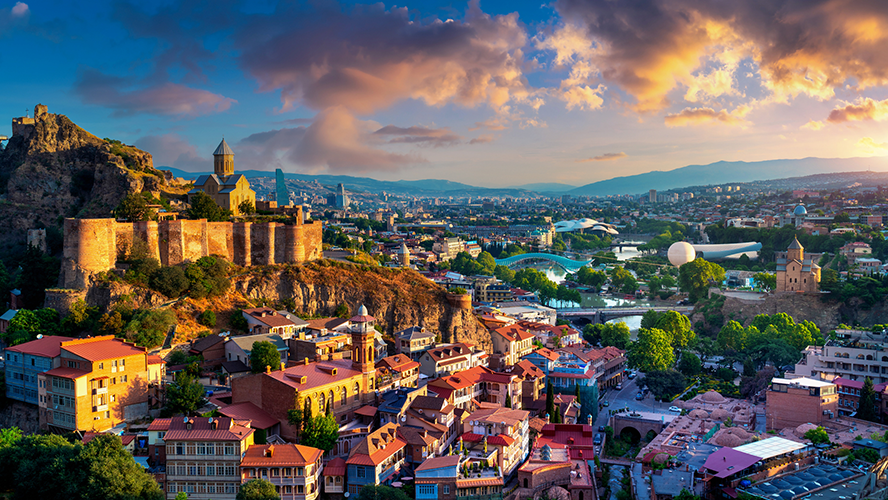
During the 17th and 18th centuries, both the Persians and the Ottomans fought for control of it, attesting to the fortress’s strategic importance in the region. At that time, the structure regained its former splendour, but its beauty was lost forever in 1827 due to the explosion of a Russian munitions store. Today, Narikala Fortress is one of Tbilisi’s major tourist attractions, particularly for the panoramic views it offers.
Narikala Fortress, Tbilisi’s great viewpoint
With architecture adapted to Tbilisi’s mountainous terrain, Narikala Fortress is also the city’s great viewpoint. Perched atop a hill, next to the Central Botanical Garden of the Georgian Academy of Sciences, it offers an unrivalled panoramic view of Tbilisi’s historic centre and its surroundings. There are many legends surrounding Narikala Fortress. For example, it’s said that somewhere within its grounds there are hidden treasures and guardian spirits. Furthermore, the fortress has had a significant influence and is reflected in Georgian literature, music and art.
A link to centuries of history
Visiting Narikala Fortress is like stepping back into Georgia’s past. As well as overlooking the city from above, it also holds a special place in the emotional and cultural landscape of Tbilisi’s residents. It offers a chance to connect with centuries of history and appreciate the legacy of past generations. It is, in short, a beacon of Georgia’s rich cultural heritage.
Following the earthquake that virtually destroyed the fortress in 1827, it’s not been fully rebuilt, although St Nicholas’s Church can still be seen, its interior featuring frescoes depicting scenes from the Bible and Georgian history. The stone towers of Narikala also remain intact.
The cable car: the most comfortable way to get there
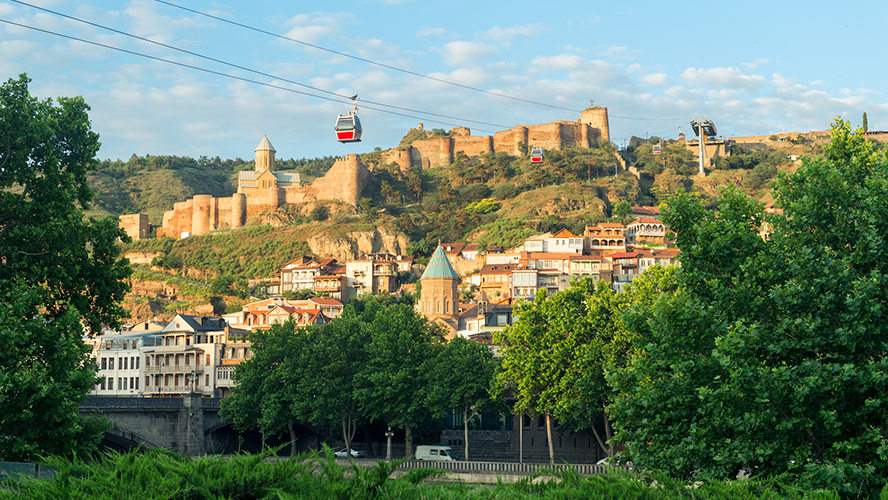
The most comfortable and quickest way to reach Narikala Fortress is by taking the cable car from Rike Park in the city centre. The journey is also a real scenic delight. For the more adventurous, there are hiking trails leading up to the fortress and its surroundings. You can also get there on foot, taking a (somewhat steep) walk from the Old Town, and, of course, by taxi or private car.
Entry is free and the fortress is open all year round. The best time to visit is first thing in the morning or at sunset. The latter option offers spectacular views and excellent light for taking photographs. As the terrain is uneven, it’s advisable to wear suitable footwear. The visit takes approximately two hours.