






























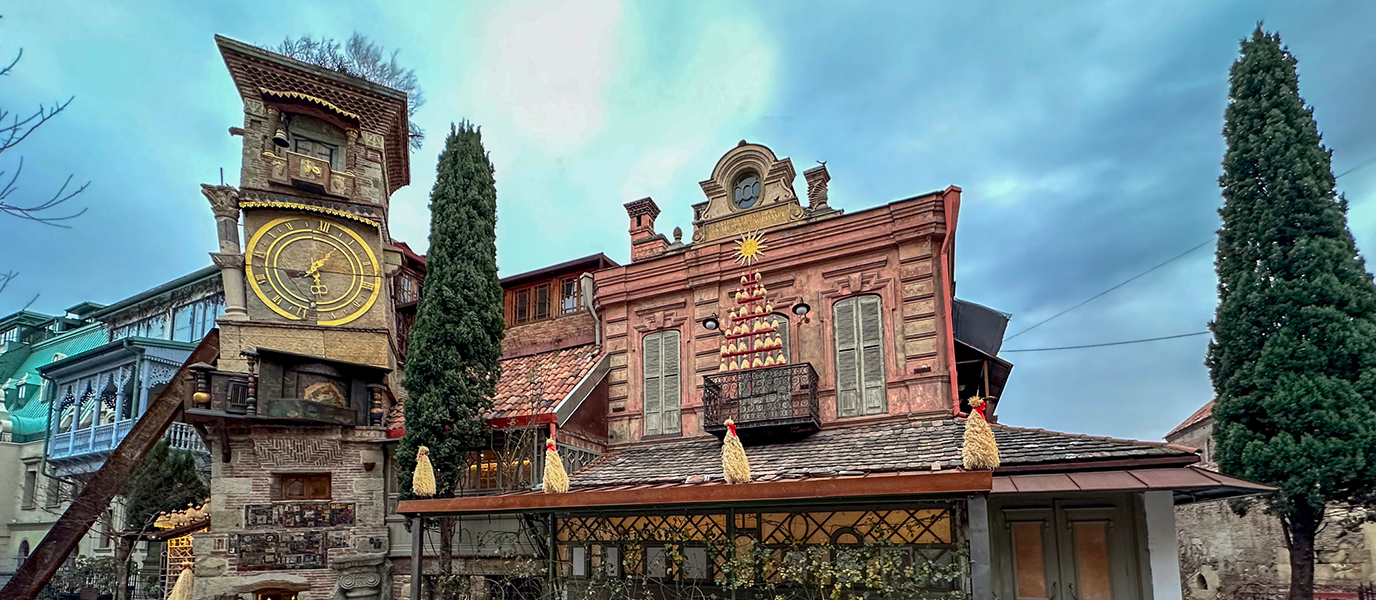
Tucked away on a side street in Tbilisi’s Old Town, the Clock Tower greets visitors as one of the city’s most unique and intriguing buildings. It’s also a true symbol of the Georgian capital, where the art of puppetry is highly valued. It was built relatively recently, in 2010, by the renowned puppeteer Rezo Gabriadze next to his puppet theatre. This tower is notable for its irregular walls, as well as a golden clock and decorative mosaics.
Although the leaning tower has only recently become part of Tbilisi’s cityscape, it has quickly won the affection of both locals and visitors. It looks as though it has literally stepped out of a fairy tale and is all the more charming for being attached to the puppet theatre.
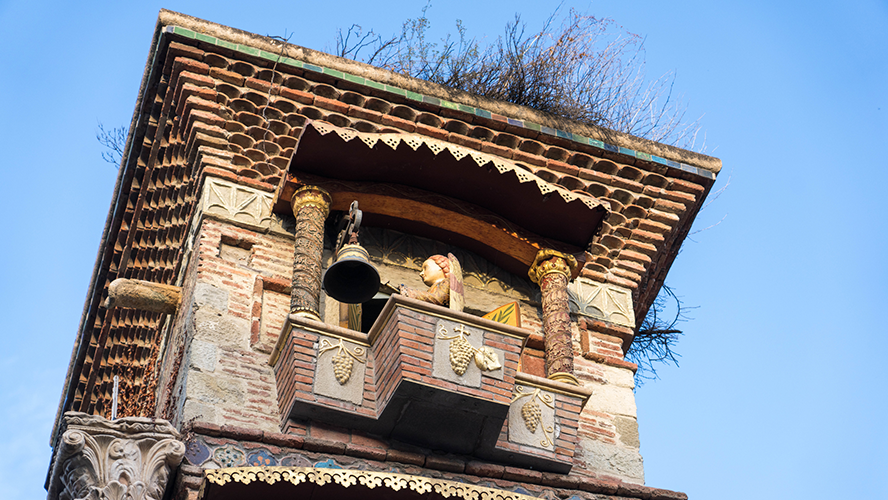
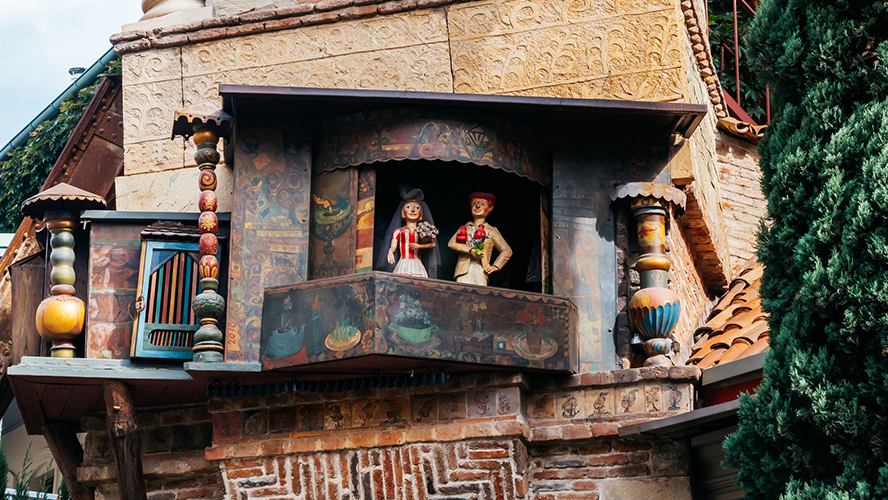
How is the time marked on the Clock Tower? Every hour, a little angel peeks out onto the building’s upper balcony and rings the bell. And twice a day, another compartment opens beneath the clock face, revealing puppets that represent the circle of life, as two young people appear on stage who meet, marry, have a child and die. It’s quite a spectacle to behold in this unique tower, situated amidst a labyrinth of Tbilisi’s ancient alleyways.
Interestingly, it’s said that embedded in the wall of this building is the world’s smallest clock.
- Origin and creation of the Tbilisi Clock Tower
- Why it’s a symbol of the city
- Distinctive architecture and design
- The clock show and the puppets
- What to see in the surrounding area
Origin and creation of the Tbilisi Clock Tower
The story of the Tbilisi Clock Tower is the story of a dream. That of a puppeteer who became famous for his puppet theatre and who, in 2010, was able to realise his wish to build a beautiful, crooked tower, built as though assembled from mismatched pieces, featuring a gigantic clock. The hours and the show, as one might expect, are presented by some charming puppets. It’s a tower, it must also be said, which, despite its youth, conveys a sense of history and great charm.
Why it’s a symbol of the city
The Clock Tower is, in addition to Rezo Gabriadze’s personal project, a tribute to the art of puppetry, so deeply rooted in Georgia. We mustn’t forget that Tbilisi also has a Puppet Museum, founded in 1937 by the writer Tinatin Tumanishvili. It’s located at 103 David Agmashenebeli Avenue, but was looted at the end of the 20th century and remained closed until the collection could be replenished, before reopening in 2008. Since then, it has been a very popular attraction in the city, especially for puppet lovers. The current collection comprises over 3,000 pieces created in the 19th and 20th centuries by artists from India, China, Japan and Europe. However, the most significant part consists of unique pieces by local masters. There are ethnographic puppets, marionettes and mechanical musical dolls. Some are made of porcelain and others of wood, ivory and even gourd. They are unique examples from over 40 countries around the world, and even flamenco dancers feature among them.
Distinctive architecture and design
The architecture and design of the Tbilisi Clock Tower couldn’t be more distinctive. The puppeteer Rezo Gabriadze first built the Puppet Theatre in 1981 and later added the tower in 2010. The most curious thing is that its structure was built using fragments of old buildings that had been abandoned in the city’s old quarter.
The clock show and the puppets
A visit to Tbilisi’s (leaning) Clock Tower is highly recommended. Every hour, you can see the figure of an angel marking the hours, and twice a day, at exactly 12:00 and 19:00, you can enjoy a short puppet show featuring puppets peeking out from inside the monument. It’s located at 13 Ioane Shavteli Street.
What to see in the surrounding area
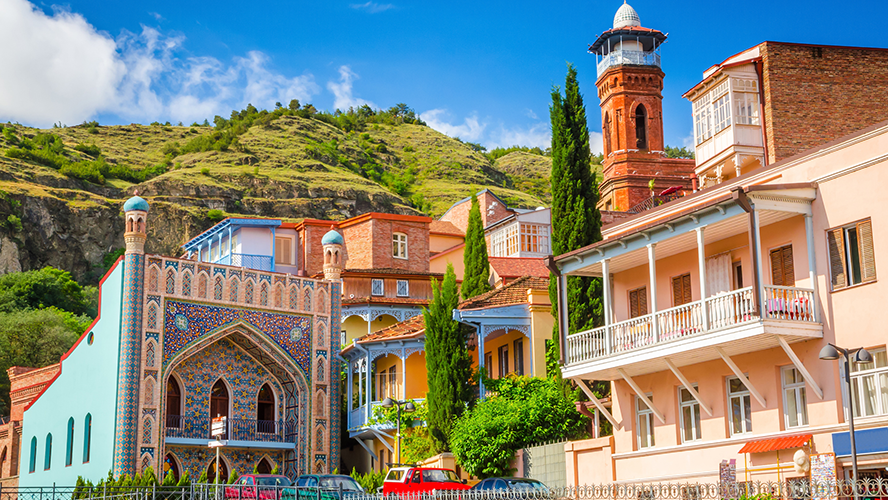
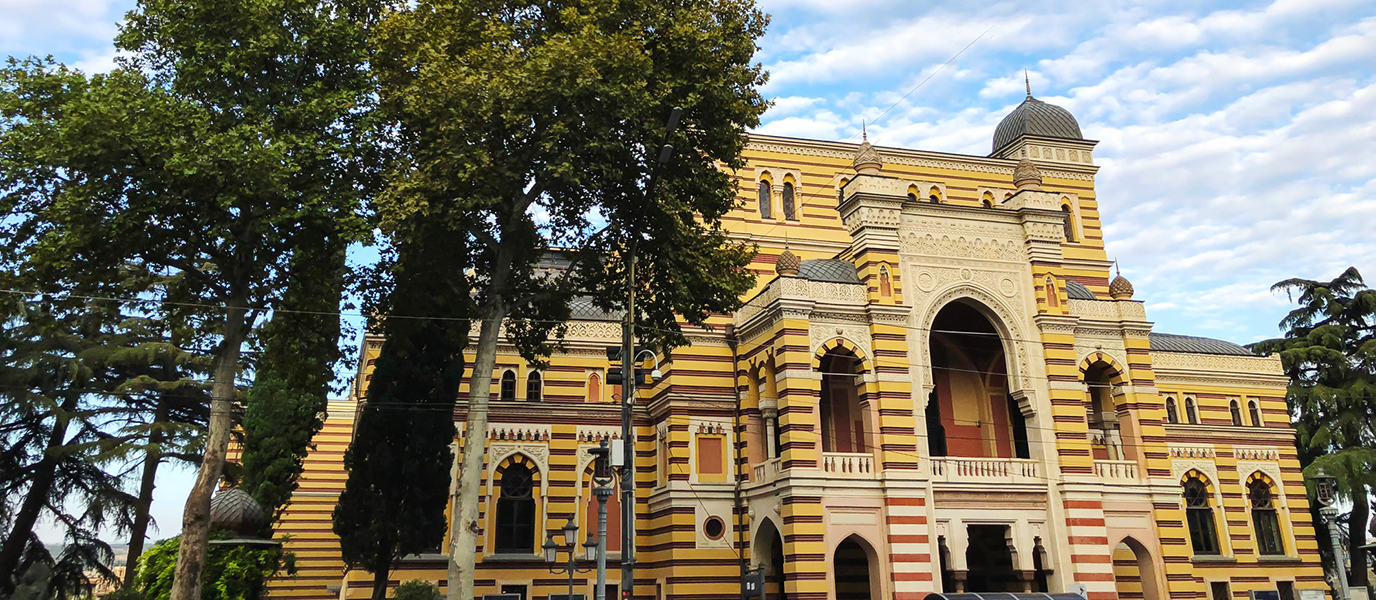
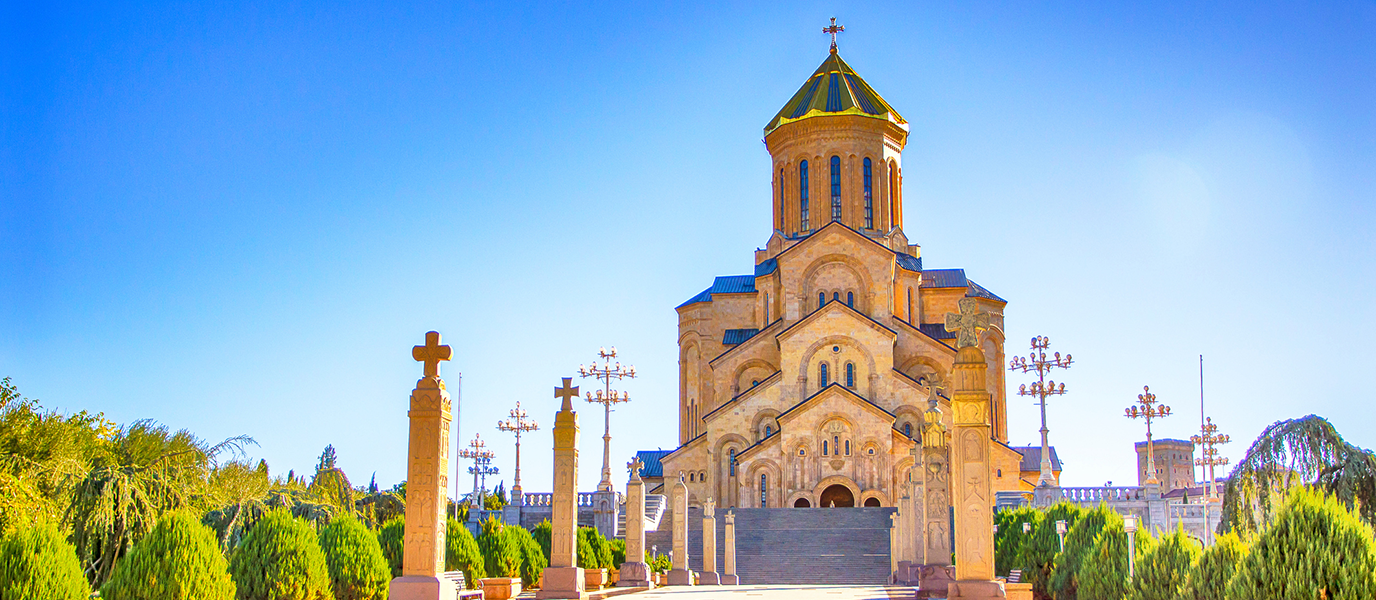
As the Clock Tower is situated in Tbilisi’s Old Town, you should take the opportunity to visit other charming spots in the Georgian capital. As well as visiting the synagogue, the mosque and the Georgian Orthodox, Armenian Gregorian and Catholic churches, it’s worth popping into the National History Museum and the Opera House, as well as the shops and food court at Galleria Tbilisi. And, of course, the National Museum of Georgia, also known as the Shalva Amiranashvili Museum of Fine Arts, as it houses a significant collection of some 140,000 pieces of Georgian, Oriental, Russian and European art.