










Mount Sinai, also known as Jabal Musa, is not just a majestic mountain in the Sinai Desert. It is also a place steeped in spirituality, history and mysticism. Located on Egypt’s Sinai Peninsula, this imposing 2,285-metre peak is revered by the world’s major monotheistic religions: Judaism, Christianity and Islam. Biblical tradition identifies it as the place where Moses received the Ten Commandments, an event that has left an indelible mark on the history and faith of millions of people. Over the centuries, countless pilgrims, adventurers and curious travellers have climbed its steep slopes to witness one of the most spectacular sunrises imaginable.
- History of Mount Sinai: the mountain where heaven meets earth
- How to get there: a journey to the heart of the desert
- Saint Catherine’s Monastery: a thousand-year-old spiritual refuge
- Climbing routes: the Camel Path and the Steps of Repentance
- Recommendations for your visit: getting the most out of your experience
History of Mount Sinai: the mountain where heaven meets earth
Mount Sinai, also known as Jabal Musa (Mountain of Moses), is one of the most revered places among the world’s religious traditions. Its mention in biblical texts, especially in the Book of Exodus, associates it with one of the most significant events in the history of the three great monotheistic religions, i.e. when Moses received the Ten Commandments. It is said that God, who appeared amidst a bush that burned without being consumed, spoke to Moses on top of the mountain, giving him the Tables of the Law, which represent the basic principles of morality and faith in those religions. The imposing mountain, with a height of 2,285 metres, rises in the heart of the Sinai Peninsula, an area steeped in religious symbolism and an intersection of historic roads between Egypt, the Levant and Arabia.
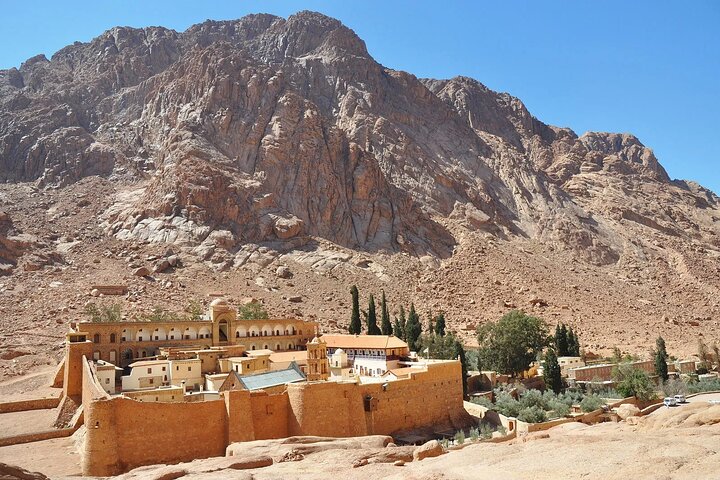
Historical and archaeological records show that Mount Sinai has been a key stopover for various civilisations over the centuries. Although it is best known for its religious importance, the mountain has also played a strategic role in trade routes and military history. During the Byzantine Empire, it was a place of pilgrimage and, in the 6th century, Emperor Justinian ordered the construction of Saint Catherine’s Monastery, which remains to this day the oldest continuously inhabited Christian monastery. The temple stands at the foot of the mountain and has a rich collection of ancient manuscripts, religious icons and texts that have attracted scholars and travellers throughout history.
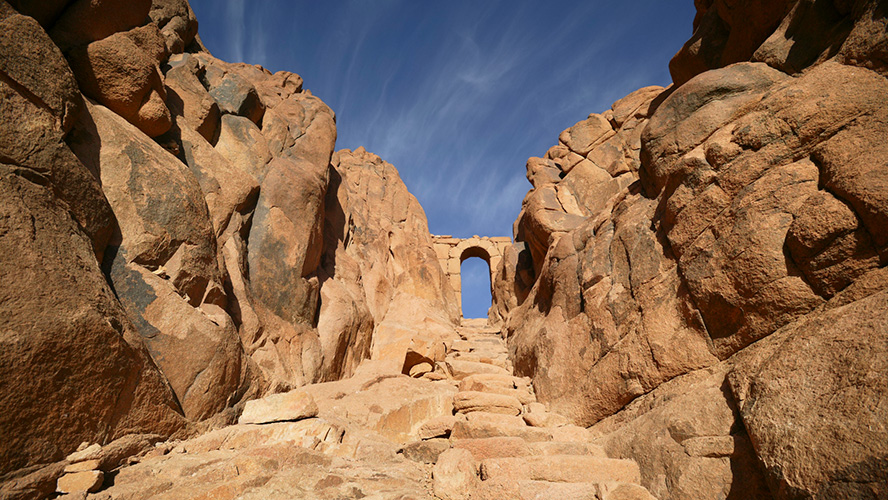
Mount Sinai is not only a symbol of spirituality but also a testimony to the connection between the human and the divine in an inhospitable and ruggedly beautiful landscape. The first Christian monastic communities found refuge on Mount Sinai and, to this day, the region continues to attract both pilgrims and adventurers who want to experience the grandeur of the desert and the mountains where, according to tradition, God spoke directly to man.
Over the centuries, the various civilisations that have passed through the peninsula have added their own layers of history to this location. From the ancient Egyptians to the Islamic civilisations, the Sinai has been a contested territory because of its strategic location between Africa and Asia. During the 20th century, as part of the Egypt-Israel wars, the Sinai was also a major military arena, until Egypt regained the peninsula following the Camp David Accords in 1979.
Mount Sinai has now become not only a religious landmark but also a natural and tourist attraction. Its climbing routes, both the Siket Sayidna Musa (Path of Moses) and the Monks’ Trail, enable travellers to follow in the footsteps of millions of pilgrims and historical figures who have travelled along them for centuries. It is a place where the past can be felt and nature and spirituality meet in a unique way.
How to get there: a journey to the heart of the desert
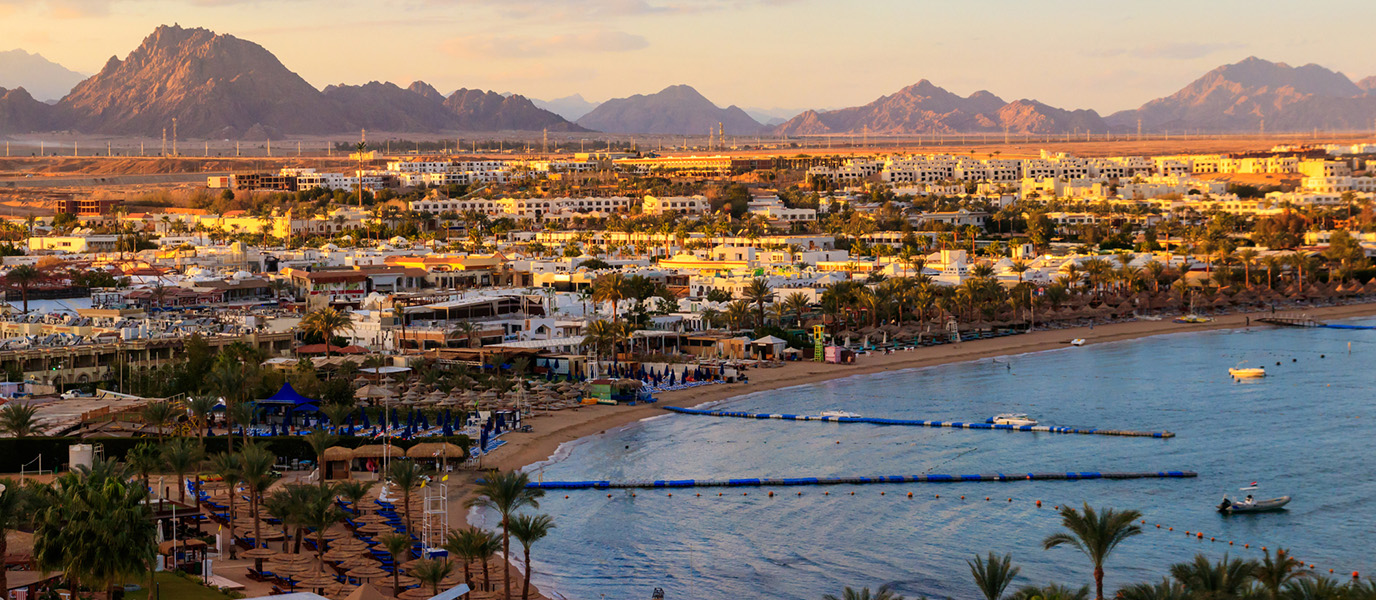
Getting to Mount Sinai is no easy task but it is well worth the effort. The nearest town is Sharm el-Sheikh, some 230 kilometres to the south-east of the mountain. From there, travellers can take a bus or hire a taxi to reach the small town of Saint Catherine, located at the foot of the mountain. Journeys from Sharm el-Sheikh to Mount Sinai usually take between 3 and 4 hours, depending on the traffic conditions and route.
Another popular option is to hire an organised tour, which often includes transport from the main tourist destinations in Sinai such as Sharm el-Sheikh and Dahab. The tours usually leave at sunset so that travellers can make the ascent during the night and arrive at the summit just in time to see the sunrise. This option not only provides a magical experience but also helps you avoid the scorching heat of the day.
Saint Catherine’s Monastery: a thousand-year-old spiritual refuge
Saint Catherine’s Monastery, located at the foot of Mount Sinai, is a must for any travellers visiting the region. Built in the 6th century by order of the Byzantine Emperor Justinian, the monastery has stood the test of time and invasion, remaining a bastion of spirituality and faith in the midst of the desert. It was built on the very spot where Saint Helena, the mother of Emperor Constantine I the Great, had ordered a chapel to be built because, according to tradition, this is where God spoke to Moses. This holy place, which belongs to the Orthodox Church, is known for its impressive architecture and for housing a valuable collection of manuscripts and religious art. It was declared a UNESCO World Heritage Site in 2002.
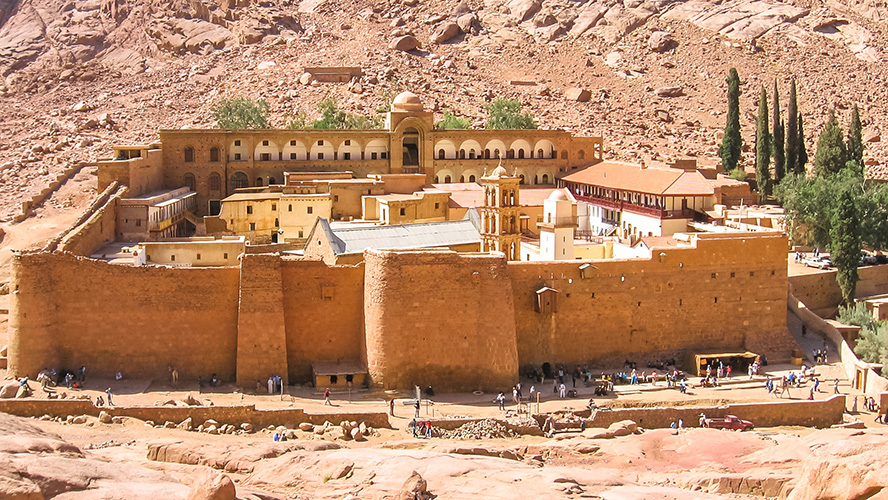
One of the monastery’s main attractions is the Chapel of the Burning Bush, which was built on the site where Moses supposedly saw the burning bush without being consumed. Visitors can see this bush, which still stands beside the chapel, considered by many to be the same bush witnessed by Moses. The monastery also houses the Library of Saint Catherine, which contains one of the oldest and most valuable manuscript collections in the world, second only to that of the Vatican.
Climbing routes: the Camel Path and the Steps of Repentance
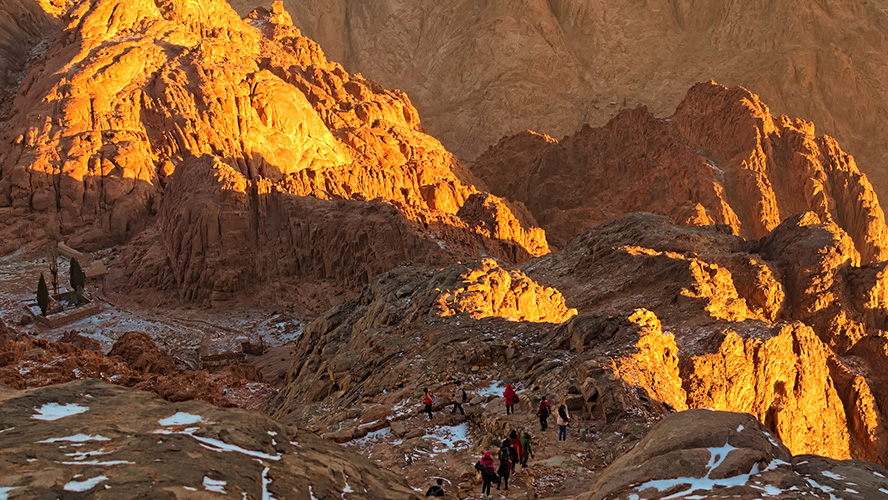
There are two main routes up Mount Sinai, both offering unique experiences and spectacular views. The first and most popular is known as the Camel Path or Siket El Bashait. This meandering trail, approximately 7 kilometres long, is more accessible and relatively easy to follow. Although the hike can take between 2 and 3 hours, most travellers choose to do this during the night so that they can reach the summit at dawn. Along the way, there are several rest areas where local Bedouins offer tea and refreshments to weary walkers.
The second route, known as the Steps of Repentance or Siket Sayidna Musa, is much more demanding. This steep climb of 3,750 stone steps, carved into the rock by monks, requires excellent physical condition and an adventurous spirit. Nevertheless, those who choose this challenging path are rewarded with a more solitary experience and a more intimate connection with the mountain.
Recommendations for your visit: getting the most out of your experience
Mount Sinai is a place of great spiritual and cultural significance, so you must plan your visit well so that you can get the most out of your experience. The first thing you should consider is the extreme weather. In summer, temperatures can reach 40 degrees Celsius during the day; and in winter, nights at the summit can be extremely cold, reaching temperatures below freezing. Our recommendation is to wear suitable clothing for both extremes: a warm jacket for the summit, and light, breathable clothing for the climb.
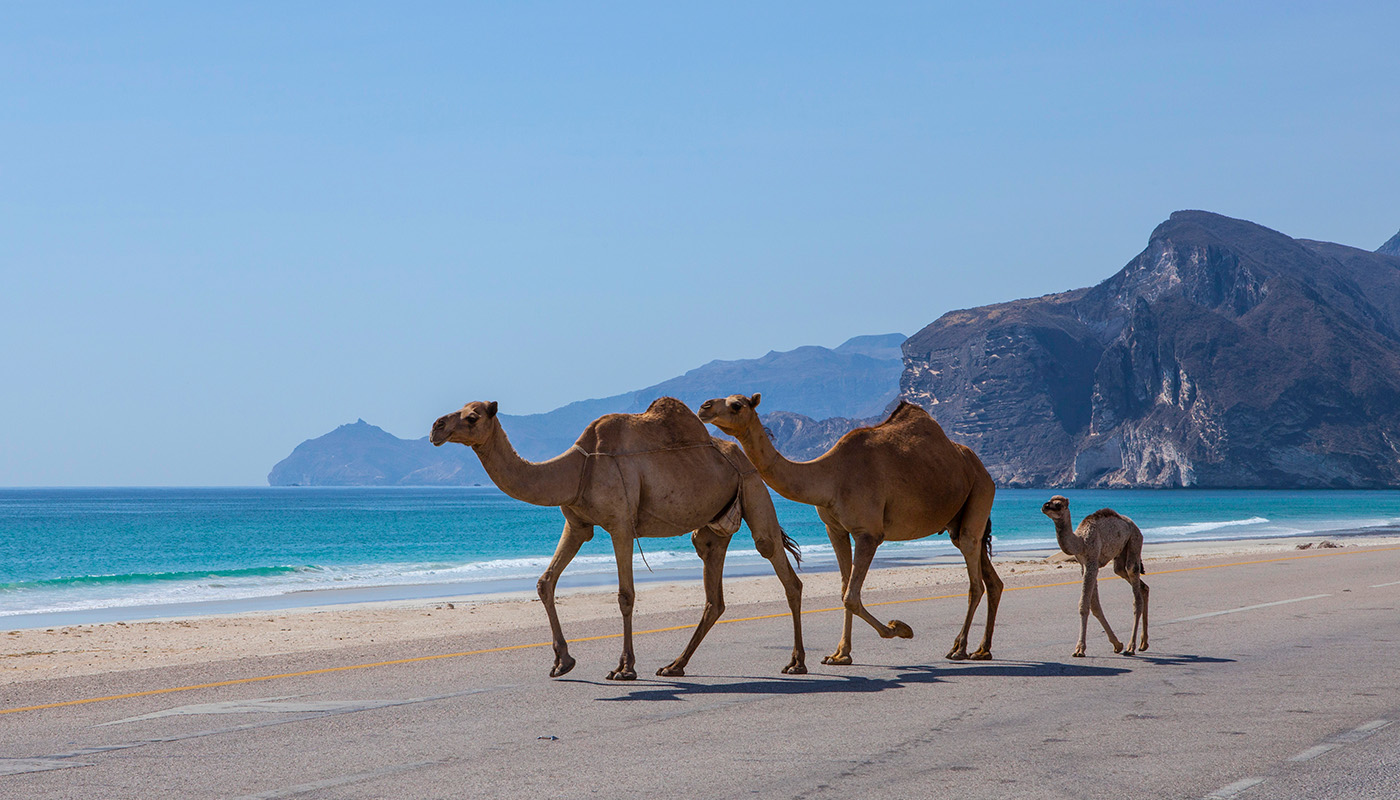
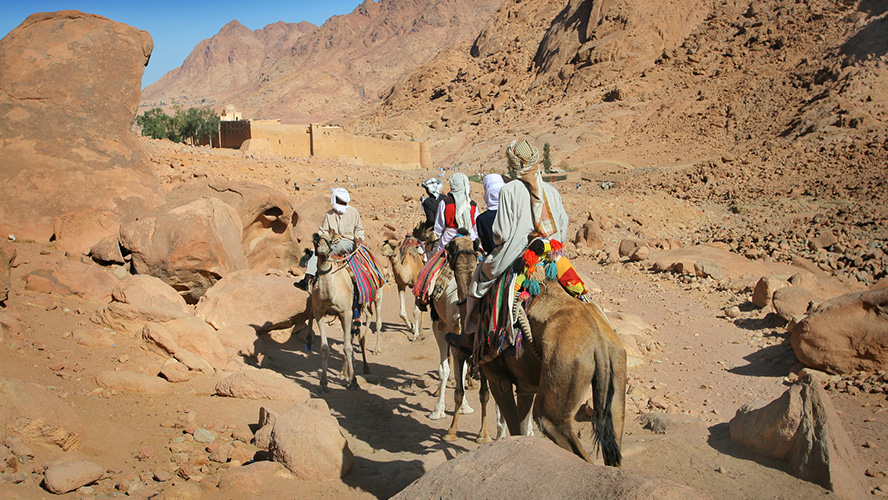
For those who do not feel like walking all the way up the mountain, there is the option of hiring a camel at the base of the mountain. Camels can take travellers along most of the Camel Path, although the last 750 steps to the top must be done on foot.
Another key recommendation is to bring plenty of water and a light meal. Although there are Bedouin posts along the way, it is best to be well prepared. Moreover, travellers should be respectful of the local culture and natural environment, making sure not to leave litter behind and follow the directions of the local guides.