









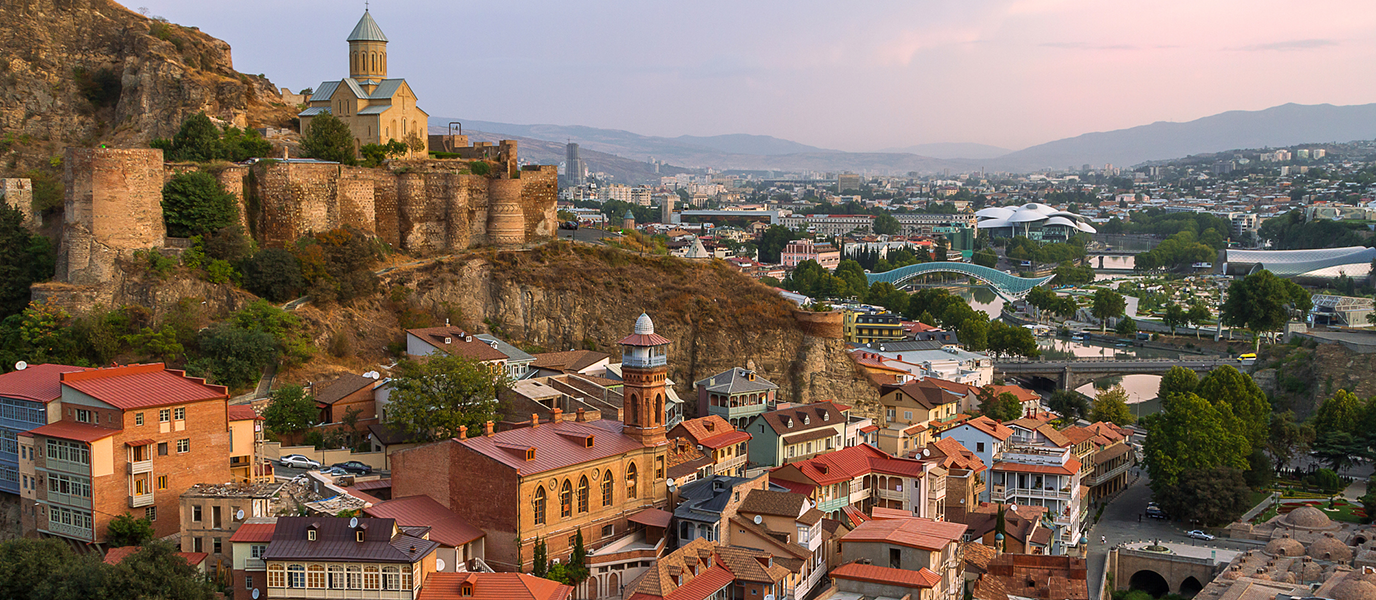
Tbilisi—Tiflis in Georgian—stretches along the Kura river valley, nestled amongst hills that have served as a natural border between empires for centuries. Few European capitals boast such a clear blend of influences: Persians, Byzantines, Arabs, Russians and Soviets have all left visible traces in the city’s architecture, urban layout and even its cuisine.
Exploring Tbilisi means strolling past carved wooden balconies, Orthodox churches with conical domes, nineteenth-century neoclassical buildings and squares where modern cafés sit alongside old Georgian wine cellars. The old town, known as Kala, retains narrow alleyways and inner courtyards where daily life unfolds just a short distance from some of the country’s most important monuments. The city, however, has also undergone a remarkable transformation since the beginning of the twenty-first century. New bridges, parks and contemporary buildings have redefined the cityscape, creating a constant contrast between tradition and modernity. This constant dialogue between the past and the present is precisely what makes Tbilisi one of the most surprising capitals in the Caucasus.
- History of Tbilisi and why to visit
- Holy Trinity Cathedral of Tbilisi
- Freedom Square
- The Clock Tower
- Narikala fortress
- Tbilisi Opera and Ballet Theatre
- The Bridge of Peace
- The Chronicle of Georgia
- Sioni cathedral
- Museums in Tbilisi
- Leisure in Tbilisi
- Rike park
History of Tbilisi and why to visit: a city contested by empires for fifteen centuries
According to Georgian tradition, the history of Tbilisi dates back to the fifth century. Legend has it that King Vakhtang I Gorgasali was hunting in the forests surrounding the valley when his falcon fell into a hot spring. Impressed by the place, the monarch decided to found a city there. The name Tbilisi derives from the Georgian word ‘tbili’, meaning ‘warm’, in reference to the sulphur-rich springs that still flow into the famous baths in the Abanotubani district today.
During the Middle Ages, the city became a strategic location on the trade routes connecting the Black Sea with Persia and Central Asia. This geographical significance also made it a constant target for conquest. Persians, Arabs and Turks fought over the city for centuries, each leaving their mark on the local architecture and culture.
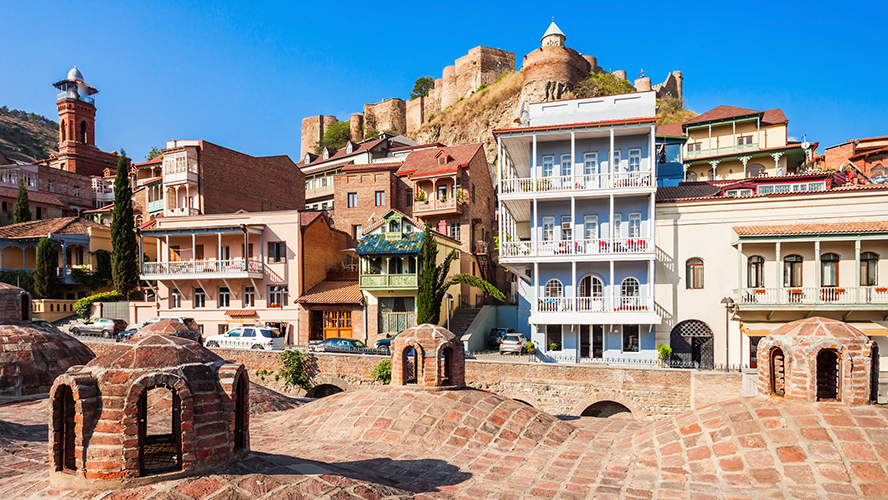
In the nineteenth century, following Georgia’s annexation by the Russian Empire, Tbilisi underwent a radical urban transformation. Wide avenues, theatres, administrative buildings and elegant residences for merchants and aristocrats were built. The city became one of the most dynamic cultural centres in the Caucasus, serving as a meeting point between Europe and Asia.
Today, that complex history is evident in all of the city’s neighbourhoods. Medieval churches stand alongside Art Nouveau buildings, Soviet structures and contemporary architectural projects. Tbilisi offers visitors a journey through more than 1,500 years of history within just a few square kilometres.
Holy Trinity Cathedral of Tbilisi: the great golden dome that dominates the city skyline
The Holy Trinity Cathedral, known as Sameba, is the largest religious building in Georgia and one of the capital’s most prominent landmarks. Construction began in 1995 and was completed in 2004 as part of the celebrations marking the 1,500th anniversary of Christianity in the country.
Perched on Elia hill, to the east of the old town, the cathedral rises to a height of more than 80 metres. Its enormous golden dome can be seen from many places across the city, particularly at sunset, when the light highlights the light-coloured stone it is made of.
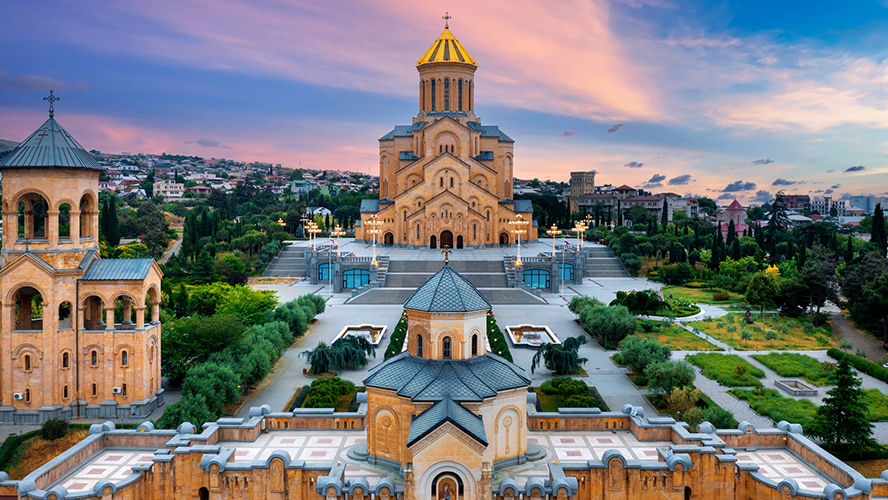
The complex includes monasteries, gardens and several underground chapels. The interior stands out for its spaciousness and the large contemporary icons that reinterpret the Georgian Orthodox tradition. Beyond its religious significance, Sameba also symbolises the spiritual renaissance that Georgia experienced following the end of the Soviet era.
Freedom Square: the political and urban heart of the Georgian capital
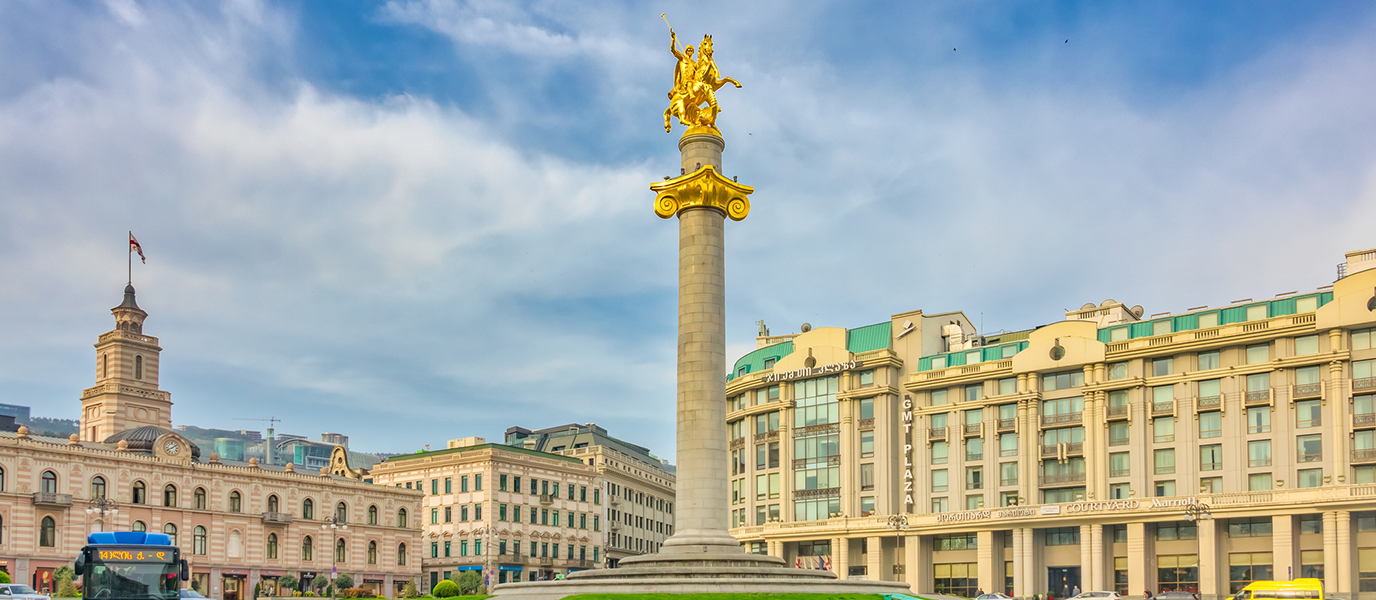
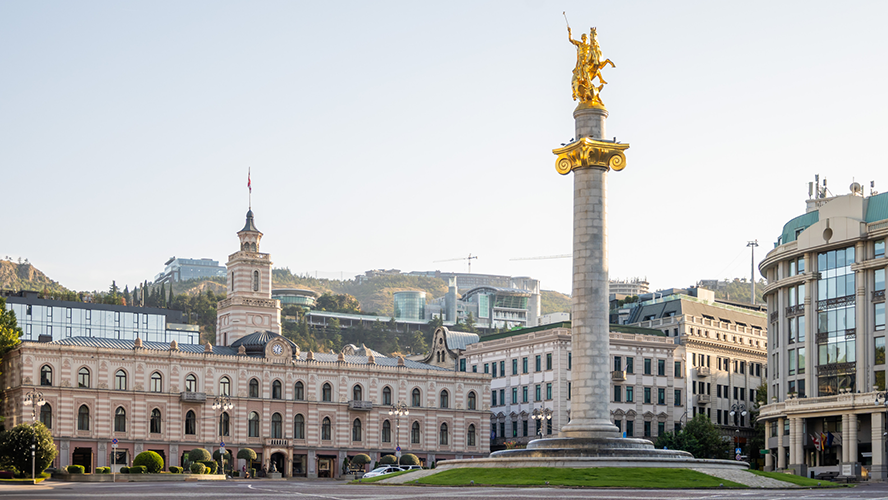
Freedom Square marks the boundary between Tbilisi’s old town and its modern boulevards. For centuries, this square has been the setting for political and social events that have shaped the country’s recent history. In the centre of the square stands the golden statue of St George slaying the dragon, created by the sculptor Zurab Tsereteli. The monument symbolises the triumph of good over evil and has become one of the city’s most famous icons.
Several of Tbilisi’s main thoroughfares start here, including Rustaveli Avenue, which is lined with theatres, museums, government buildings and historical cafés. Strolling through the area is a great way to admire the neoclassical architecture of the Russian imperial period, alongside modern buildings and commercial spaces.
The Clock Tower: the leaning building that keeps times in the old town
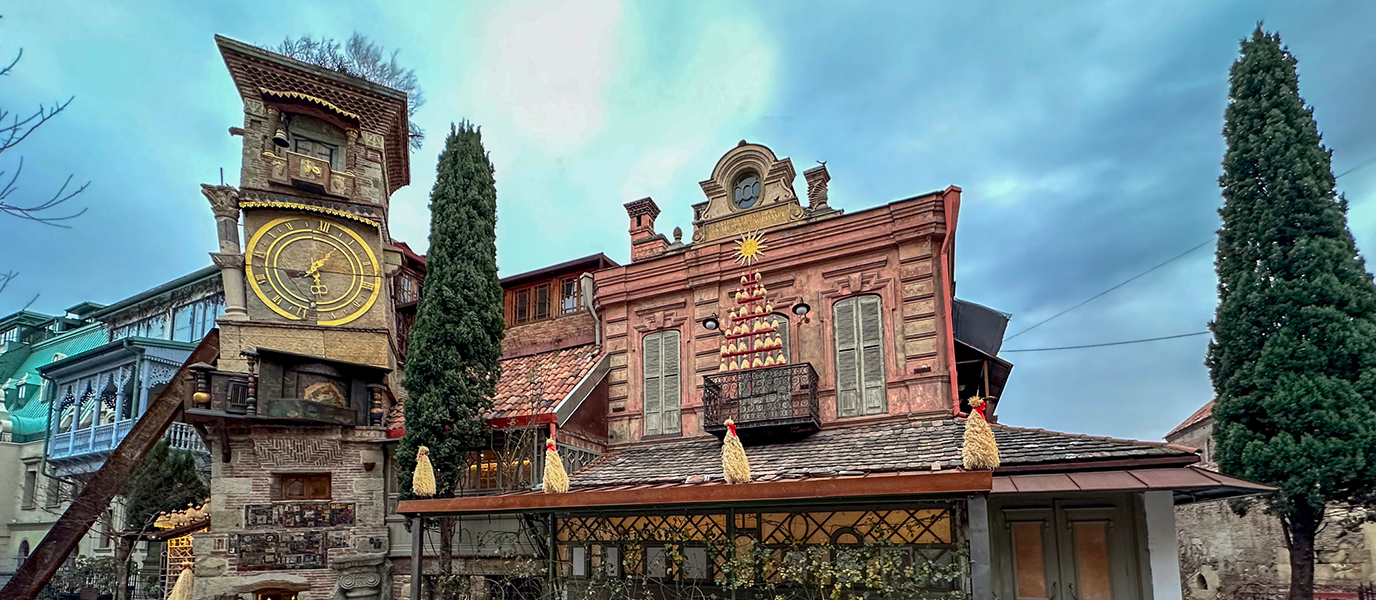
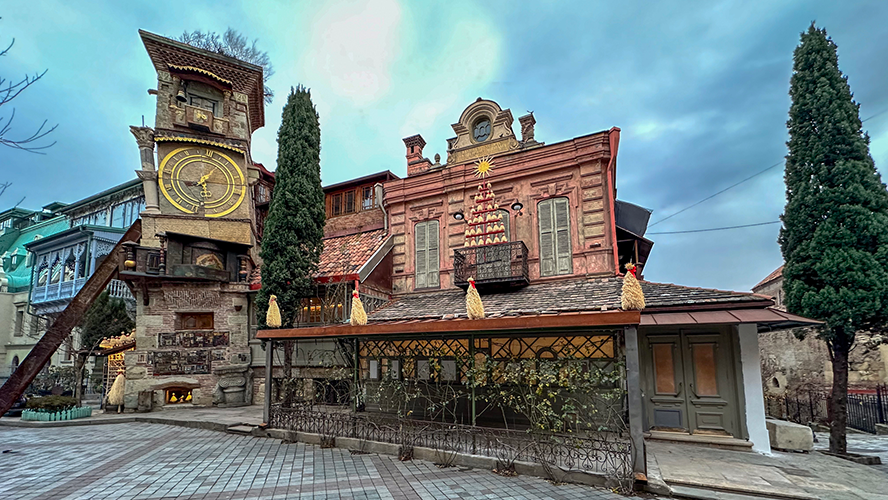
One of Tbilisi’s most intriguing spots, the Gabriadze Theatre Clock Tower, lies in a narrow street near the Anchiskhati basilica. This seemingly improvised leaning structure was designed by the artist and theatre director Rezo Gabriadze at the start of the twenty-first century.
At set times every day, a small mechanical figure appears in the top window to mark the passing of time. This brief spectacle attracts visitors and locals alike who gather in front of the tower to watch the scene.
The structure is made of bricks, tiles and fragments of old buildings salvaged from demolition sites, giving it an irregular and almost whimsical appearance. In a neighbourhood dominated by medieval churches and quiet courtyards, the tower adds a touch of playfulness and artistry to the urban landscape.
Narikala fortress: medieval walls overlooking the Kurá valley
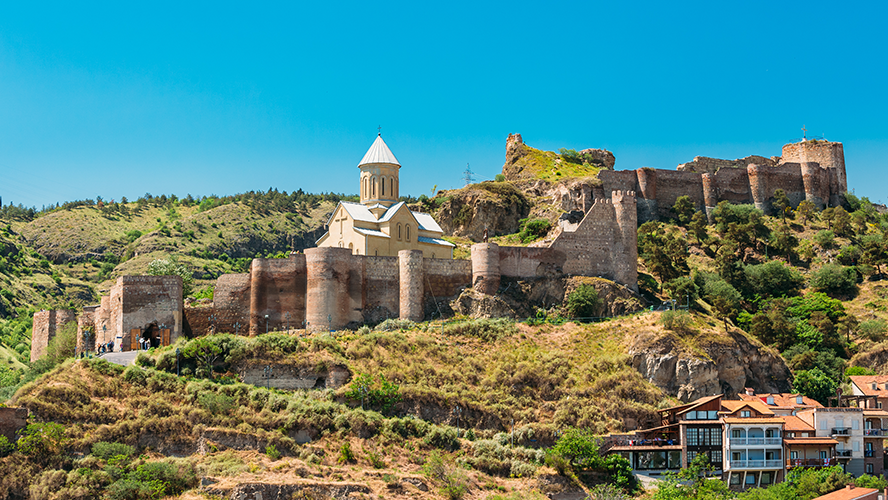
Narikala fortress overlooks Tbilisi from a steep hill to the south of the old town. Dating back to the fourth century, much of the current walls were reinforced during the Arab period in the eighth century.
For centuries, its elevated position enabled it to control the Kura river valley and the routes passing through the city. Although much of the structure has been damaged by earthquakes and invasions, the preserved walls now offer some of the best panoramic views of the capital.
You can get to it on foot from the Abanotubani district or via the cable car departing from Rike park. From the top, the view takes in the rooftops of old houses, church domes and the winding course of the river that divides the city.
Tbilisi Opera and Ballet Theatre: an Eastern-inspired palace on Rustaveli Avenueli
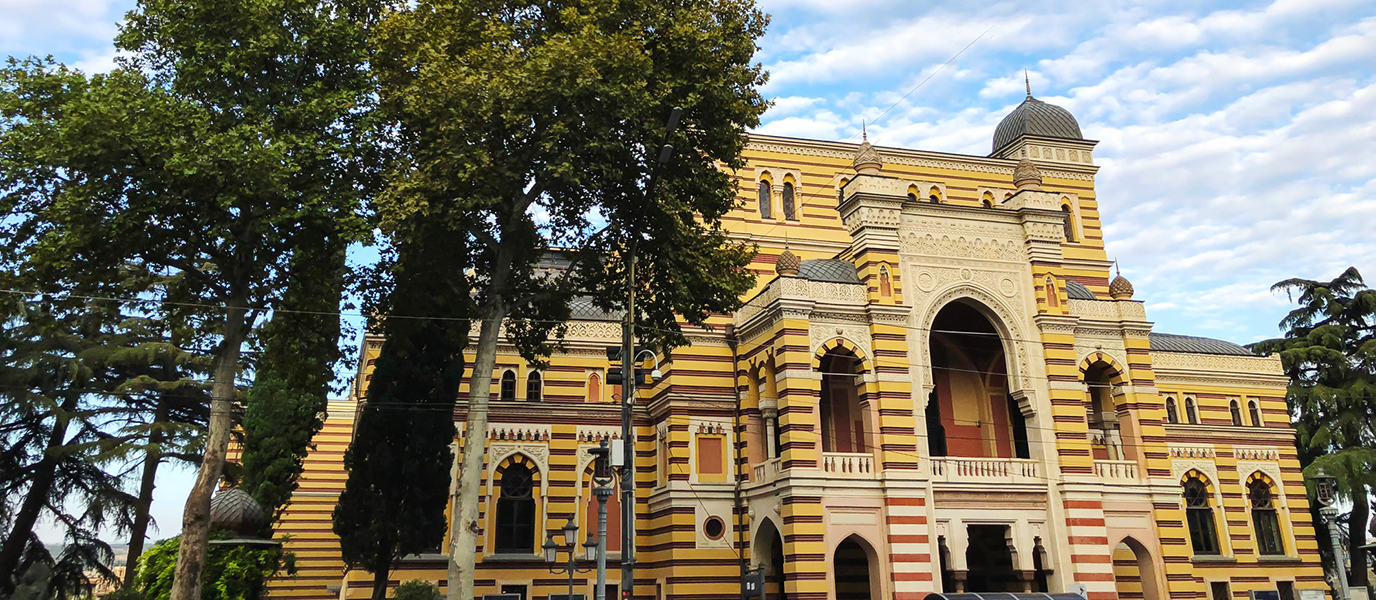
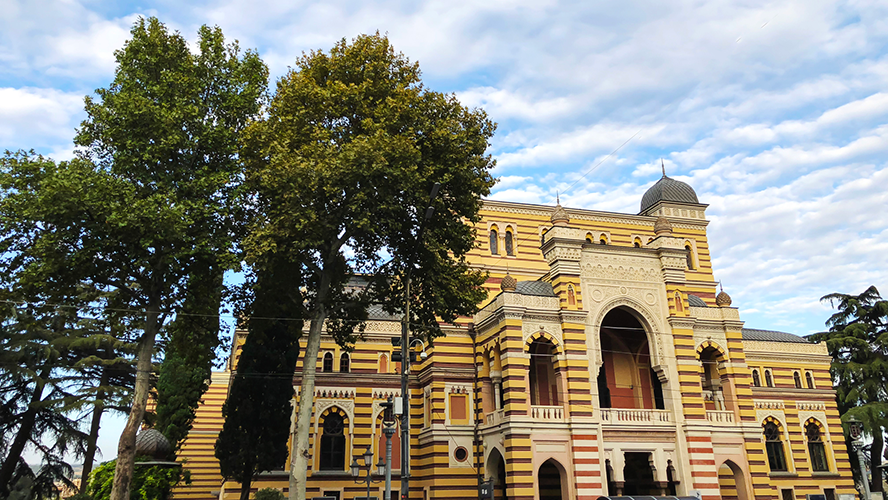
The Tbilisi Opera and Ballet Theatre is particularly notable for its Neo-Moorish façade, an architectural style that is uncommon in Europe and reflects the nineteenth century’s fascination with Eastern influences. The original building was opened in 1851 and rebuilt following a fire in 1874.
The theatre’s decorated arches, mosaics and ornamental details reflect the Persian and Ottoman influences that have shaped the region over time. The interior, which was restored in 2016, combines red velvets, crystal chandeliers and gilded balconies that evoke the atmosphere of great European theatres.
Attending a performance here—be it an opera, a ballet or a symphony concert—provides insight into the role culture played in Tbilisi’s urban life during the Russian imperial era.
The Bridge of Peace: the glass arch connecting old Tbilisi with the modern city
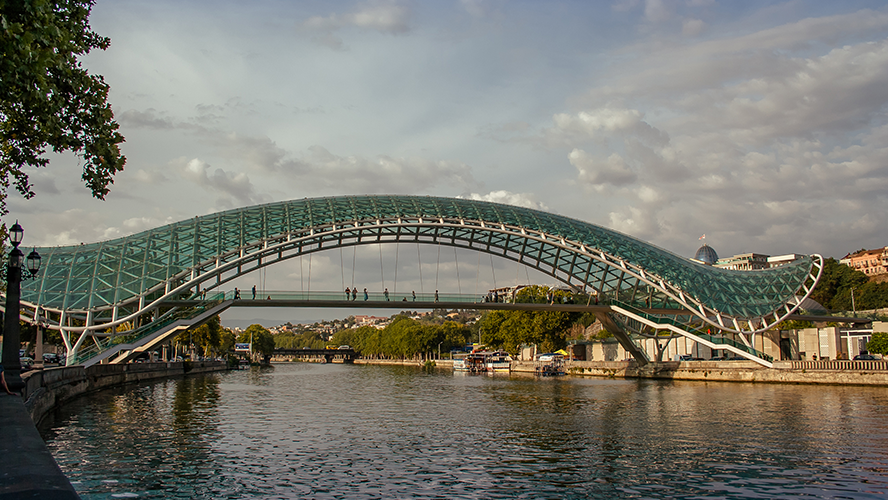
Opened in 2010, the Bridge of Peace has become one of the most recognisable features of Tbilisi’s contemporary architecture. Designed by the Italian architect Michele De Lucchi, the footbridge spans the Kura river, connecting the old town with Rike park.
Its undulating deck structure, made of steel and glass panels, is lit up by thousands of LED lights. At night, the bridge takes on an almost futuristic appearance contrasting with the traditional houses of the old town.
Aside from its design, the bridge symbolises Georgia’s desire to project a modern image while retaining its historical heritage.
The Chronicle of Georgia: monumental columns overlooking the Tbilisi reservoir
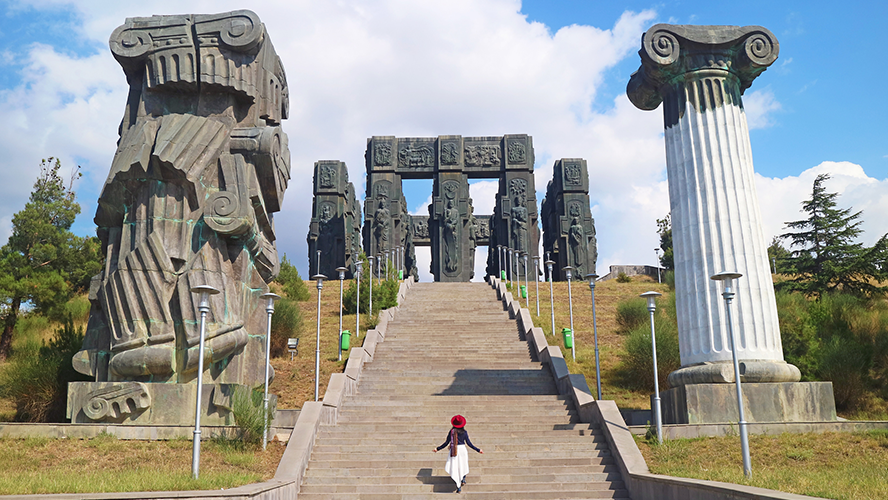
One of the country’s most striking monuments, the Chronicle of Georgia, stands on a hill to the north of the city. This sculptural complex, which was begun in the 1980s by Zurab Tsereteli, consists of enormous bronze pillars depicting key episodes in Georgian history.
Standing at over 30 metres high, the columns feature reliefs portraying medieval kings, Christian saints and scenes from national history. The lower section of each pillar depicts biblical episodes, whilst the upper part is dedicated to Georgian monarchs and historical figures.
From the upper esplanade, you can enjoy sweeping views of the Tbilisi reservoir and the hills surrounding the capital. The monumental nature of the site, combined with its relative distance from the city centre, make it one of the most impressive places from which to gain an understanding of the country’s historical narrative.
Sioni cathedral: the historic church where the Cross of Saint Nino is housed
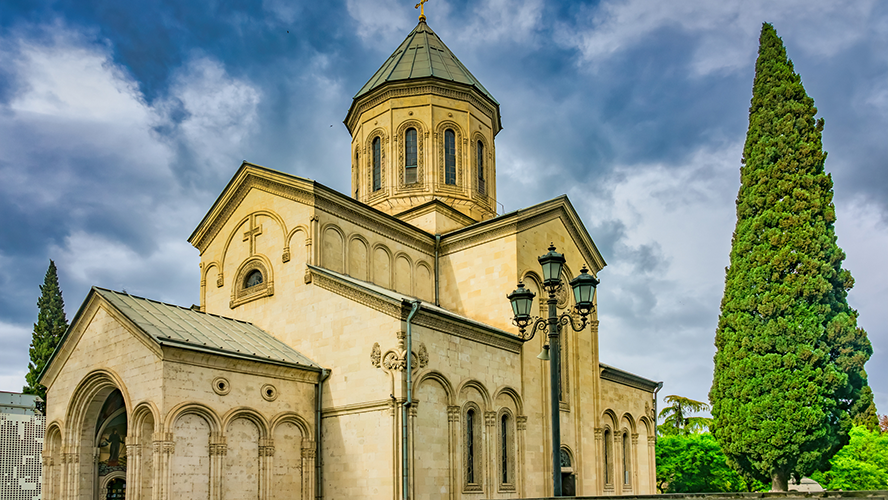
Sioni Cathedral, known in English as Zion Cathedral, is one of the oldest and most revered churches in Tbilisi. Situated in the heart of the old town, just a short walk from the Kura river, the cathedral dates back to the sixth century. The current building, however, is the result of numerous reconstructions following invasions and earthquakes.
Over the centuries, the cathedral was destroyed or damaged several times by Persian and Mongol invaders, but has always been rebuilt. Its current appearance is chiefly the result of restorations carried out between the seventeenth and nineteenth centuries, which explains the mixture of styles evident in its architecture.
The cathedral houses one of the most important relics of Georgian Christianity: the cross of Saint Nino, the evangelist who introduced Christianity to Georgia in the fourth century. Traditionally made from vine branches bound with the saint’s hair, the cross is an object of profound devotion for the faithful.
Museums in Tbilisi: from the gold of ancient Colchis to the naïve world of Niko Pirosmani
Tbilisi is home to some of Georgia’s most important museums, many of which are part of the National Museum of Georgia. Their collections offer a journey through several millennia of the country’s history, from the earliest cultures of the Caucasus to contemporary art.
One of the most interesting places is the Georgian History Museum, located on Rustaveli Avenue. Some of its most notable pieces include gold jewellery from ancient Colchis and the early Georgian kingdoms, some of which are over 2,000 old and crafted using sophisticated granulation techniques. Nearby is the National Gallery, which exhibits works by the famous painter Niko Pirosmani, who is known for his naïve scenes featuring taverns, markets and ordinary people.
To gain a better understanding of the country’s cultural diversity, it is also worth visiting the Open-Air Ethnographic Museum, which is situated on a hill to the west of the city. This extensive park features dozens of traditional houses that were relocated from different regions of Georgia, ranging from the mountain dwellings of Svaneti to the typical wooden houses found in the western part of the country.
Leisure in Tbilisi: age-old wine, sulphur baths and bars in former Soviet factories
Social life in Tbilisi is closely linked to food and wine. Georgia boasts a winemaking tradition dating back over 8,000 years, which is considered by many historians to be the oldest in the world. Many bars and restaurants across the city serve wine made in qvevri, large clay amphorae buried underground using a method recognised by UNESCO.
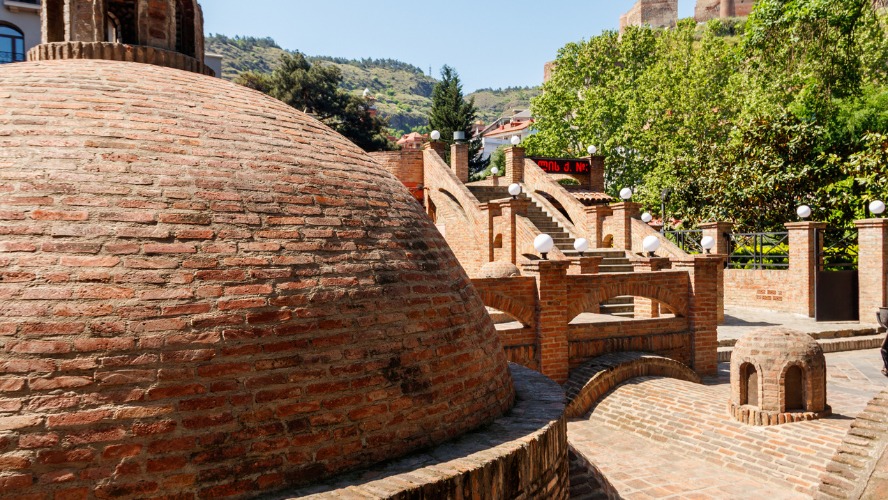
Another of the city’s most iconic leisure spots is the Abanotubani district, home to the historic sulphur baths that gave rise to the city. Beneath their brick domes are steam rooms and pools of hot mineral water where, for centuries, merchants and travellers came to relax after long journeys through the Caucasus.
Areas such as Vera, Rustaveli and the Fabrika cultural complex are home to bars, terraces and cultural venues that are popular in the evening. The Fabrika cultural complex, a former Soviet industrial site, has been transformed into one of the city’s liveliest spots, with courtyards filled with murals, cafés and live music.
Rike park: modern gardens oppose Tbilisi’s old town
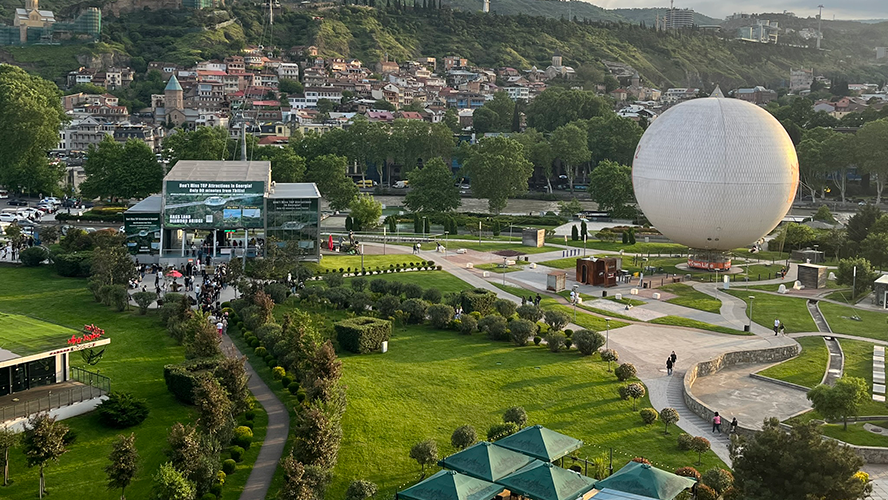
Rike park is situated on the left bank of the Kura river, directly opposite the old town. Opened in 2010 as part of an urban regeneration project, it is home to gardens, footpaths and areas where you can take a rest and has excellent views of the traditional houses and Narikala fortress on the hill.
The cable car that ascends to Narikala fortress departs from the park, offering one of the city’s most scenic journeys. The site is also home to the famous ‘Rike Tubes’, two large metal structures originally designed to house a concert hall and exhibition centre. Their futuristic silhouette has become one of the symbols of modern-day Tbilisi.