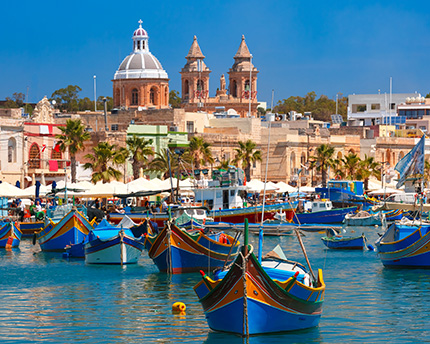










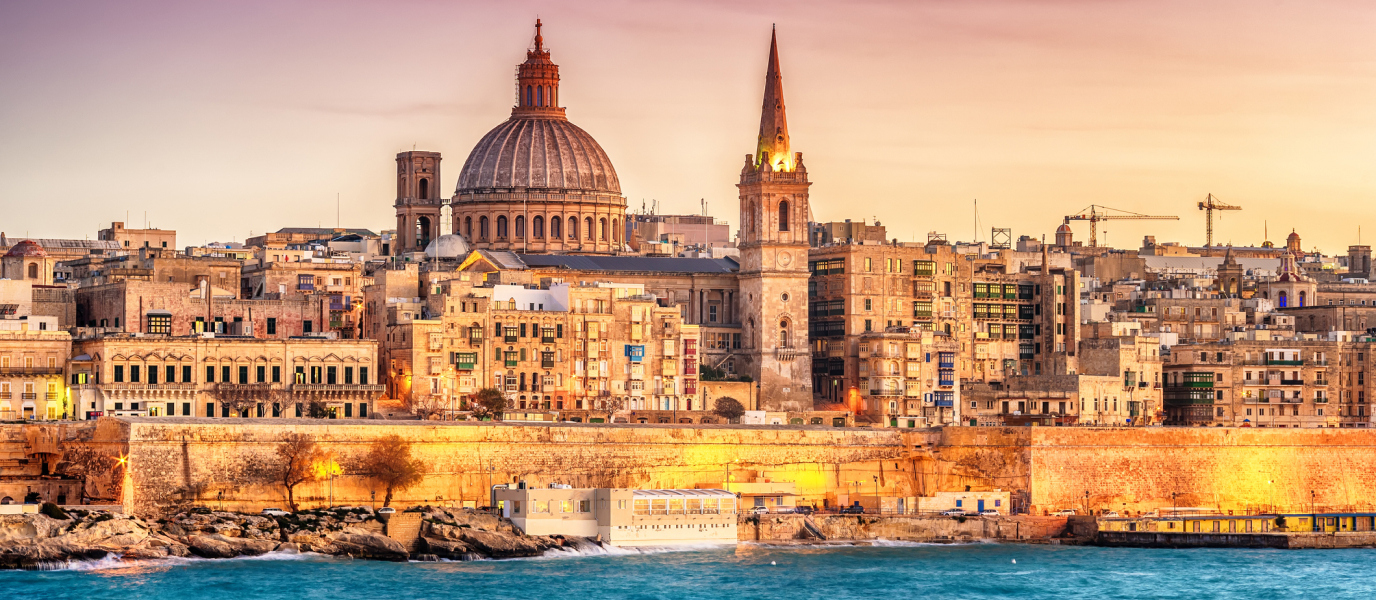
Malta’s capital is Valletta, a walled city with a long history and rich cultural heritage. The city was built by the Order of Saint John of Jerusalem and has managed to combine the traditions and monuments of the past with the avant-garde of the 21st century. Today it has about 8,000 inhabitants who enjoy a ‘city built by gentlemen for gentlemen’ and proudly preserves its large and beautiful Renaissance and Baroque buildings. There are also contemporary architectural projects such as Renzo Piano’s Opera House. In 1980, UNESCO declared Valletta a World Heritage Site.
The city is named after Jean Parisot de La Valette, who defended the island from an Ottoman invasion in 1565. Nevertheless, it was the Knights of Saint John who gave it the final name of ‘Most Humble City of Valletta’.
- Valletta’s history
- Things to see in Valletta
- Valletta’s most scenic streets
- Where to eat in Valletta
- Where to stay in Malta
Valletta’s history
The Sciberras peninsula where Valletta is located today was virtually uninhabited and unfortified at the time of the Great Siege of Malta in 1565. It was Grand Master Jean Parisot de La Valette of the Order of Saint John who decided to build a new city on what was then a prominent limestone rock. Valletta was arguably the first planned city in Europe, with a grid system and tall buildings to keep the sun off the streets. A large moat, some 18 metres high, was dug and huge walls were erected to prevent attacks by the Turks. All of this was done in just five years.
Things to see in Valletta
Valletta has many tourist attractions, some of which are must-sees. This is the case of Fort Saint Elmo, Casa Rocca Piccola, Saint John’s Co-Cathedral, the Auberge de Castille, the National Museum of Archaeology, the Upper Barrakka Gardens, the Lascaris War Rooms, the Manoel Theatre and the Grandmaster’s Palace.
Fort Saint Elmo
Fort Saint Elmo, dedicated to the patron saint of sailors, was built in just four months in 1552 to defend the ports along the Sciberras peninsula and it withstood the attacks of the Turkish army in 1565 very well. Today it houses the National War Museum. You can also visit the parade ground and the chapel, dating from 1559.
Casa Rocca Piccola
This is a 16th century palace-museum that shows what daily life was like for the Maltese nobility at the time. There you will see original furniture, silver objects, paintings and other works of art, laid out in 50 rooms that preserve the period’s decoration: winter dining room, summer dining room, green room, Chinese room, library, church, gardens, etc.
Saint John’s Co-Cathedral and museum
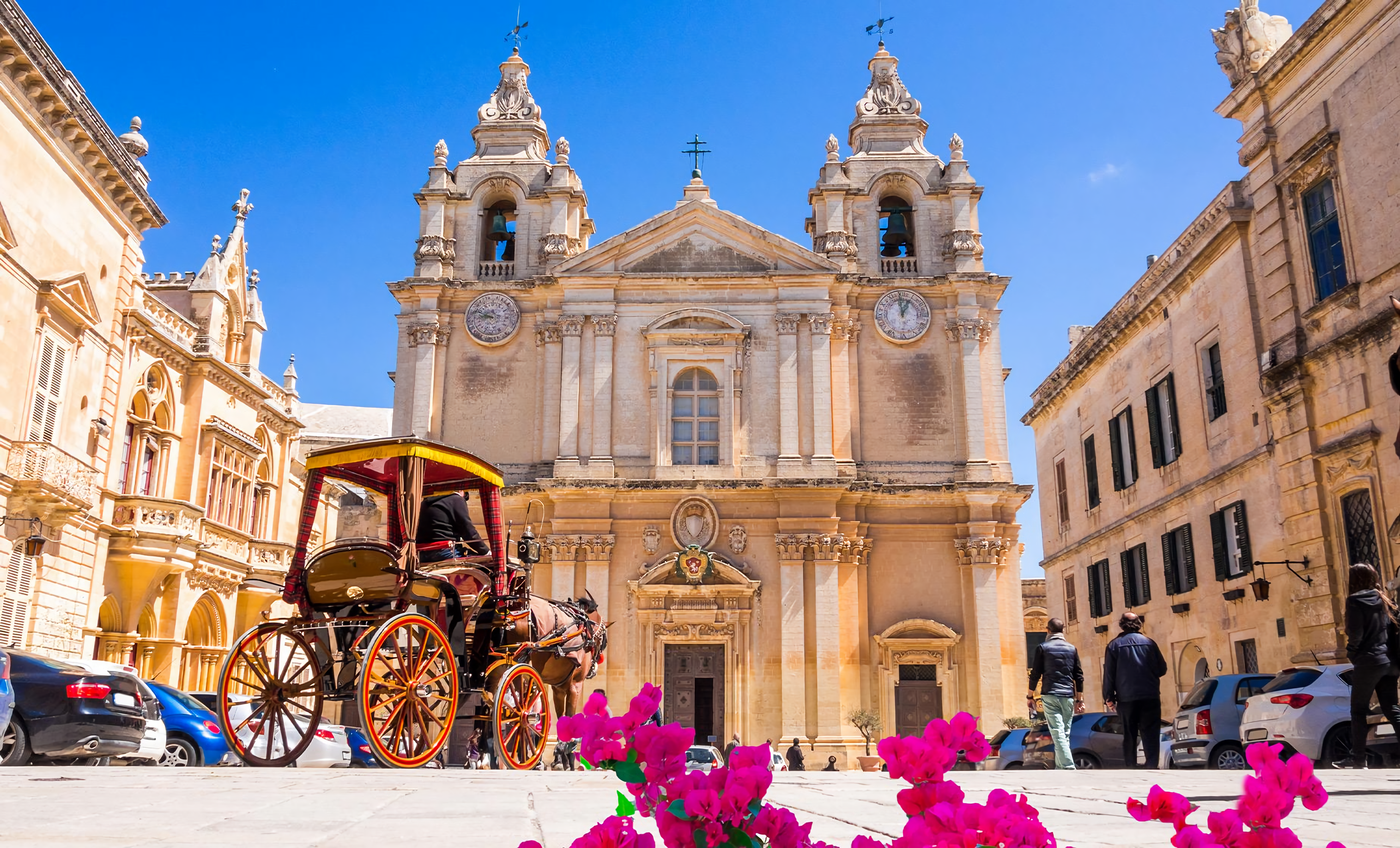
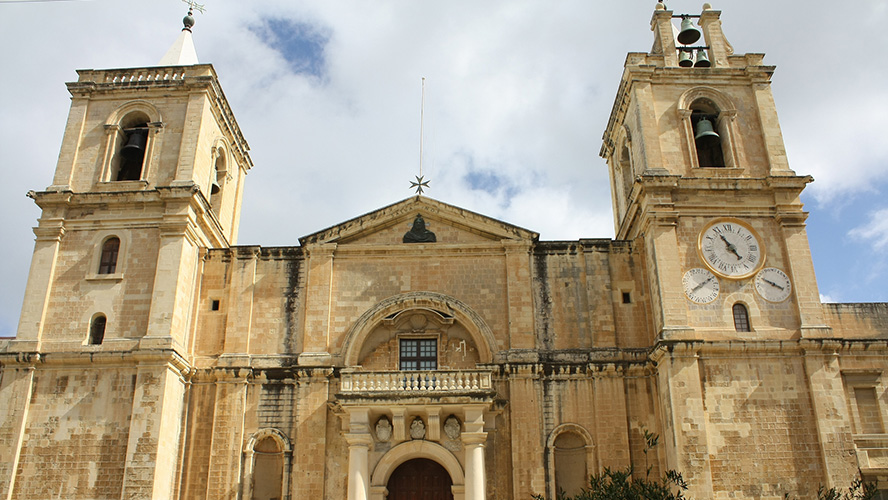
This temple, the largest in Malta, was built between 1573 and 1578 to replace Saint Lawrence church in Vittoriosa, which had been the place of worship for the Crusader Knights. Its simple façade contrasts with the Baroque and gilded decoration of its interior. There you will find the famous painting that Caravaggio dedicated to Saint John the Baptist. The adjoining oratory also houses two other paintings by Caravaggio. The cathedral museum contains 16th century illustrated choir books, a collection of 17th century Flemish tapestries and an exhibition on Caravaggio’s life and work.
Auberge de Castille
Built in 1573 to house the Knights of the Order of Saint John, this monument now houses the Office of the Prime Minister of Malta. It is located at the highest point of Valletta, on Castille Place, and was rebuilt in the Spanish Baroque style between 1741 and 1744.
National Museum of Archaeology
Located in the Auberge de Provence, the museum has a large collection of prehistoric tools, Phoenician amulets and an amazing model of one of the Ta’ Hagrat temples. Its star pieces are the Sleeping Lady and the Venus of Malta, both of which are more than 5,000 years old.
Upper Barrakka Gardens
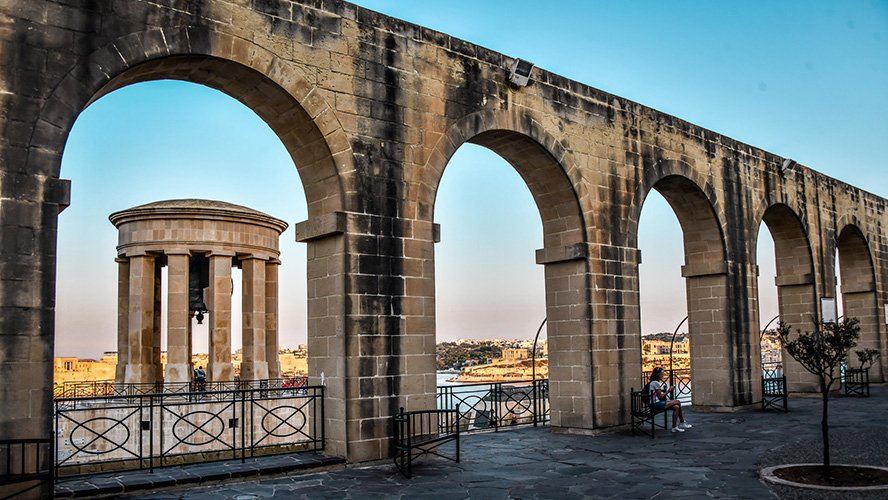
These gardens were designed in the 16th century to provide rest and relaxation to the knights of the neighbouring Auberge d’Italie. There are colonnades, and the balcony has one of the best panoramic views of Valletta.
Lascaris War Rooms
The Lascaris War Rooms are a network of underground tunnels that were used during World War II as the headquarters of the British secret command in Malta. They are accessed from the Upper Barrakka Gardens.
Manoel Theatre
Built in 1731, it is Malta’s national theatre and one of the oldest in Europe. Its highlight is the magnificent Baroque auditorium which is decorated with gilded motifs and has a gigantic chandelier.
Grandmaster’s Palace
Former residence of the Grand Masters of the Order of Saint John, this 16th century palace was the seat of the Maltese Parliament until 2015 and is still the official residence of the President of Malta. Its old stables house the Armoury, which has a collection of more than 5,000 suits of armour from the 16th to the 18th centuries. The palace opens its main rooms to the public, such as the Council Chamber, decorated with 17th century Gobelin tapestries; the Supreme Council Hall; the Minstrels’ Gallery; the Pages’ Room; and the Ambassadors’ Room, also known as the Red State Room, where the Grand Master received important visitors.
Valletta’s most scenic streets
Valletta’s grid system is quite convenient for visitors since the city is nestled between Marsamxett Harbour and the Grand Harbour. The main roads in Valletta are Republic Street, Old Theatre Street, Archbishop Street and Merchant Street.
Republic Street
Approximately 1 kilometre long, this pedestrian street runs longitudinally through Valletta and is home to the city’s main legislative, judicial and shopping areas. The street starts at the City Gate and runs to the granaries at Fort Saint Elmo. It is lined by Freedom Square, the Maltese Parliament, Palazzo Ferreria, the Royal Opera House, the Archaeological Museum and Saint John’s Square.
Old Theatre Street
Old Theatre Street is named after Malta’s National Theatre, the third oldest functioning in Europe. Inaugurated in 1732, the theatre was commissioned by Grand Master António Manoel de Vilhena, who funded its construction.
Archbishop Stree
This is another main thoroughfare in Valletta. It is located in the heart of the city and within walking distance of all the tourist attractions of this beautiful Maltese peninsula. One of its main ‘neighbours’ is the Grandmaster’s Palace.
Merchant Street
Parallel to Republic Street, this is one of the most beautiful streets in Valletta. Lined with shops and restaurants, it also has major palaces and churches.
Where to eat in Valletta
Valletta’s gastronomy is heavily influenced by Italian cuisine. In fact, one of the most famous dishes is the pastizzi, i.e. savoury pastries filled with cheese or peas, which can be found everywhere in Malta. Some of the best known restaurants in Valletta where you can sample typical Maltese cuisine, are Grain Street, Kaiseki, Fifty Nine Republic, Muza, Gracy’s Arts & Supper Club, Zizka Kitchen and Palazzo Preca.
Where to stay in Malta
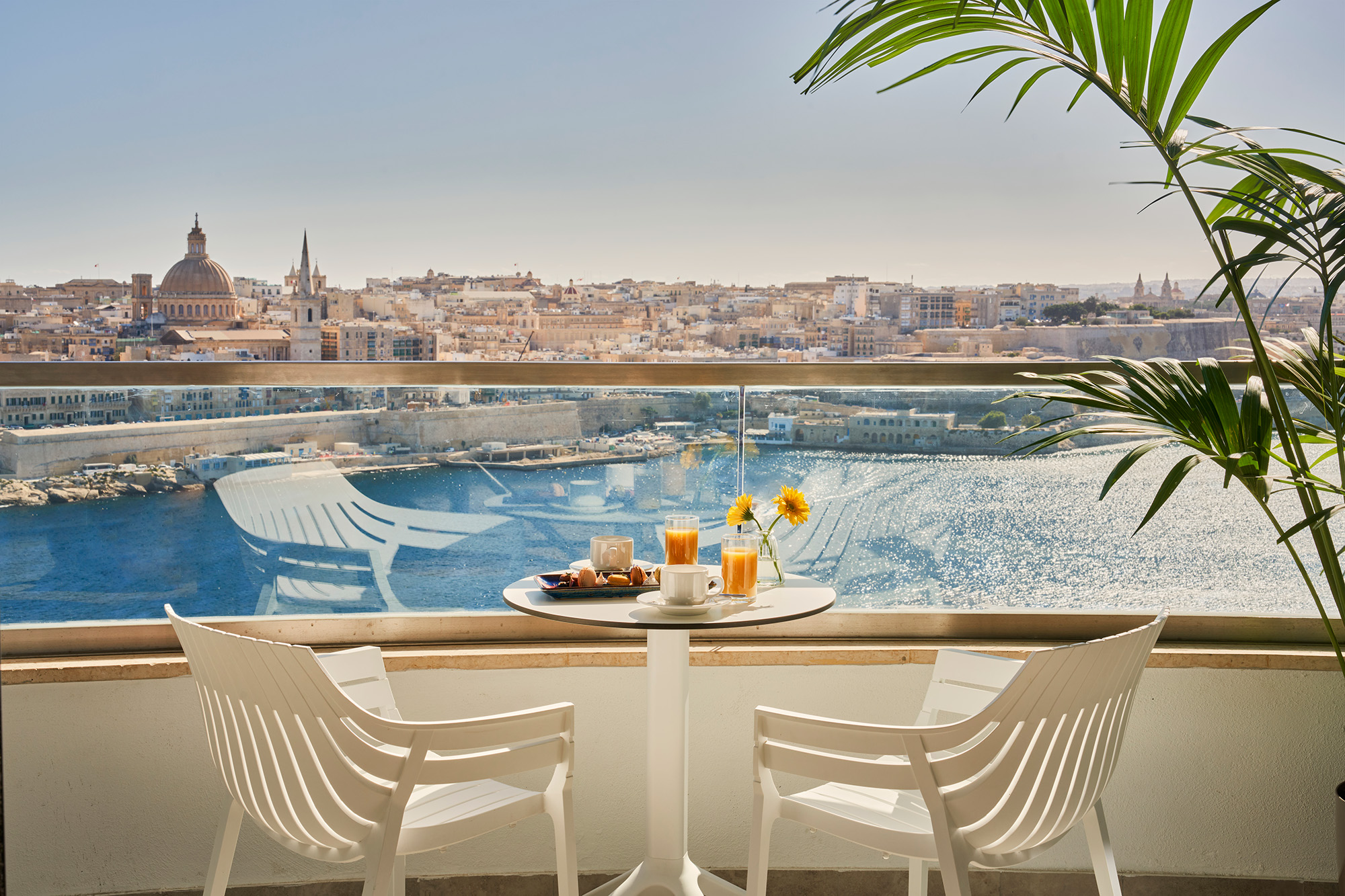
If you want to travel to Valletta on your trip to Malta and stay in a hotel where you are guaranteed rest and comfort, we recommend the Barceló Fortina Malta hotel due to its excellent quality-price ratio. It is a very cosy five-star establishment located on Sliema’s seafront, with fantastic views of the Mediterranean and Valletta. It has 183 very comfortable, modern and equipped rooms with a terrace. It has an international restaurant where you can also enjoy typical Maltese cuisine and a well-equipped spa where guests can relax with a treatment, sauna or hammam. In short, it is a true oasis so that you can feel at home.