















When talking about towns to visit near Chiclana, it is worth mentioning that the Cádiz coastline is full of places whose beauty and personality go beyond the obvious. Here, history is alive and tangible, with clear traces of all the civilizations and cultures that have passed through the area over millennia.
That is why it is well worth shaking off the laziness that staying in the attractive and pleasant town of Chiclana might induce to explore the towns and village around it.
Here are some of the best known and most recommended, although it is just the tip of the iceberg. Each one of them is worth a day trip or even a future holiday in its own right.
- Cádiz: the oldest city in the West
- Vejer de la Frontera: the horizon’s watchman
- Conil: a picture-perfect white town
- Medina Sidonia: a comprehensive catalogue of art and history
- Tarifa: between two continents
- Nature in the surrounding area: the wonders of the sea
Cádiz: the oldest city in the West
It is worth mentioning that Cádiz is not a town but a city with more than 100,000 inhabitants. It is also the capital of the province and has a history dating back more than 3,000 years, which is why many consider it to be the oldest city in the West. This is attested to by the Phoenician remains found in the subsoil, which continue to reveal more and more surprises each time a few centimetres are excavated.
From what has been found so far, both the Gadir site (under the Teatro del Títere-La Tía Norica) and the remains of the Phoenician port found in the La Cueva del Pájaro Azul tablao are well worth a visit, in addition to the sarcophagi and many other archaeological treasures in the Museum of Cádiz and the visible part of the Roman Theatre.
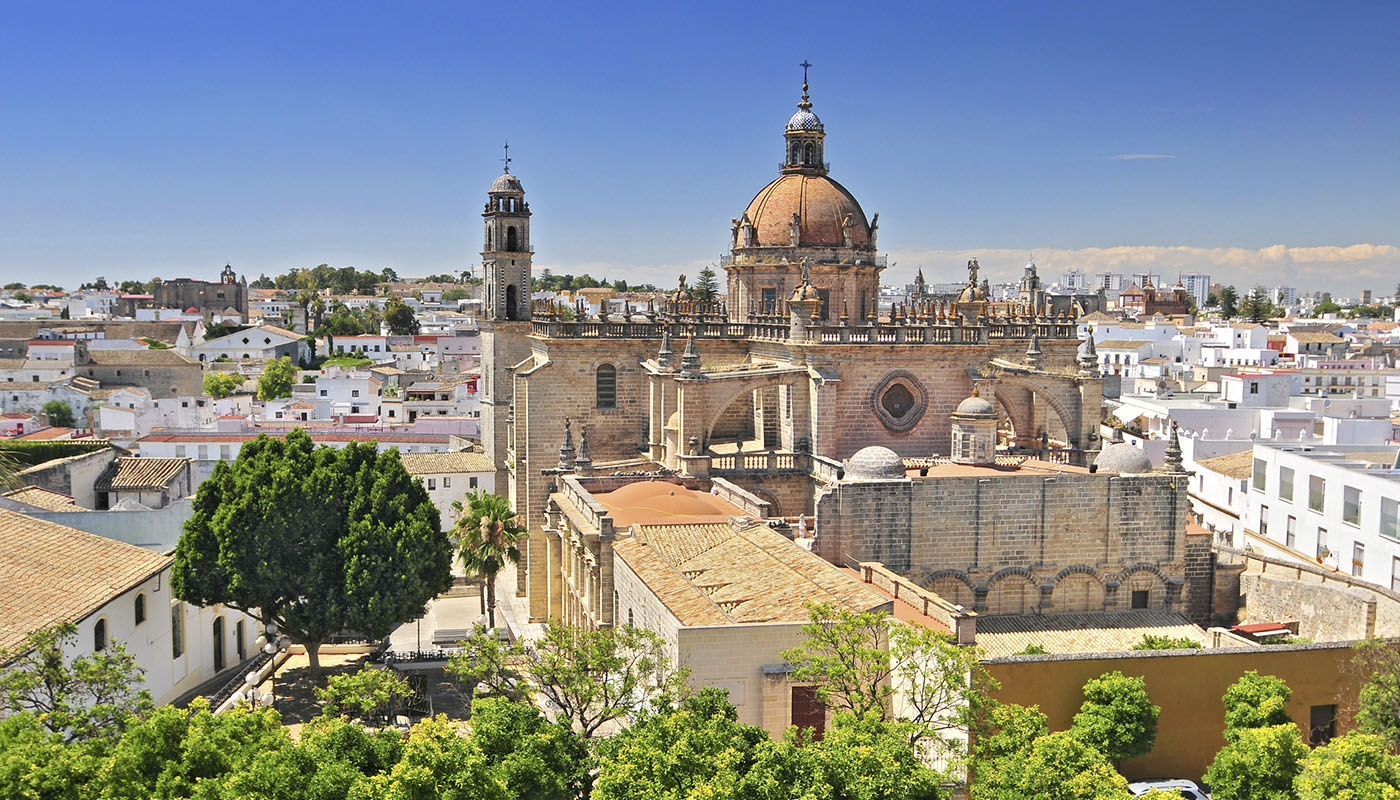
And, while we’re at it, a walk through the city centre, which is almost fully pedestrianised, is a true delight. From Las Puertas de Tierra and Plaza de San Juan de Dios, the Town Hall square, to the La Viña neighbourhood, you will be able to discover all of the city’s main monuments.
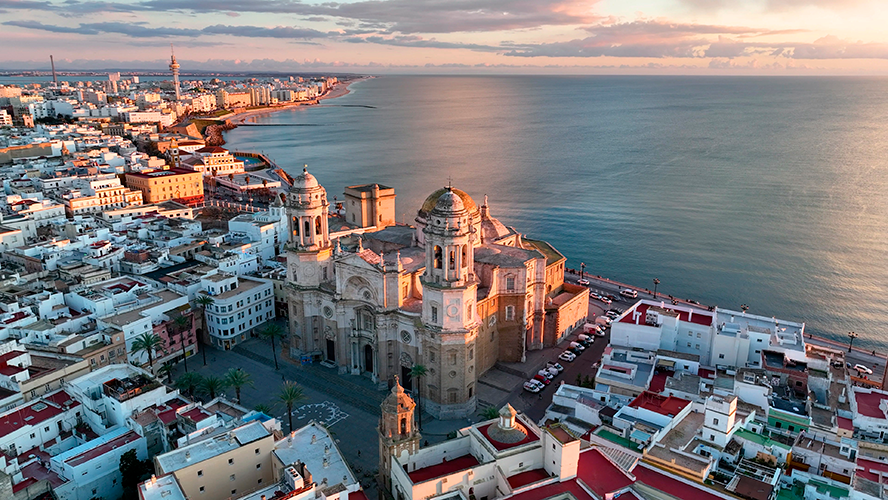
These include the Cathedral, the arches that were part of the old wall (such as the El Pópulo archway), the central market with its food court, Tavira Tower and its camera obscura, the Gran Teatro Falla theatre, the monument to the Constitution of Cádiz and the Oratory of San Felipe Neri, where the system of fundamental principles was enacted.
Needless to say, people also come to Cádiz to enjoy its beaches. Some are very long, such as La Victoria beach and its extension, Cortadura beach. Others have as much personality, flavour and scenery as La Caleta, which is overlooked by the old bath house and its two fortifications (San Sebastián and Santa Catalina), not to mention the pleasant and less crowded Santa María beach.
What’s more, you cannot leave Cádiz without sampling its magnificent cuisine in the form of tapas and more formal, sit-down meals. The sheer number of bars, terraces and restaurants in the city is truly endless.
Vejer de la Frontera: the horizon’s watchman
As you stroll along the many vantage points that make up the village of Vejer de la Frontera, it is easy to understand why the first Iberian settlers chose this location, long before the Carthaginians arrived here. Vejer sits on a promontory overlooking a wide plain and the Sierra de Grazalema mountains in the background on one side, and the Atlantic Ocean and the not-so-distant African continent on the other.
Roman, Muslim, and Christian civilisations all passed through the area at one point, shaping what is considered to be one of the most beautiful villages in Spain. Despite the steep slopes that dot the entire village, it is certainly the most well-kept and striking of the white villages of Cádiz.
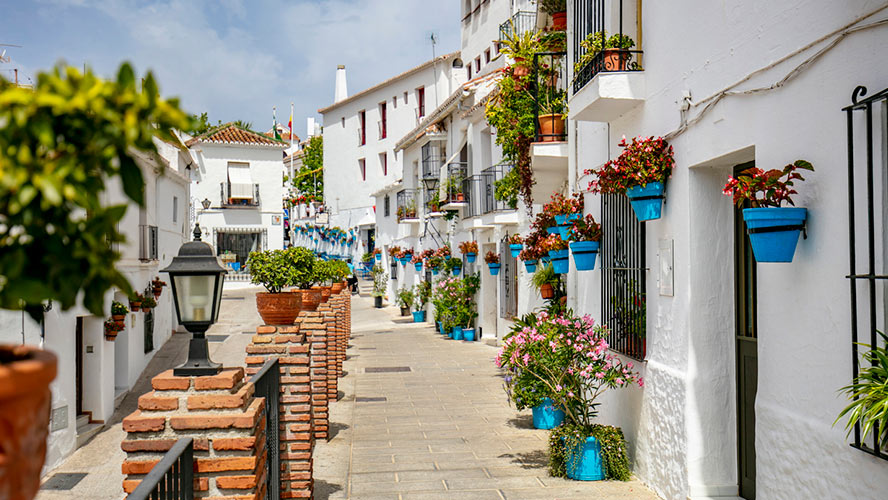
Highlights include the castle, the wall and its towers, built by the Duchy of Medina Sidonia in the fifteenth century; Divino Salvador church, which occupies part of the old mosque; the Convent of the Monjas Concepcionistas; the historical and ever-lively Plaza de España; and the Casa del Mayorazgo.
Finally, it is worth visiting the windmills. Apart from their heritage and ethnographic importance, from them you can enjoy magnificent panoramic views of the entire area.
Conil: a picture-perfect white town
Just over 20 kilometres from Chiclana, Conil is one of the most characteristic white towns in Cádiz province. Together with the neighbouring towns of Barbate and Zahara, the seafaring coastal town forms the triangle of almadraba tuna fishing villages. This traditional fishing technique gets the most out of the qualities of this magnificent fish.
The beauty of Conil de la Frontera, with its maze of streets and squares lined with whitewashed houses, does not disappoint. The Muslims settled here for many centuries, although it was founded by the Phoenicians almost two millennia earlier.
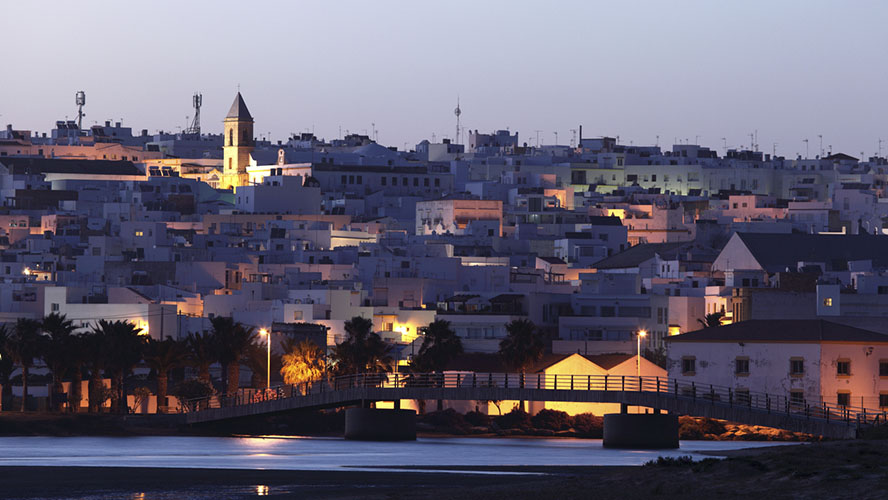
Here you can visit the remains of its defensive system, such as the bastion, Guzmán Tower, the Puerta de la Villa gate and the watchtowers scattered along the coastline. Stretching out along 14 kilometres, the coastline is home to attractive beaches such as Fuente del Gallo, Castilnovo, Fontanilla and Los Bateles. Not to mention El Palmar beach, one of the most impressive and beautiful beaches in Spain, although it belongs to the municipality of Vejer.
Medina Sidonia: a comprehensive catalogue of art and history
Those responsible for promoting tourism and heritage in Medina Sidonia always emphasise its three distinct periods—Roman, Muslim and Baroque—each with their own brilliant examples of heritage.
Needless to say, you should set aside a considerable amount of time to visit Medina Sidonia, which is located about 22 kilometres from Chiclana inland in the province of Cádiz, as it has many very important and beautiful attractions.
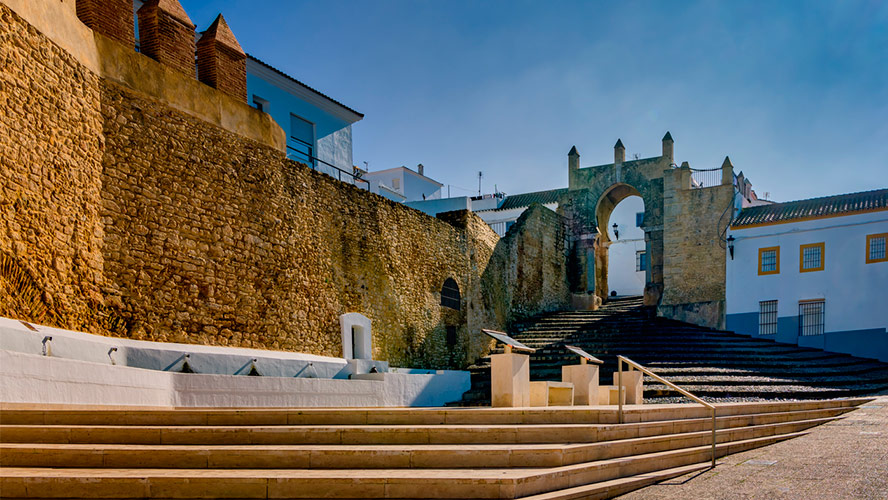
These include, among others, the remains of the Roman road that can be admired under one of the houses, the many collections housed in the Archaeological Museum and the mansions and palaces from the seventeenth and eighteenth centuries that line its most central streets. Also noteworthy are its castle dating from the fifteenth century in the highest part of the town, the remains and gates of the Muslim wall and the Baroque church of Santa María Coronada.
Medina Sidonia is also well known for its confectionery, which are the legacy of its convent tradition and Arabic pastries. They include alfajores, amarguillos, bizcotelas, almendrados, mantecados and roscos de vino, which are eaten beyond the Christmas season.
Tarifa: between two continents
One of Tarifa’s main attractions is that it is a town on the border between two continents, Africa and Europe, just 14 kilometres away from neighbouring Morocco. The distance is exactly the width of the Strait of Gibraltar level with Tarifa and the closest point between the two continents.
It was precisely on an islet off the coast of Tarifa where the troops of the Berber general Tariq ibn Ziyad landed in 711 to begin what would be the full conquest of the Iberian Peninsula and the founding of al-Andalus. Long before that, however, the Phoenicians and Romans had already passed through the region.
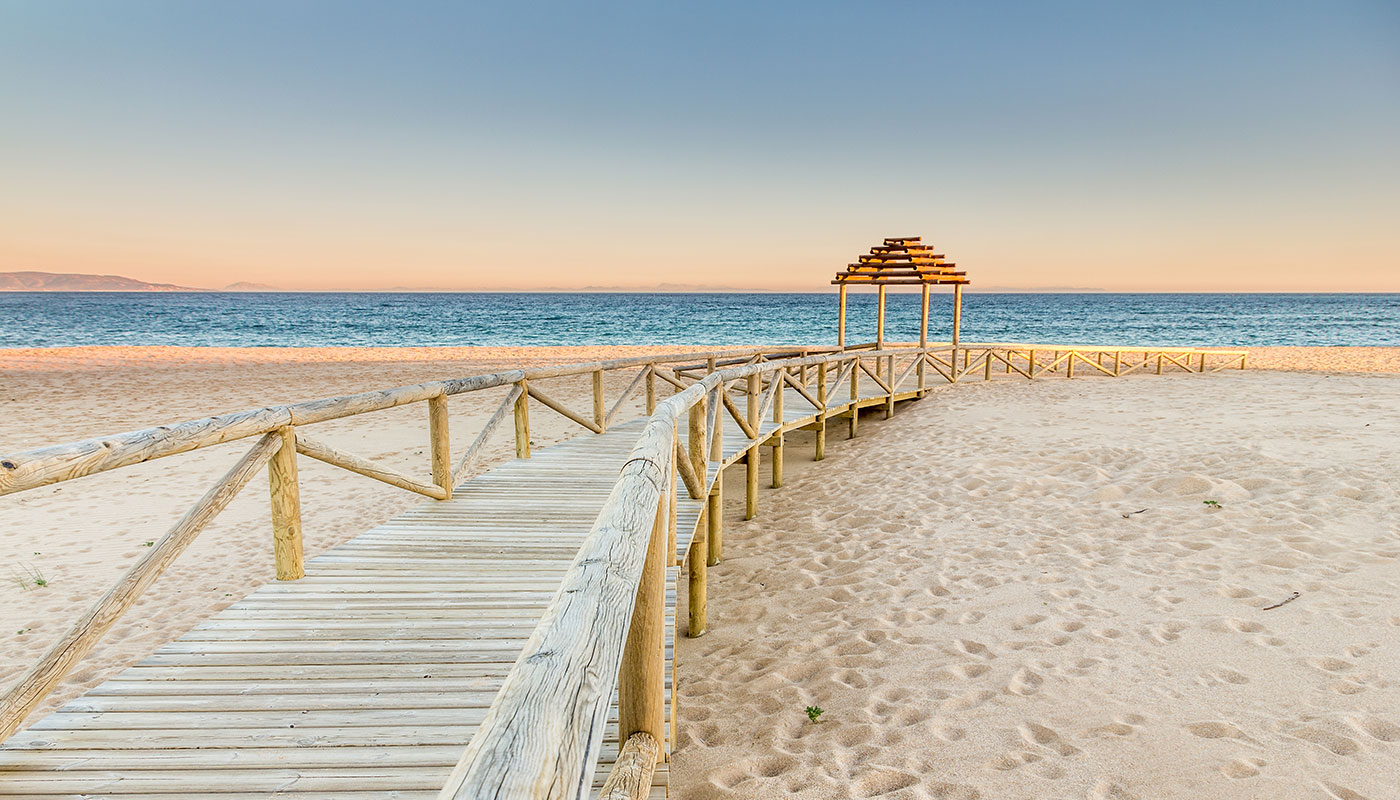
The latter left behind what is now one of the most complete and extensive archaeological sites in the country: the city of Baelo Claudia, on the spectacular, and unfortunately now overcrowded, Bolonia beach, located about 23 kilometres from the historical quarter of Tarifa.
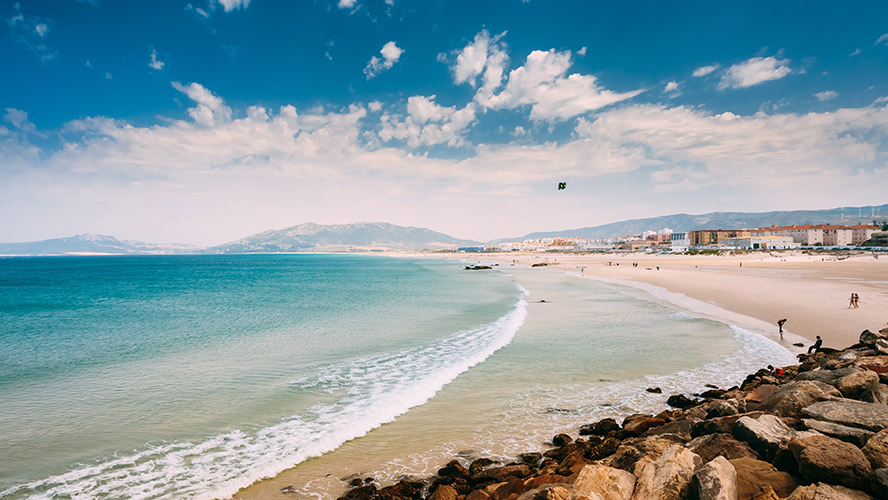
Notable monuments include the Puerta de Jerez gate, part of the old medieval wall, and the tenth-century Guzmán el Bueno castle. But what is most striking about Tarifa is the intricate layout of its streets and the white façades of its houses, which are decorated with brightly-coloured flower pots.
The wind, which has such a strong influence on life in this part of the country, is one of the town’s great attractions, making it a mecca for windsurfers and kitesurfers. You will find hundreds of them on beaches such as Valdevaqueros, Punta Paloma and Los Lances.
Nature in the surrounding area: the wonders of the sea
The main natural feature in the area surrounding Chiclana is undoubtedly the sea. The Atlantic Ocean, which washes against the shores in the town, is a great source of wealth and determines both the region’s climate and the terrain.
In this regard, El Estrecho Natural Park is particularly notable, with its protected area encompassing both land and water. The stretch of coastline, extending over more than 60 kilometres, is crisscrossed by numerous trails, where you can enjoy breath-taking views.
In terms of the part of the park submerged in the ocean, several companies organise excursions to see the many whales and dolphins that inhabit or pass through the channel between the Atlantic and the Mediterranean Sea.
Closer by, within the municipality of Chiclana itself, are the pine forests of Carboneros, Los Franceses, El Hierro and La Espartosa. These extensive parks are characterised by their stone pine forests, which are populated by large-fruited junipers, broom, mastic trees, and cork oaks.
Finally, a truly impressive place due to its biodiversity is the Marismas de Sancti Petri Natural Park and the point where it meets the area known as Punta del Boquerón, in the municipality of San Fernando. The area is particularly notable for its birdlife, both permanent and migratory, and the abundance of halophilic algae.