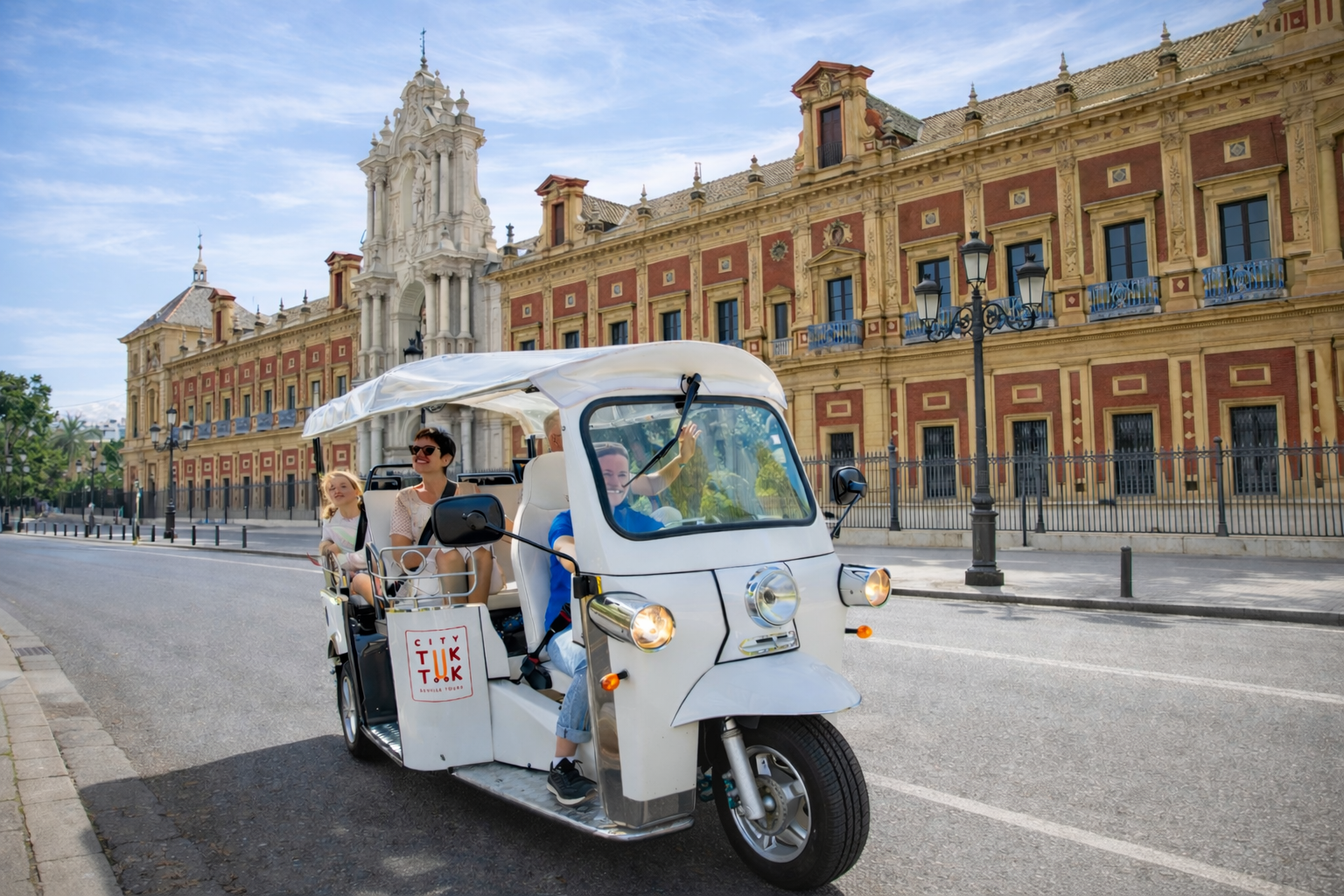



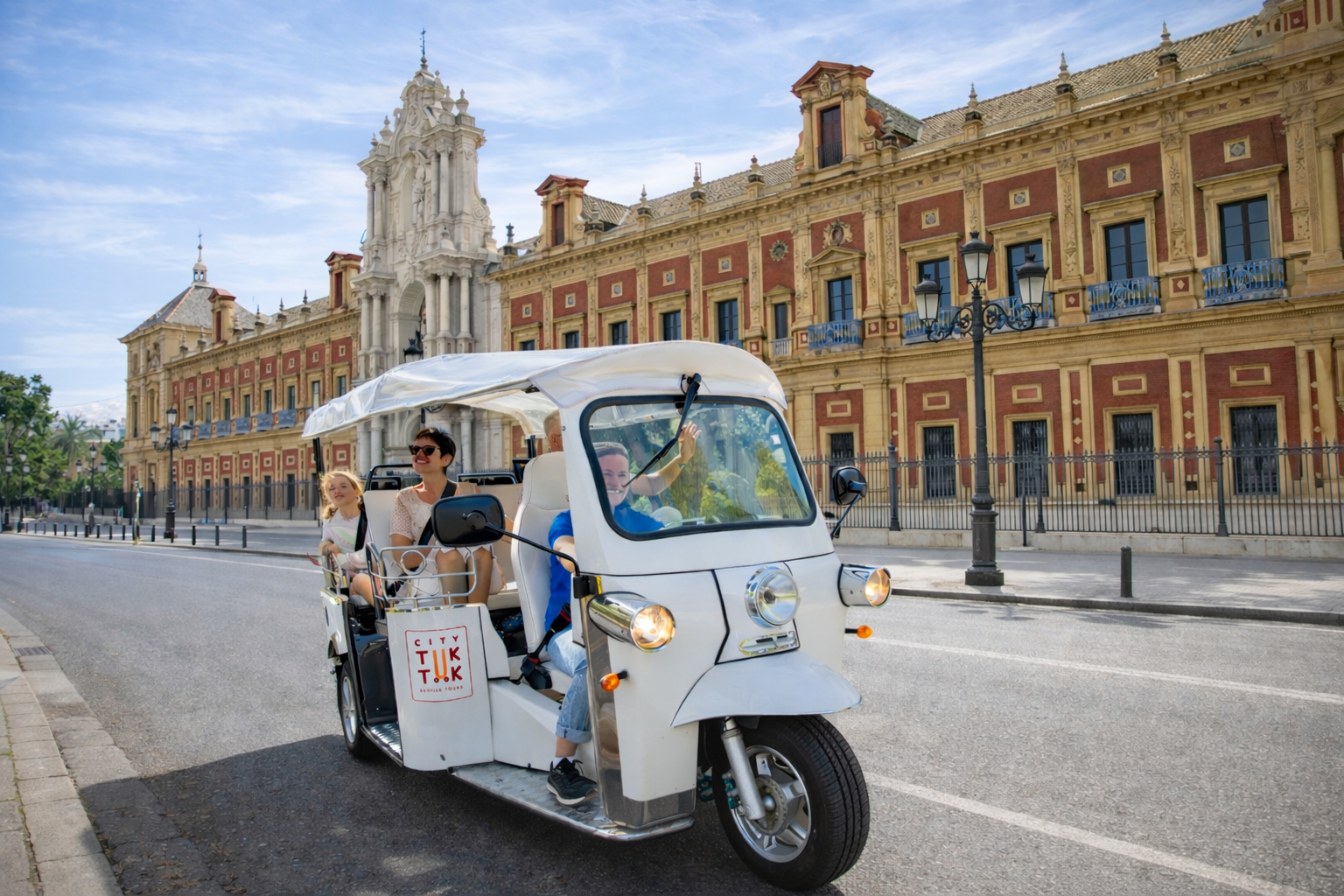
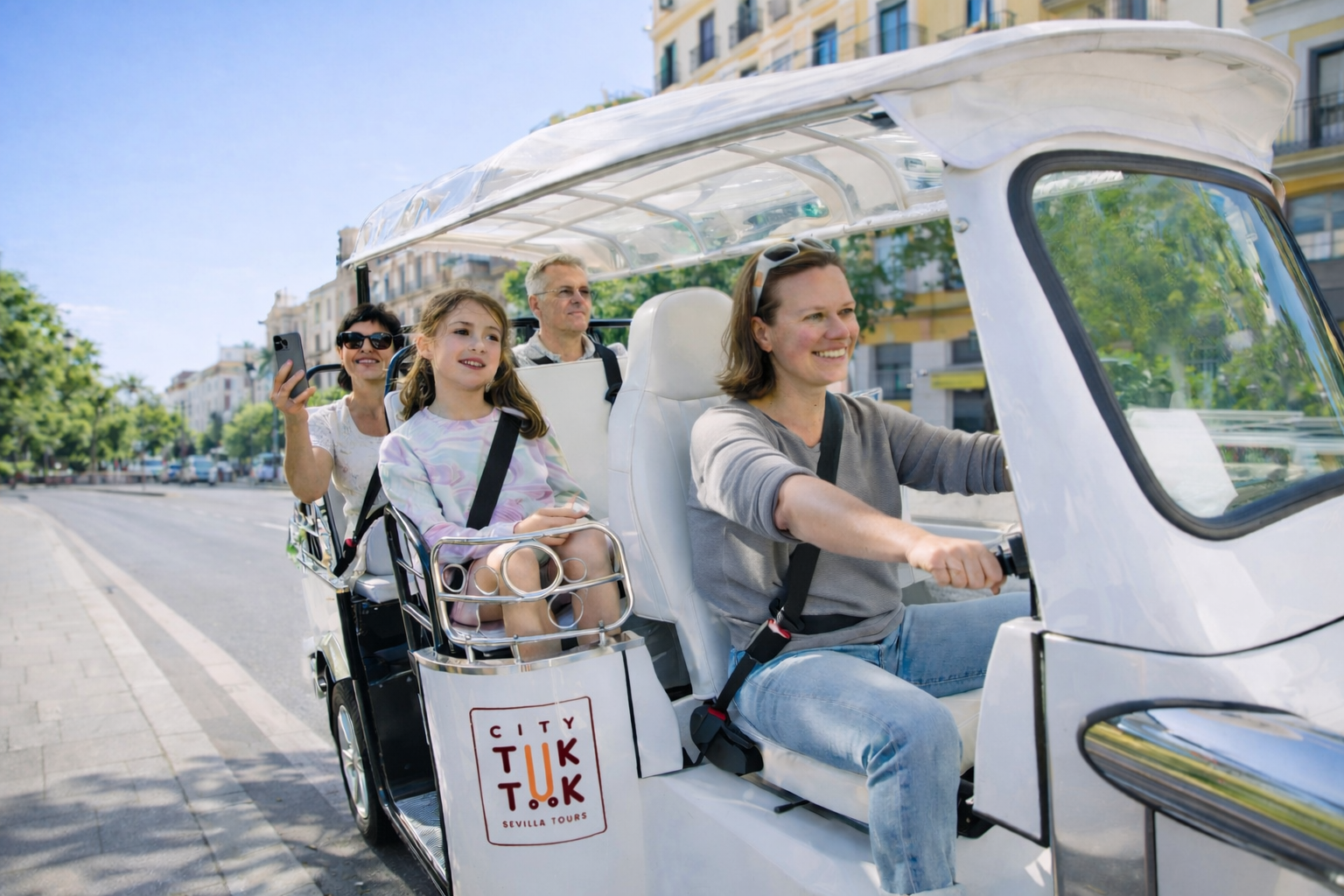
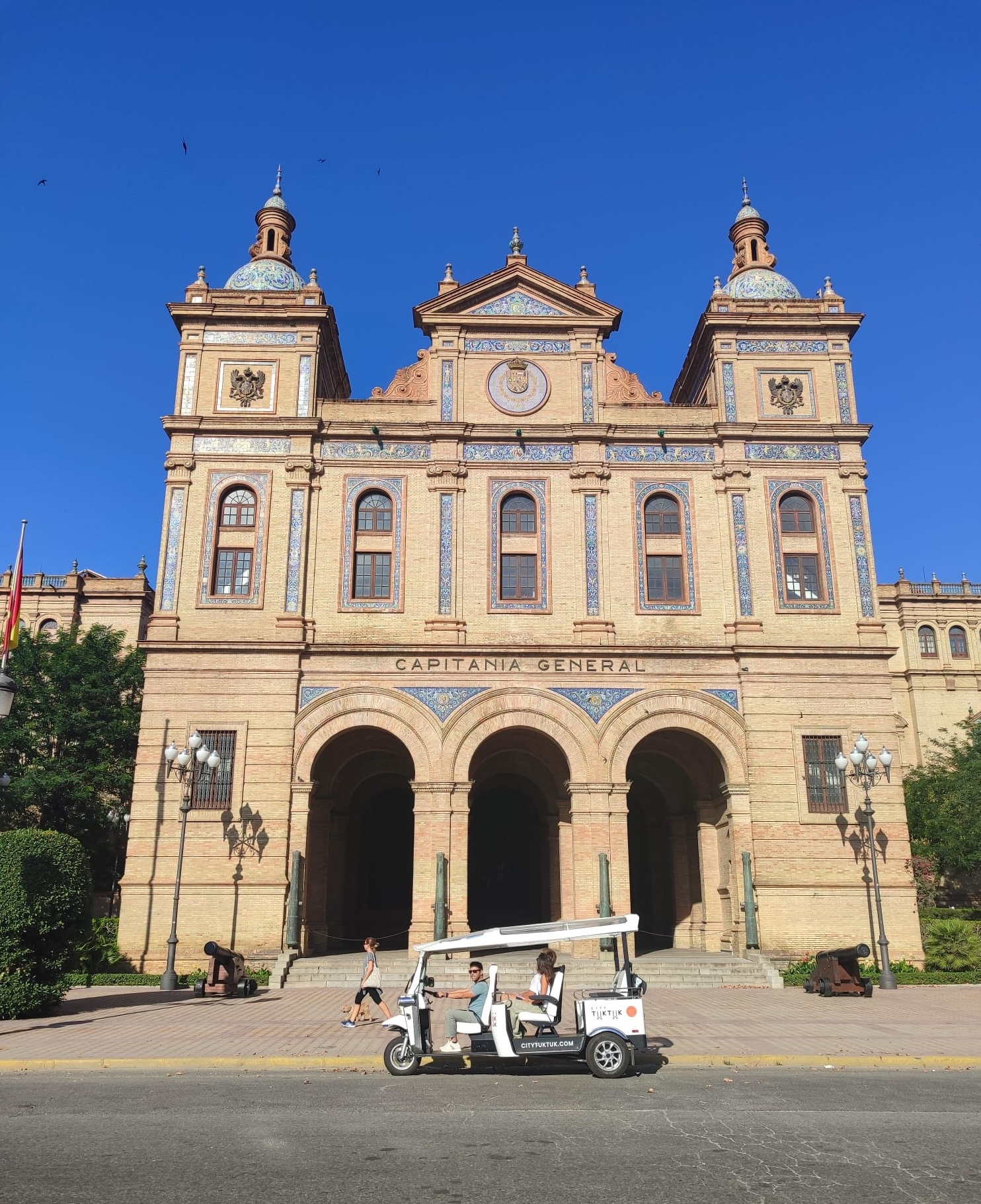

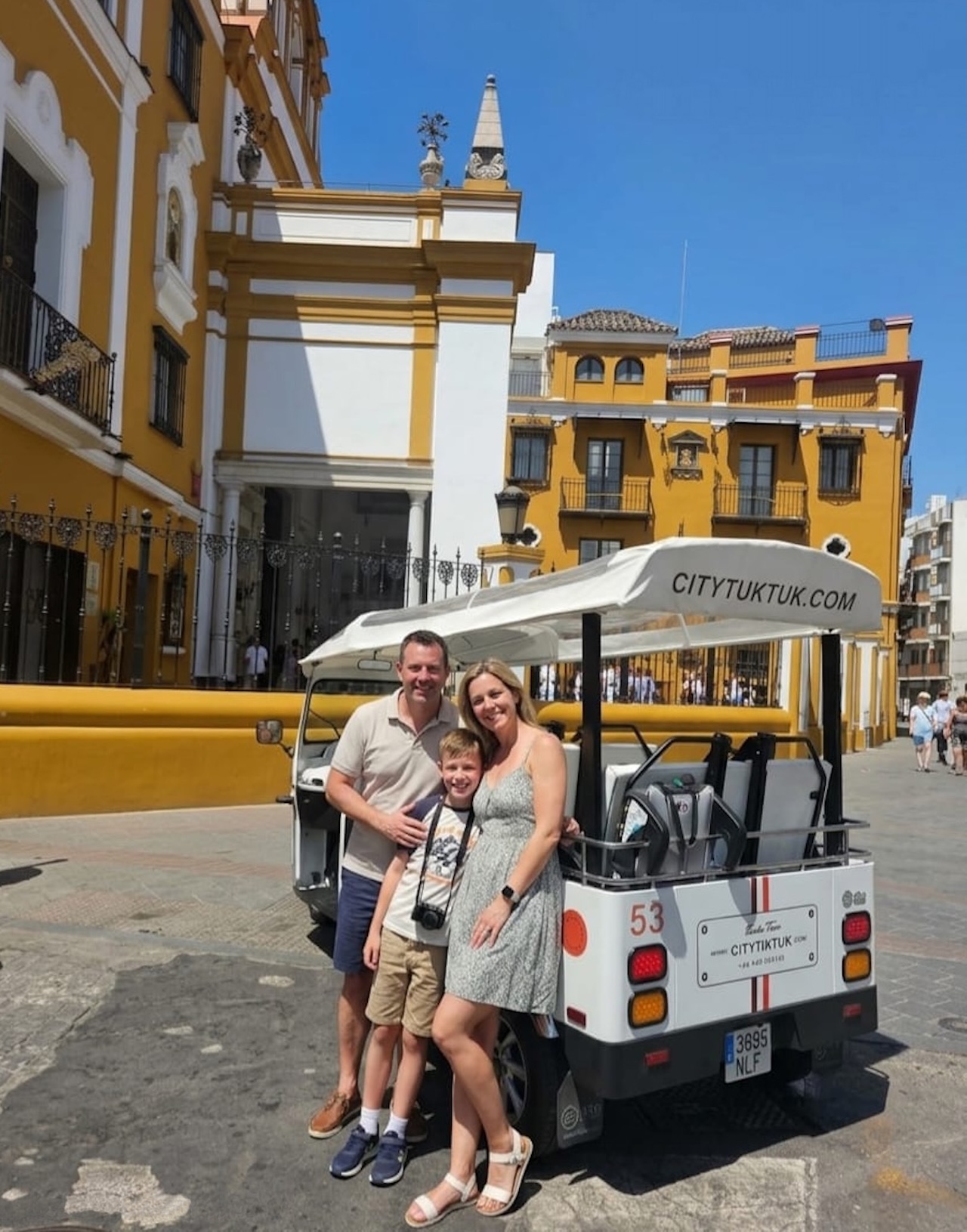
Exploring Seville by tuk tuk offers a comfortable way to see the city while discovering its main landmarks from a different perspective.
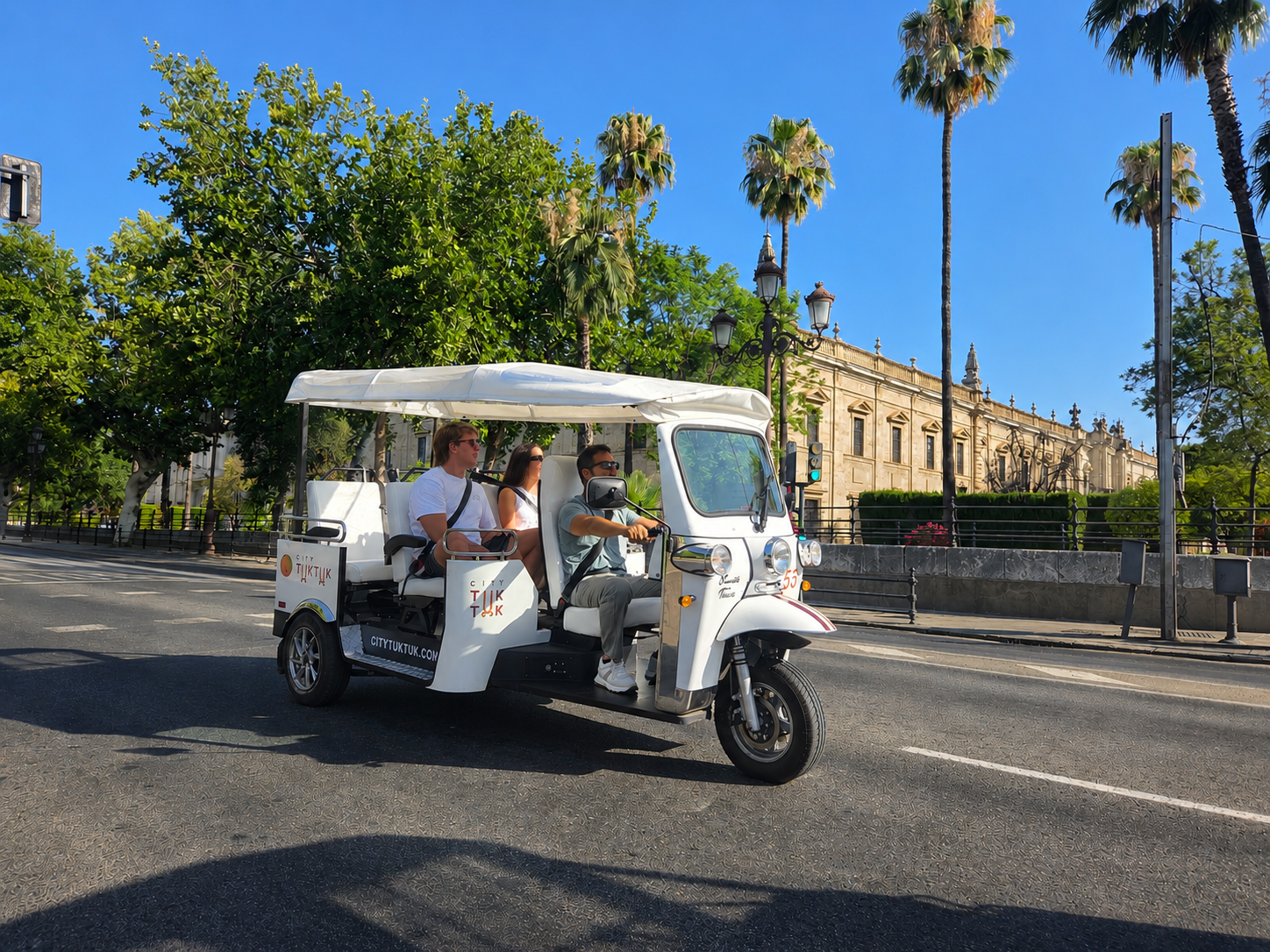
This private tour takes place in an electric tuk tuk, providing a more personalised experience as you move through the city accompanied by a local guide who shares insights along the way.
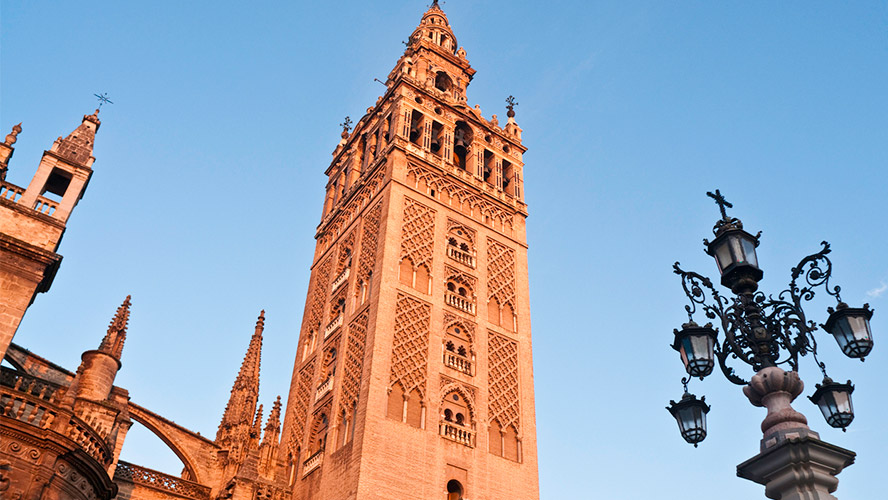
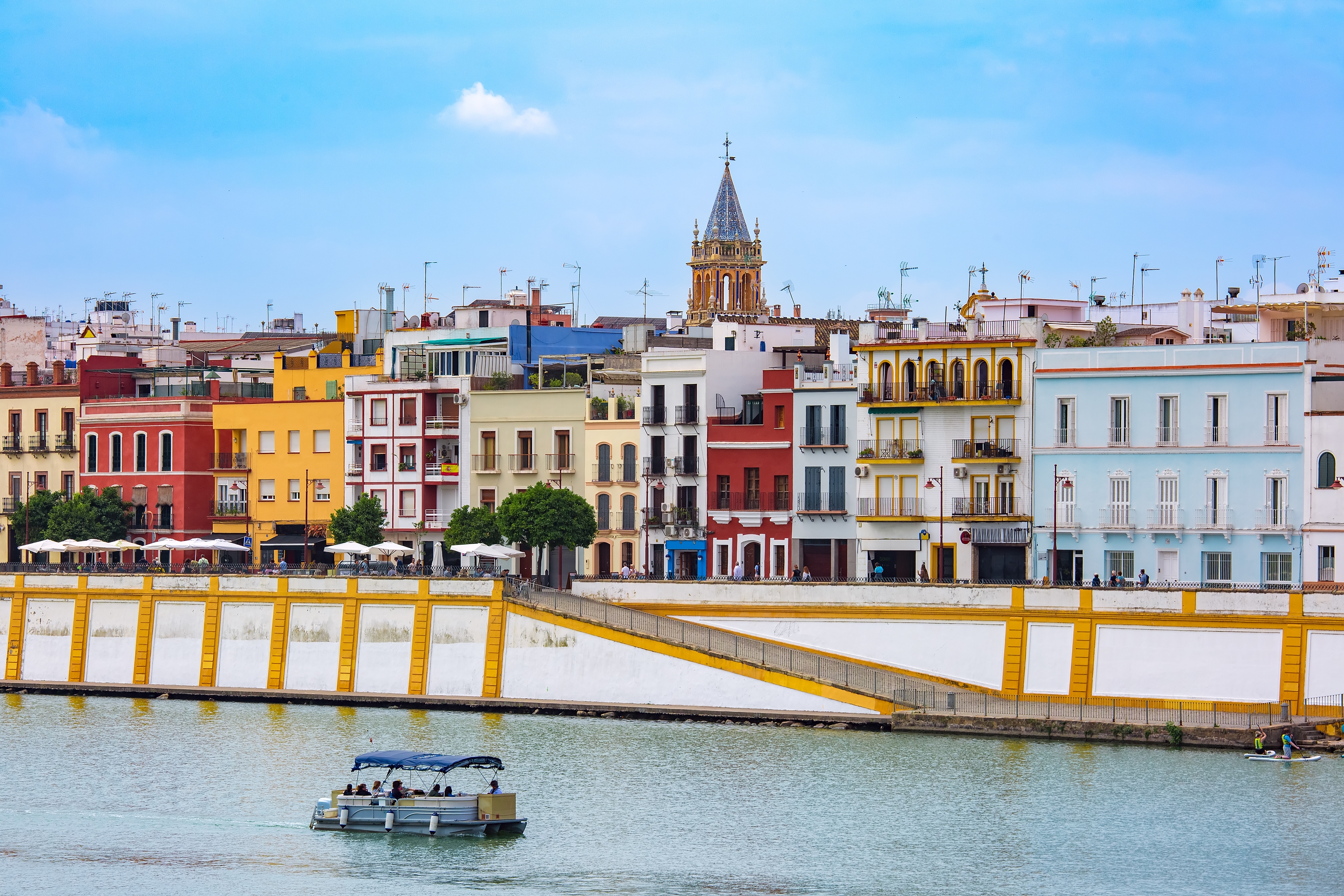
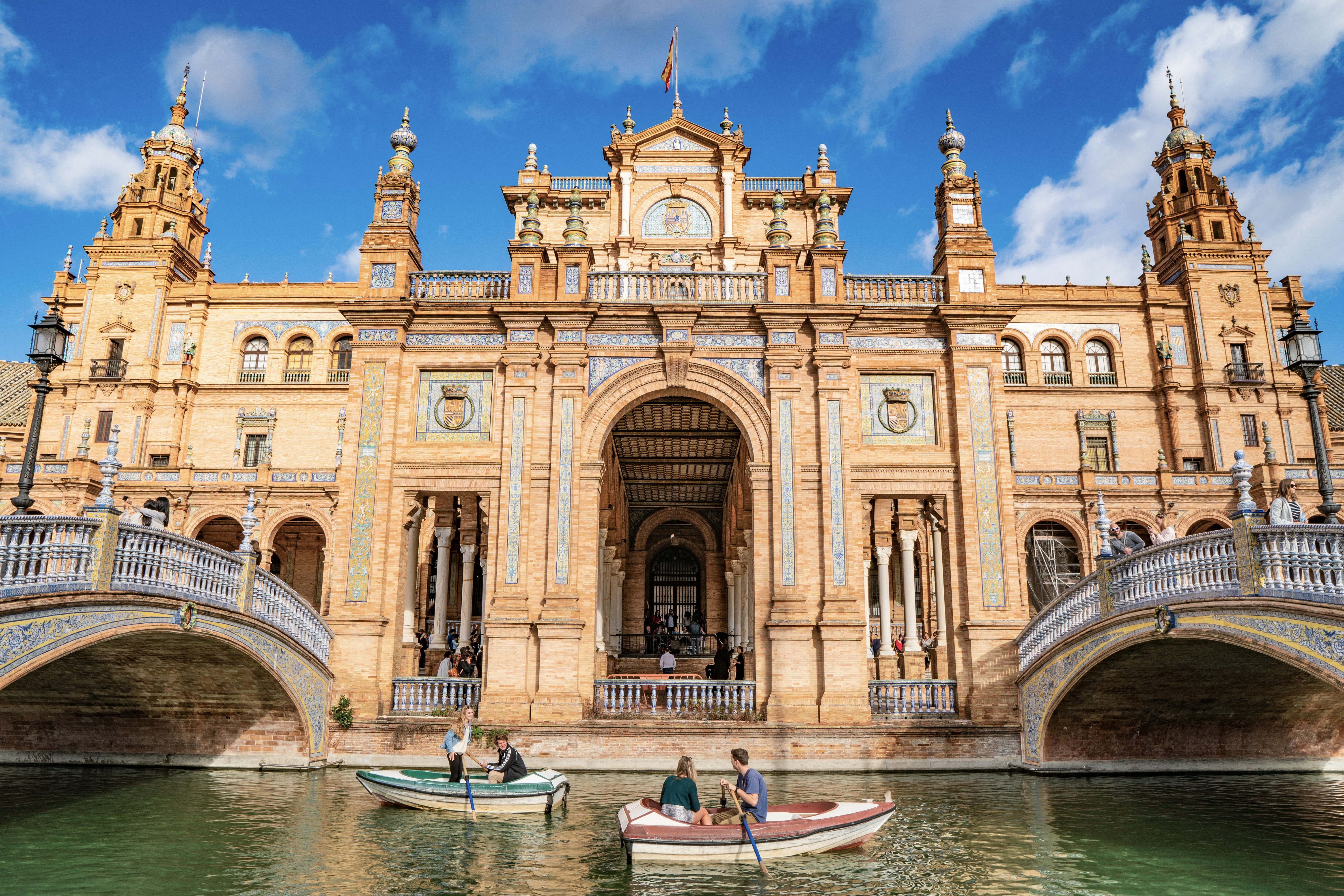
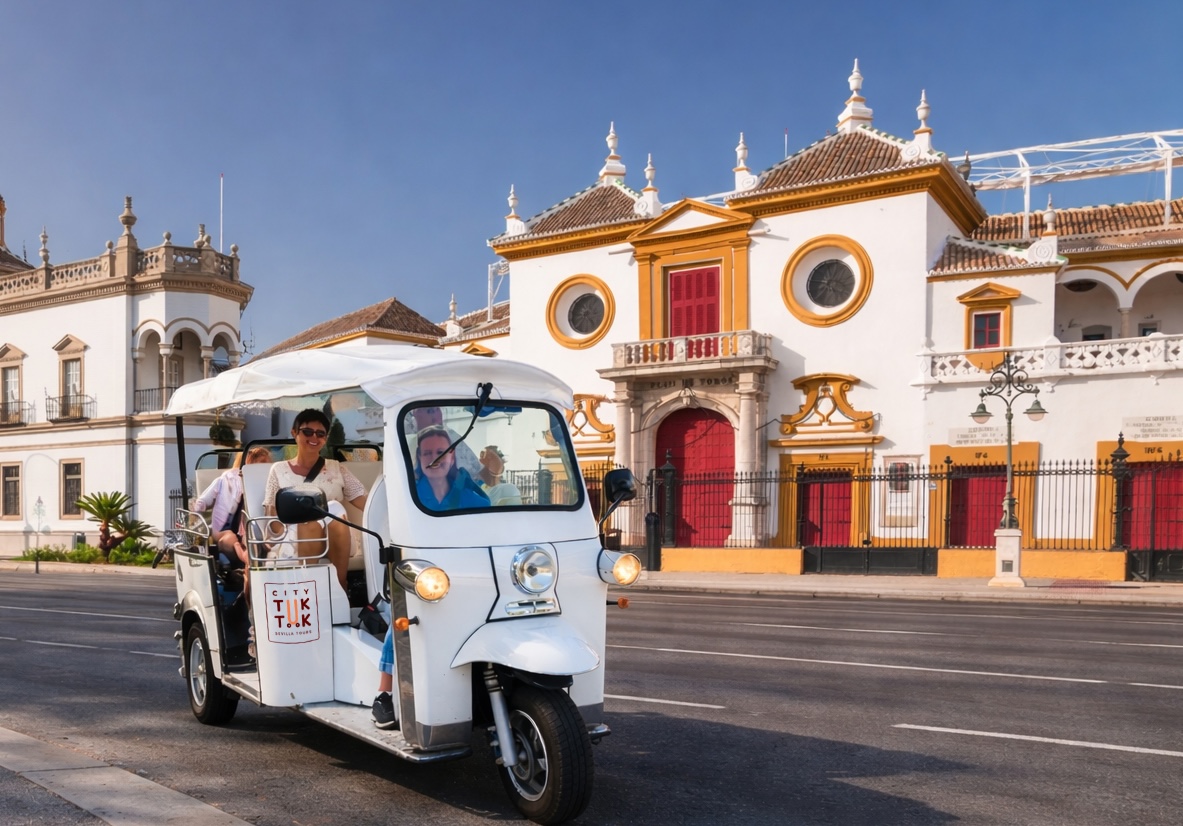
Over approximately two hours, the route covers emblematic areas such as Triana and its bridge, the Plaza de España, the María Luisa Park, the Torre del Oro and the Real Maestranza. The itinerary also includes both historic and contemporary areas that reflect the diversity of Seville.
Several stops are made throughout the tour, allowing time to take photos and observe each location more closely.
This experience is well suited for first-time visitors or for those looking for an efficient way to explore different parts of the city in a short time.
A visit with a steady ride and guided commentary that creates a dynamic and accessible way to discover Seville.

Minimum per booking: 1 person / Maximum per booking: 8 people
We begin our journey at a central, easy-to-find location to ensure a smooth start. From here, we’ll set off to explore Seville’s most iconic landmarks in comfort.
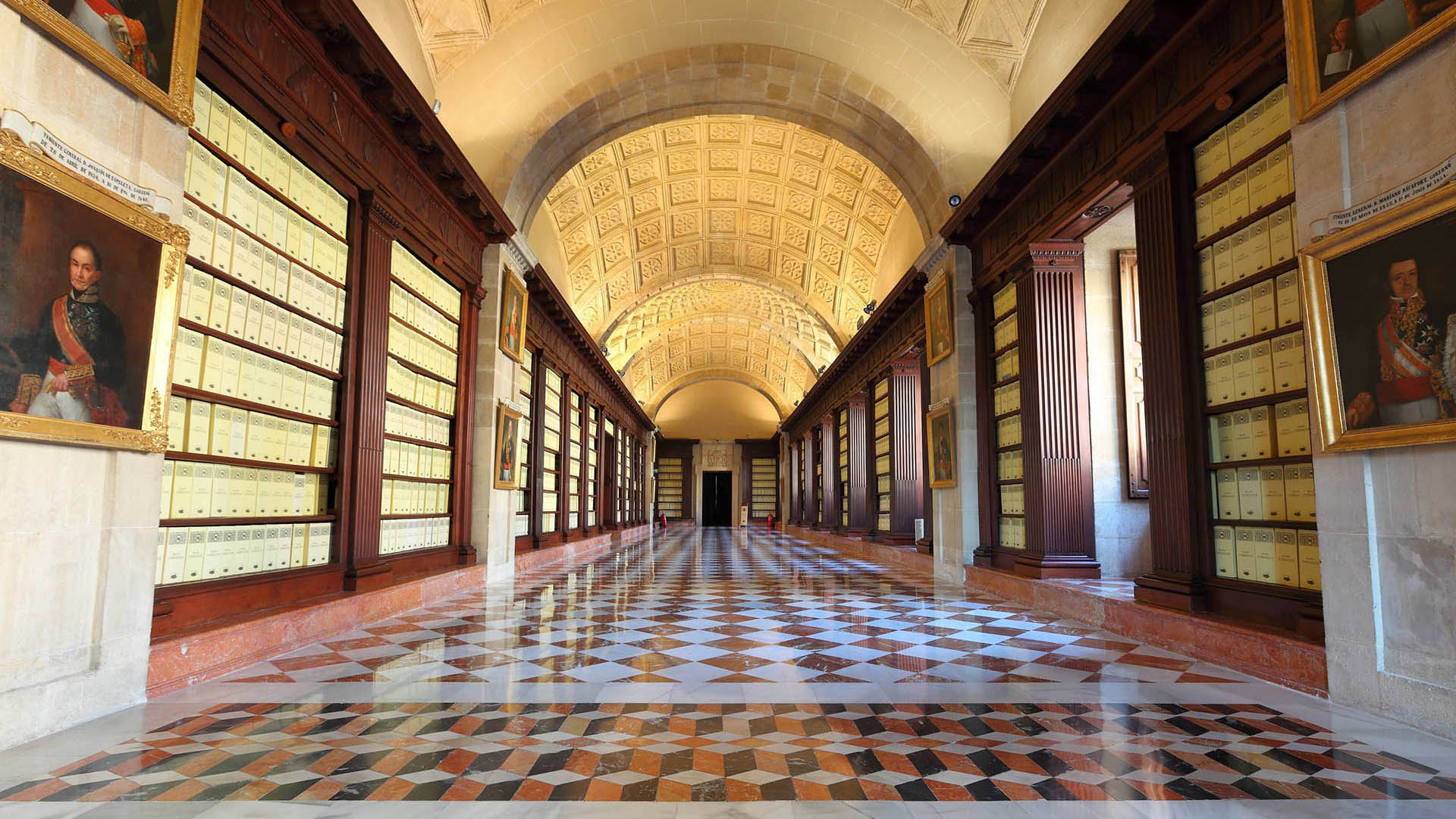
Christopher Columbus's son, Hernando, who built one of the world’s greatest private libraries in Seville.
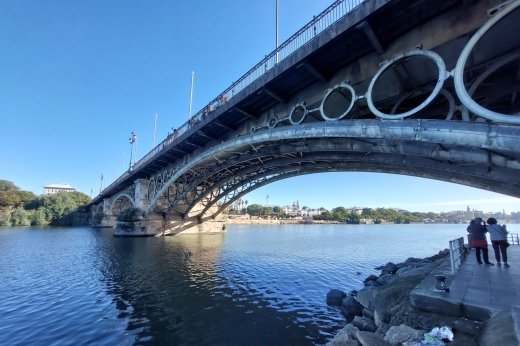
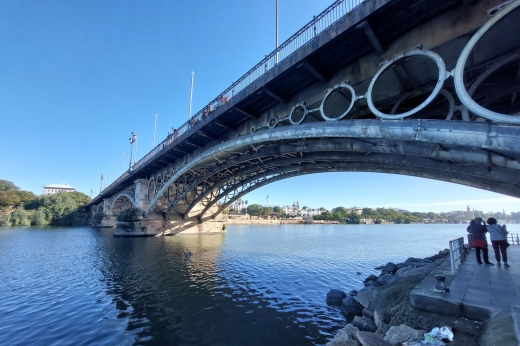
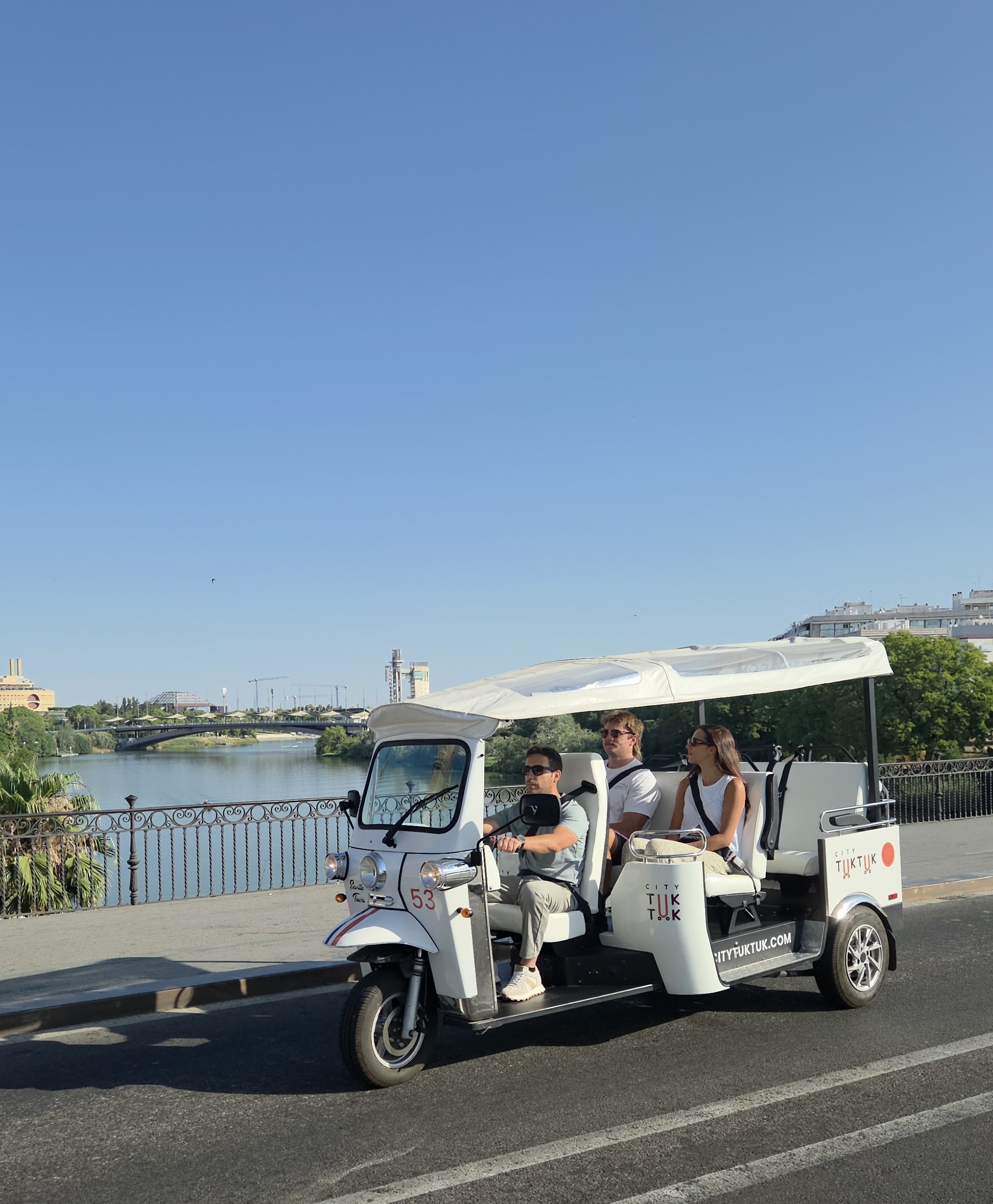
This historic iron bridge, also known as Puente de Isabel II, connects the city center with the vibrant Triana district. It offers one of the most famous panoramic views of the Guadalquivir river.
Located at the end of the Triana Bridge, this small, picturesque chapel is dedicated to the patron saint of sailors. Its unique Neo-Mudéjar architecture makes it a beloved local landmark.
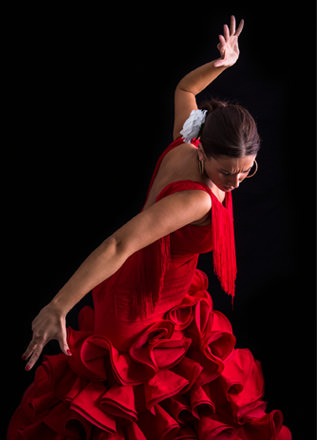
Known as the cradle of flamenco and traditional pottery, Triana has a soul unlike any other part of Seville.
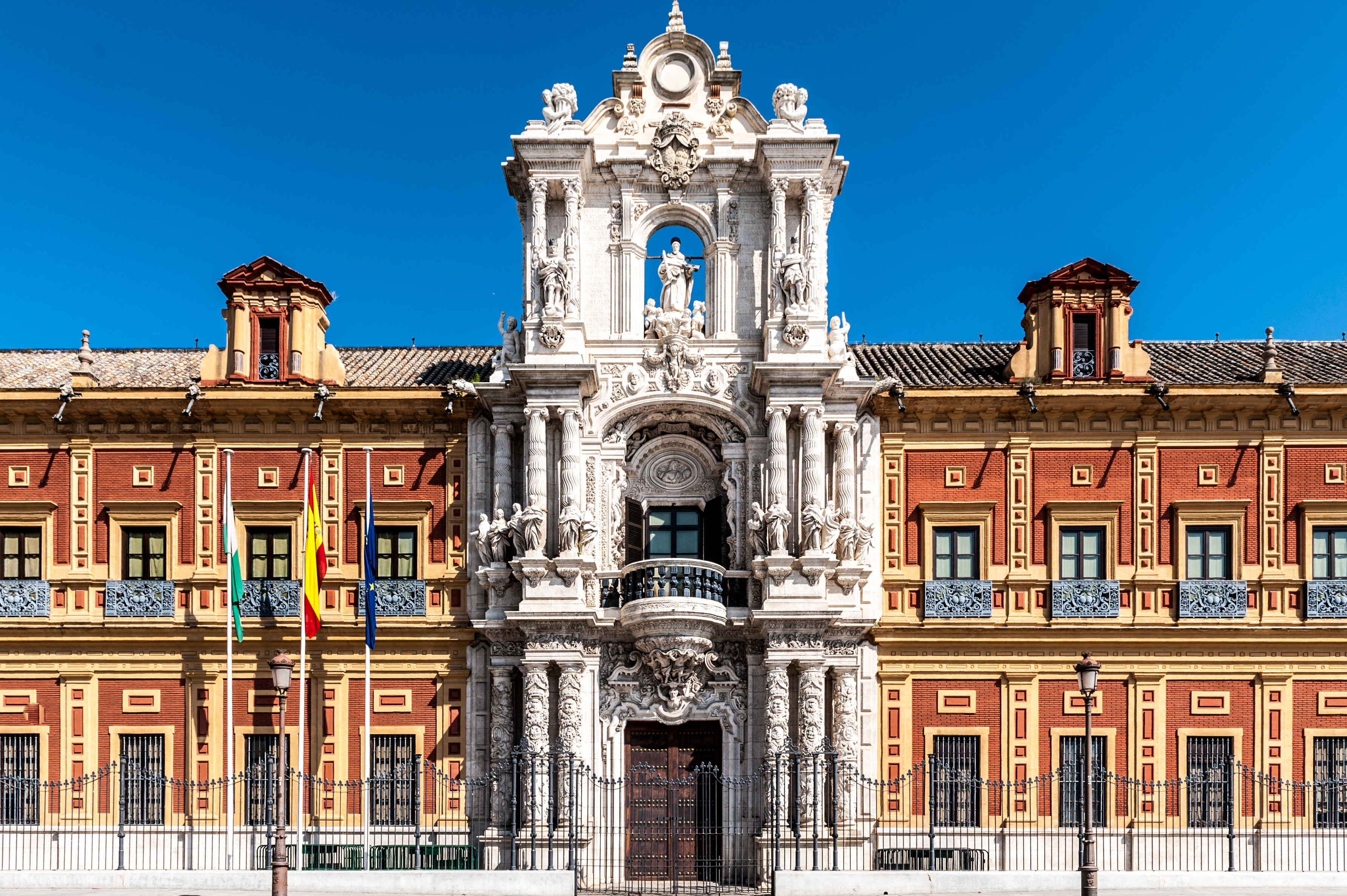
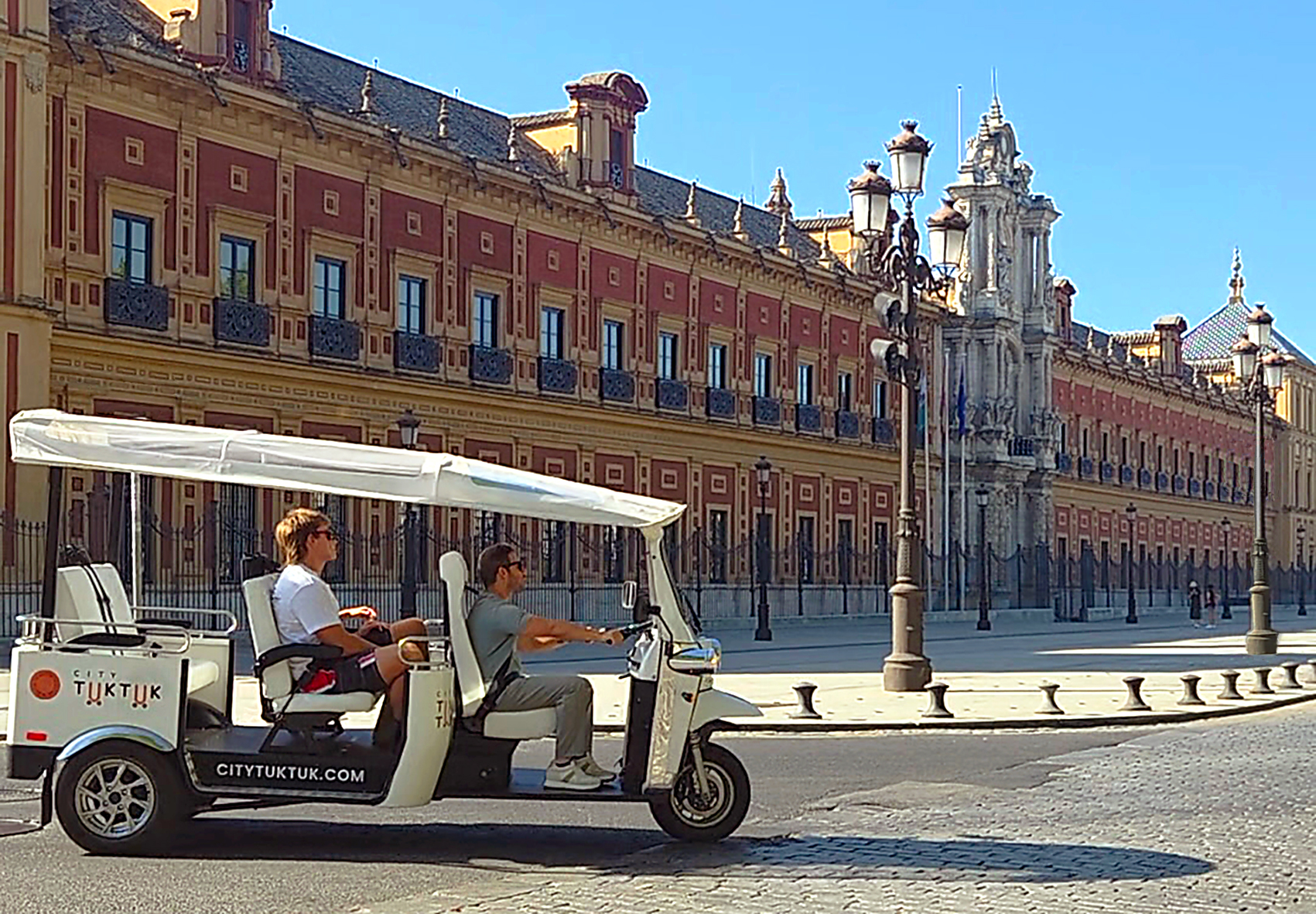
Once a naval academy and now the seat of the Andalusian government, this palace is a masterpiece of Spanish Baroque. Its ornate facade is decorated with statues of famous Sevillian figures.
This massive 18th-century stone building was once the most important tobacco factory in Europe. Today, it serves as the main building for the University of Seville.
This impressive bronze monument honors El Cid, the legendary Castilian knight and hero of the Reconquista. It stands proudly at the gateway to the park and the university area.
Located in the heart of the gardens, this tall lion-topped pillar commemorates the explorer's voyages to the Americas. It is a key symbol of Seville's historical role in global exploration.
These beautiful gardens are named after the famous painter Bartolomé Esteban Murillo. They feature shaded walkways, tiled benches, and lush Mediterranean flora.
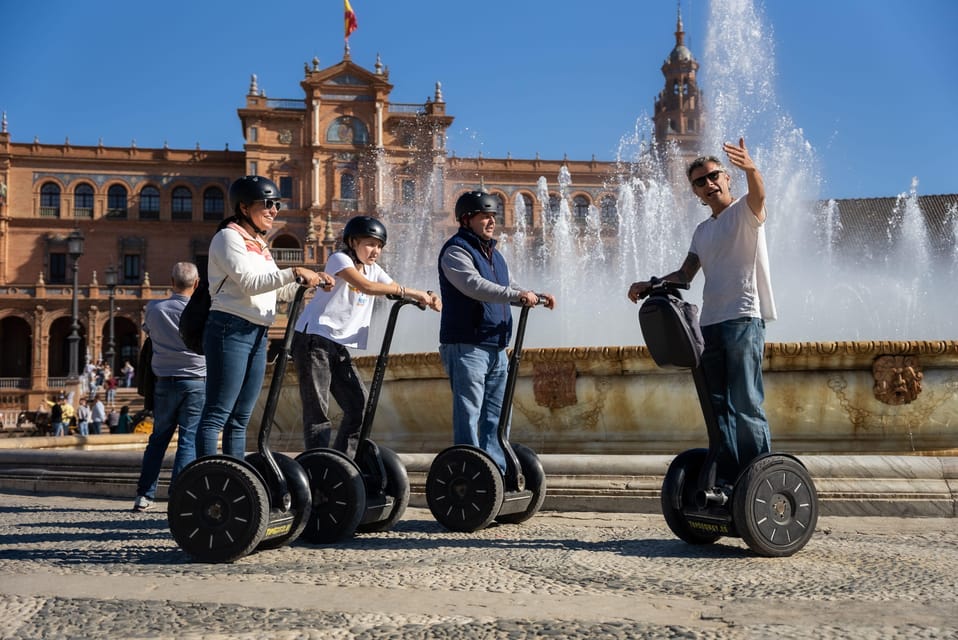
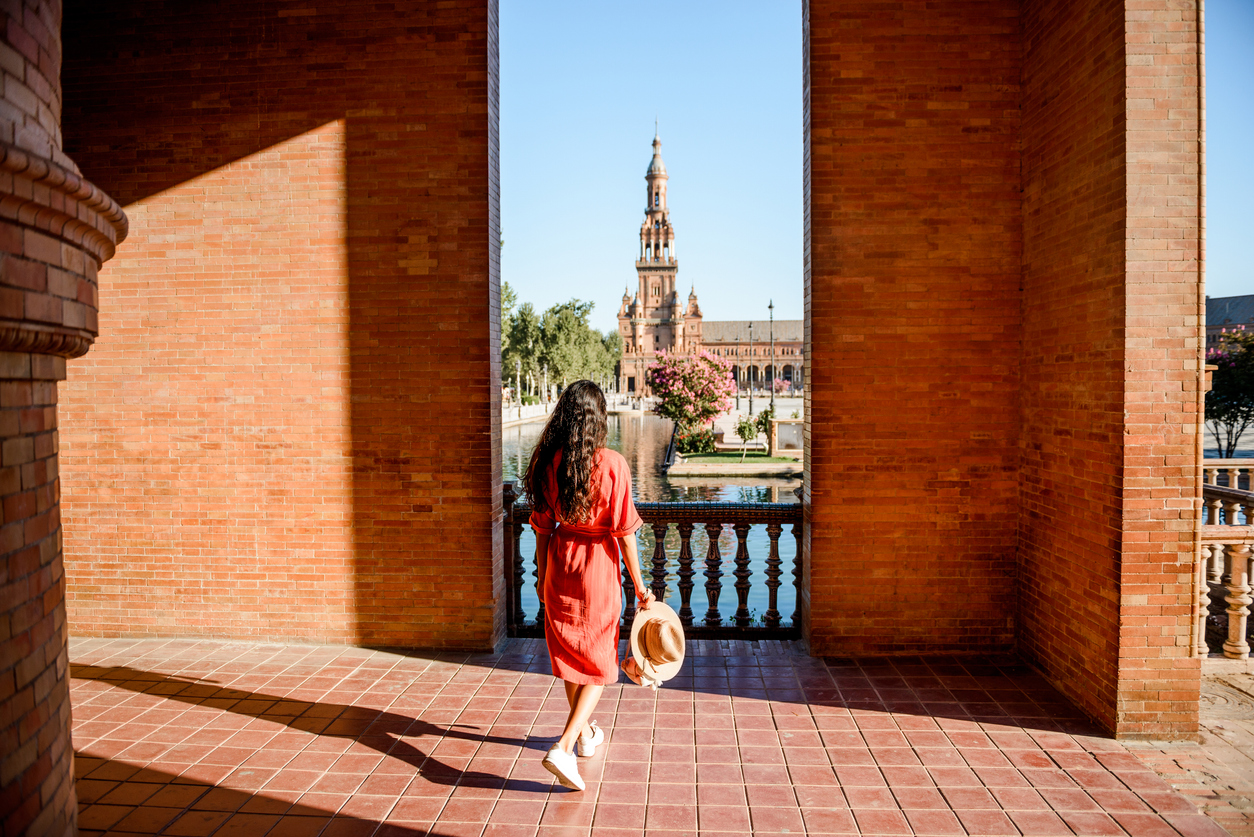
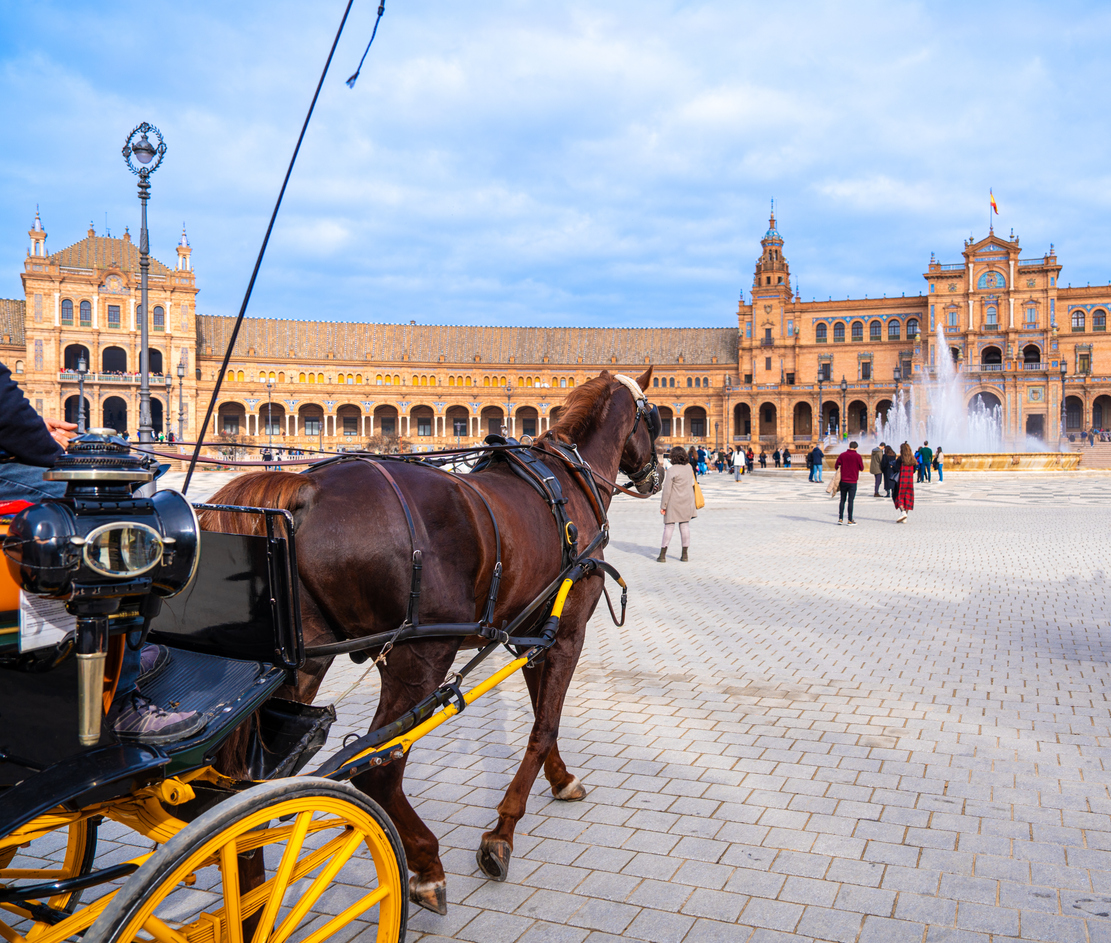
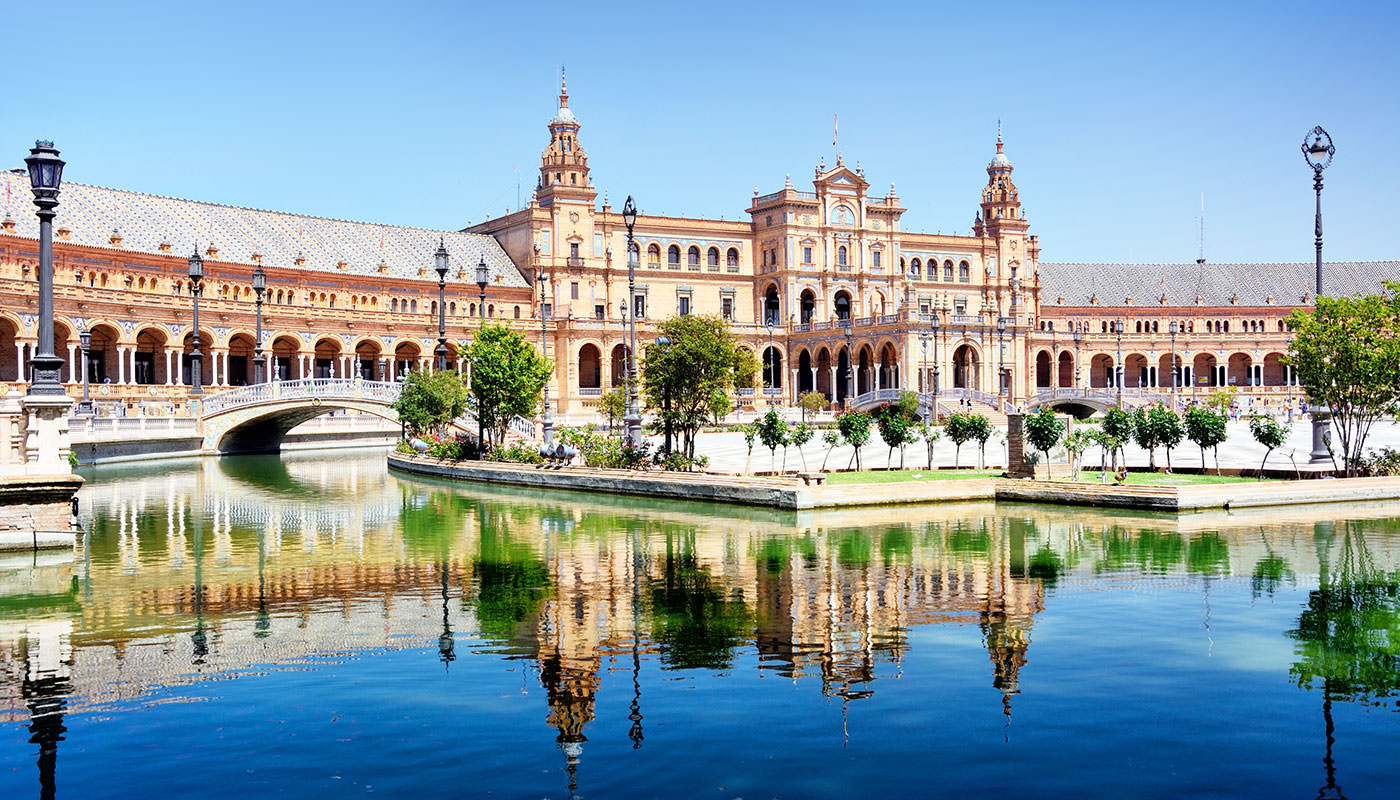
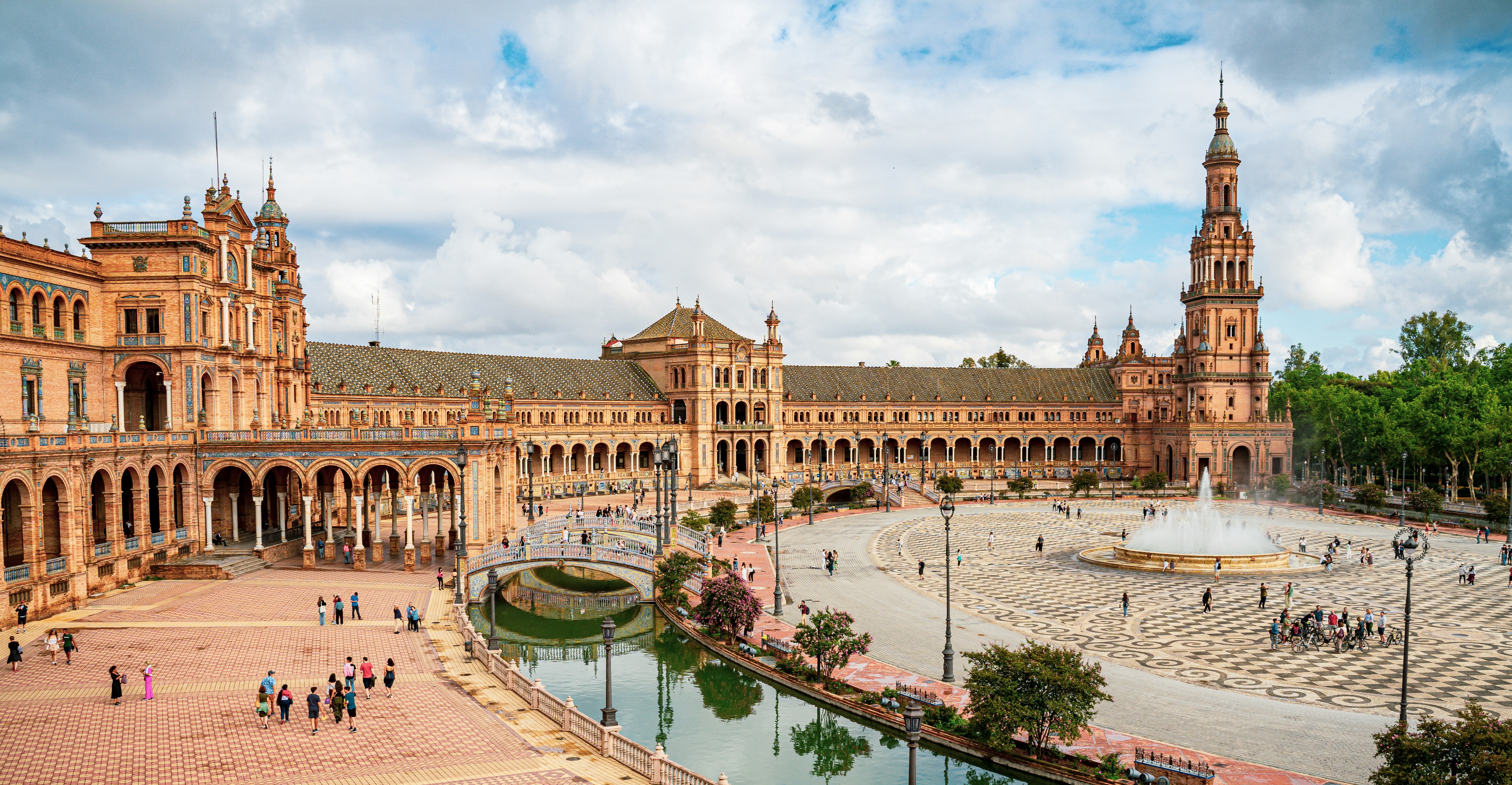
Built for the 1929 Exhibition, this breathtaking semi-circular plaza is famous for its bridges and colorful tiled alcoves. It is widely considered one of the most beautiful squares in the world.
Seville's primary public park is a green oasis filled with exotic trees, hidden fountains, and romantic pavilions. It served as the former private gardens of the San Telmo Palace.
Located within the park, this square is surrounded by three magnificent buildings in different architectural styles. It is often called "the plaza of the pigeons" by locals.
This grand riverside boulevard offers a scenic route along the Guadalquivir. It connects the historic center with the famous bullring and the Golden Tower, "Torre del Oro".
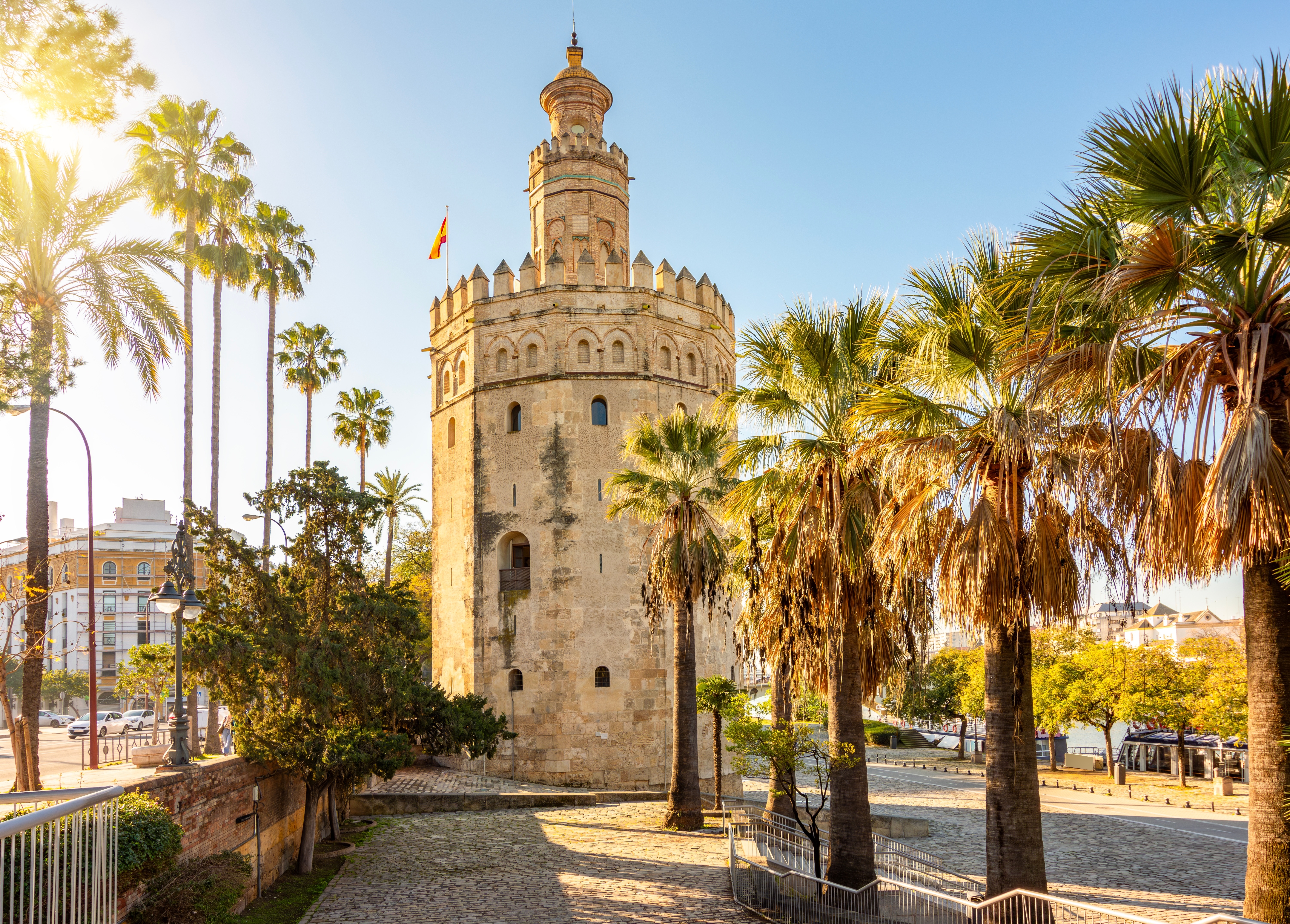
This 13th-century military watchtower was once part of the city's defensive walls. Today, its golden reflection on the river remains one of Seville’s most iconic sights.
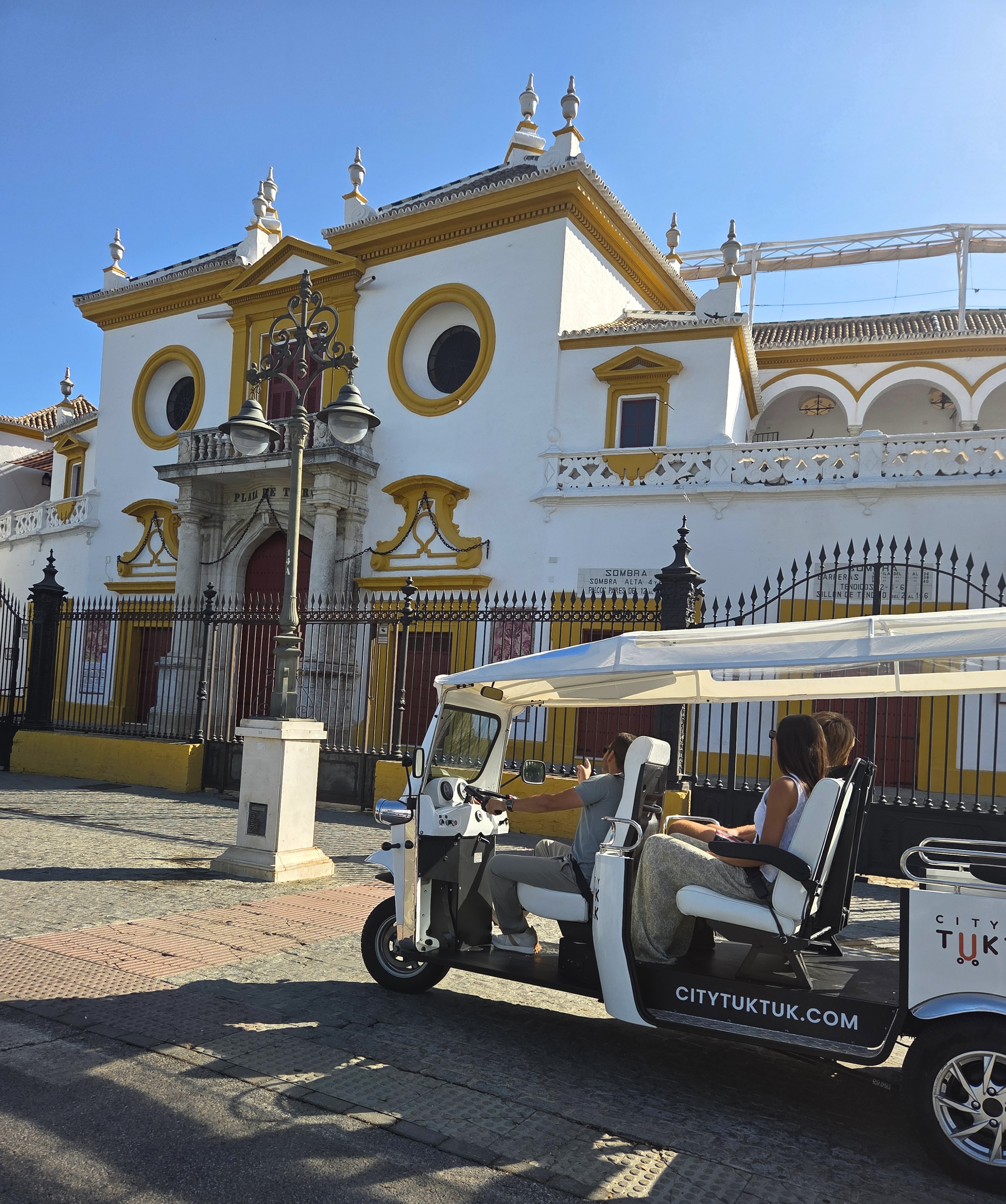
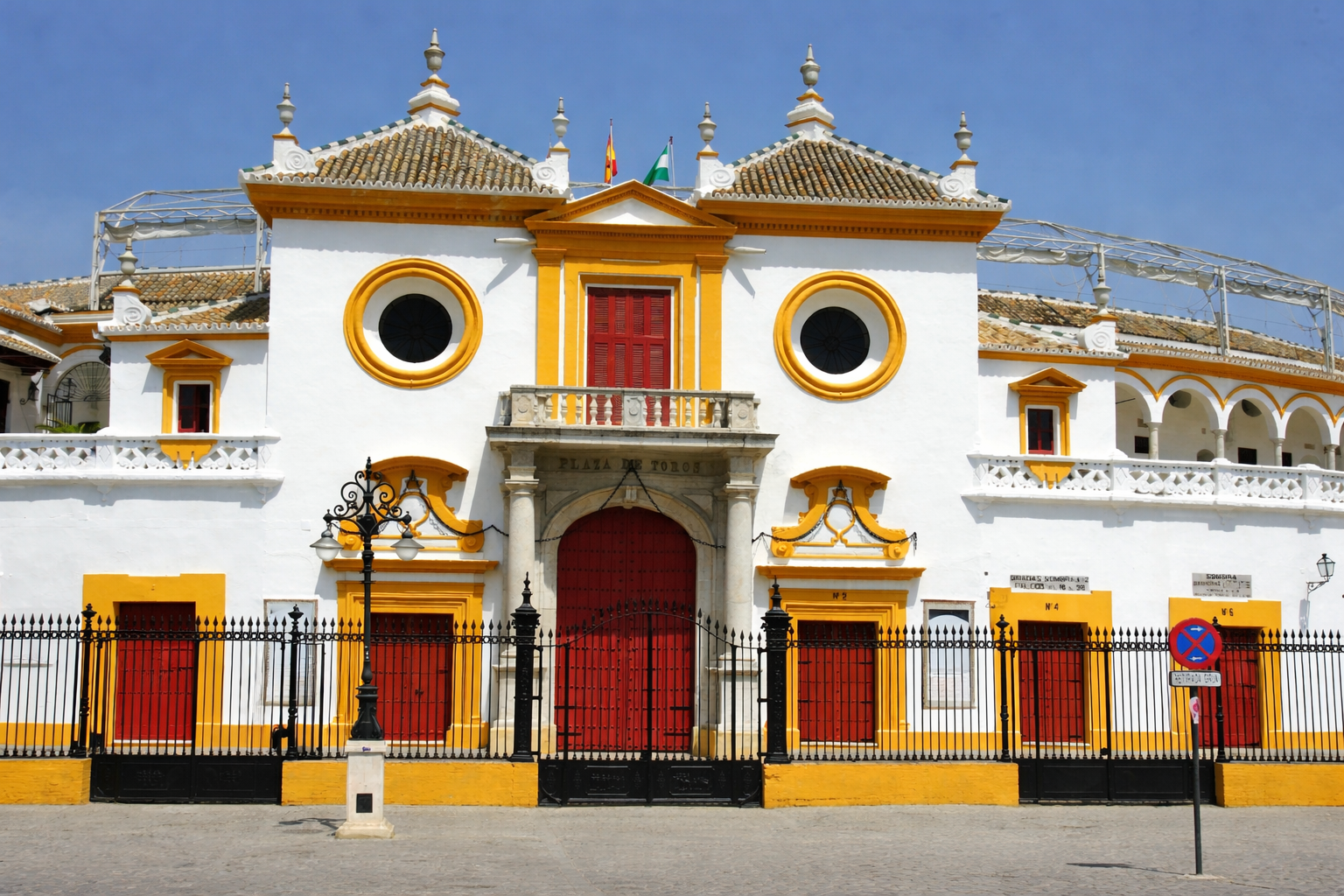
One of the oldest and most beautiful bullrings in Spain, known for its striking white and yellow Baroque facade. It is a central piece of Seville’s cultural and social history.
As the city's first and only skyscraper, this modern tower offers a striking contrast to the historic skyline. It marks the entrance to the contemporary side of Seville.
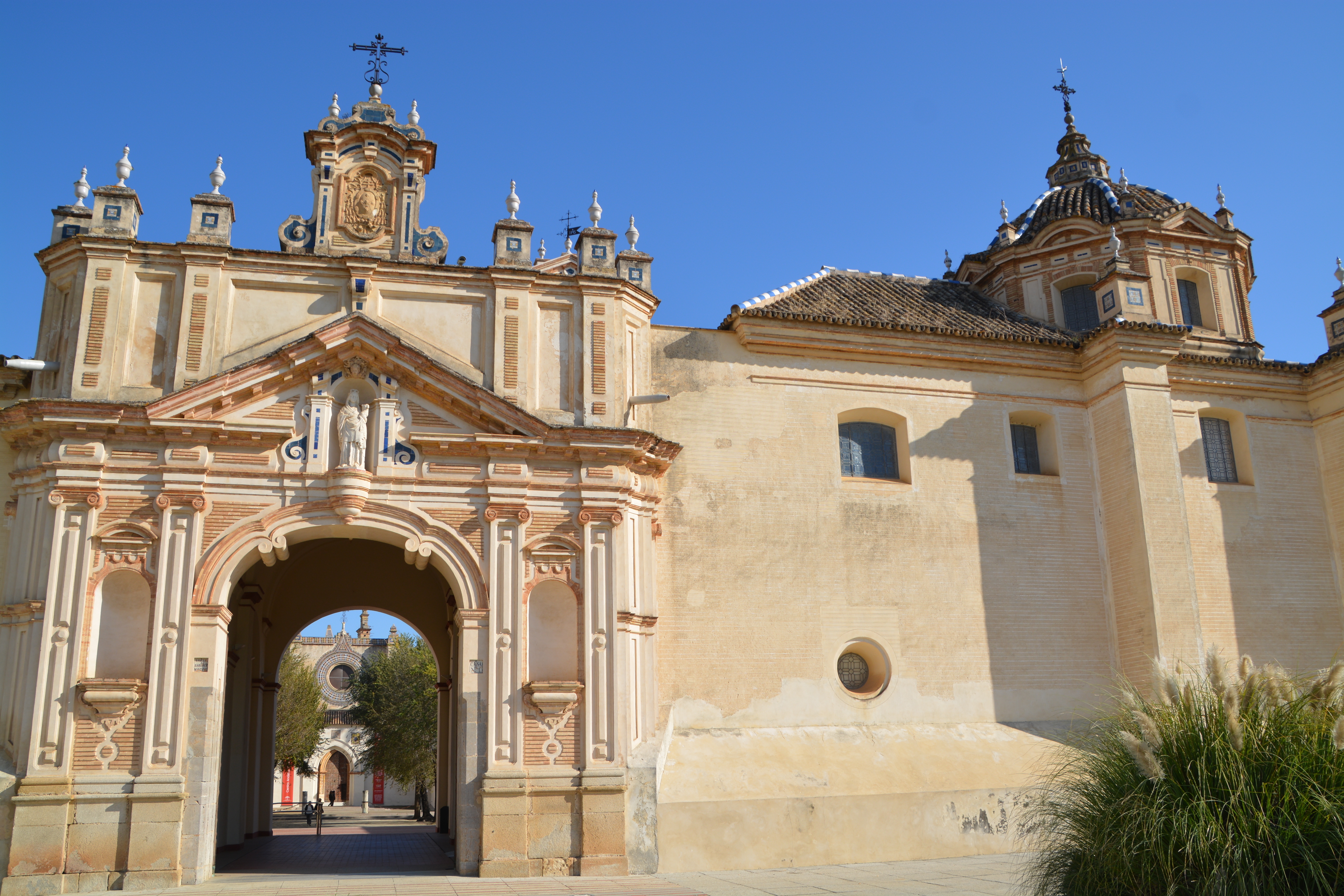
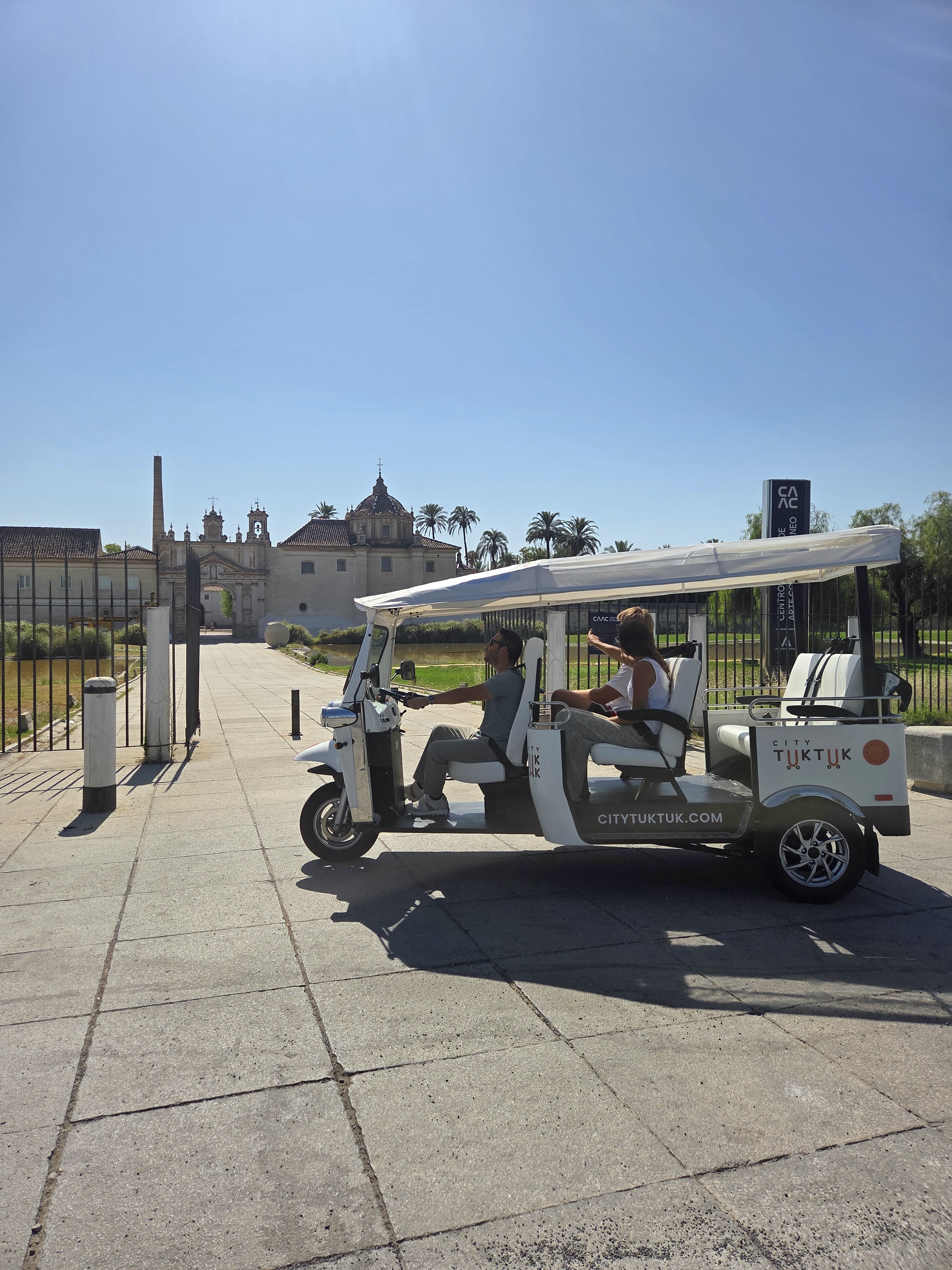
This former monastery was where Columbus lived while planning his second voyage. It later became a world-famous ceramics factory and is now a contemporary art museum.

This island was the site of the Expo '92 world fair and is now a hub for technology and culture. It blends historic heritage with modern pavilions and botanical gardens.
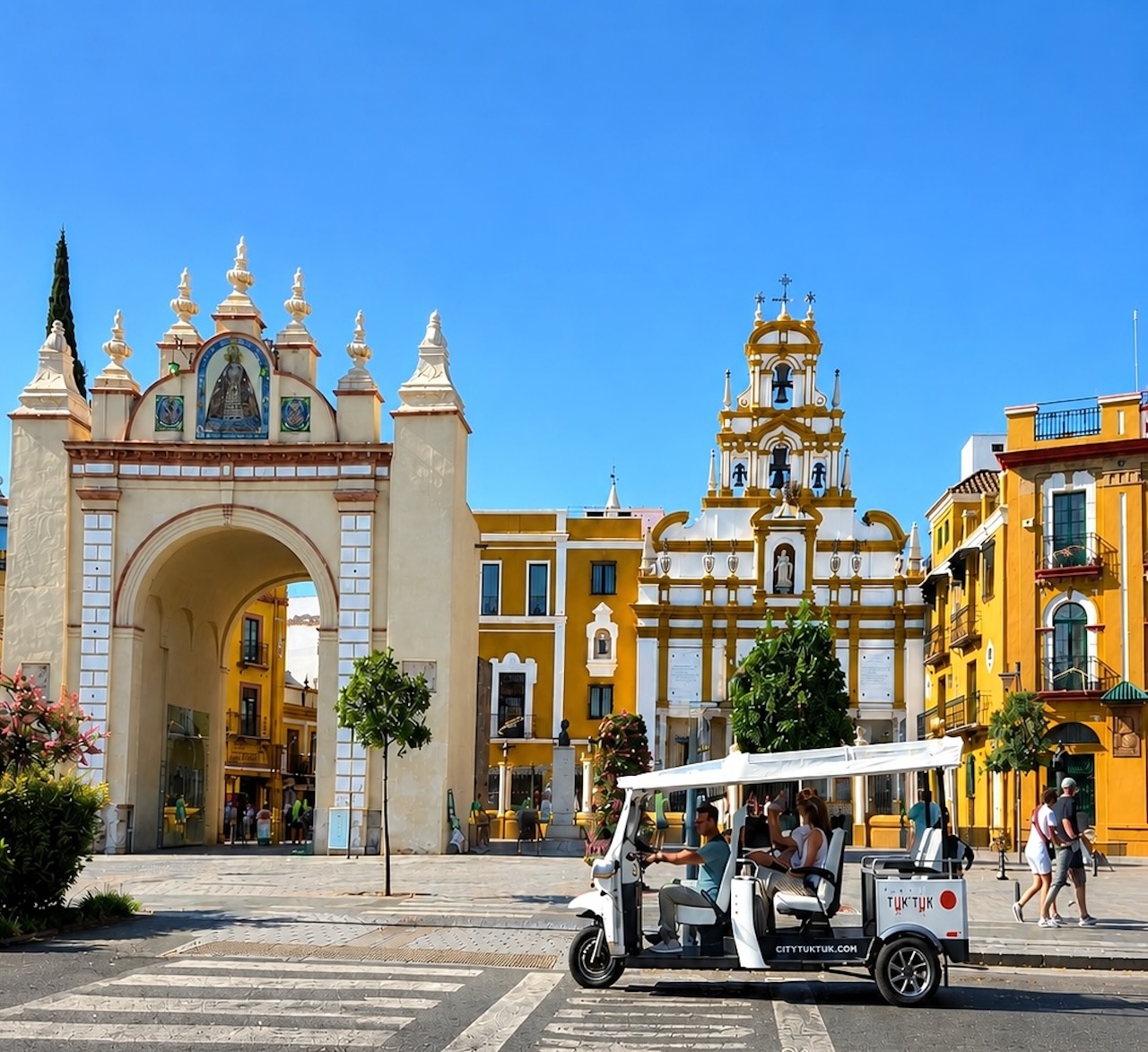
This neo-Baroque church houses the Virgin of the Macarena, one of the most revered religious figures in Spain. It is a spiritual heart for the city, especially during Holy Week.
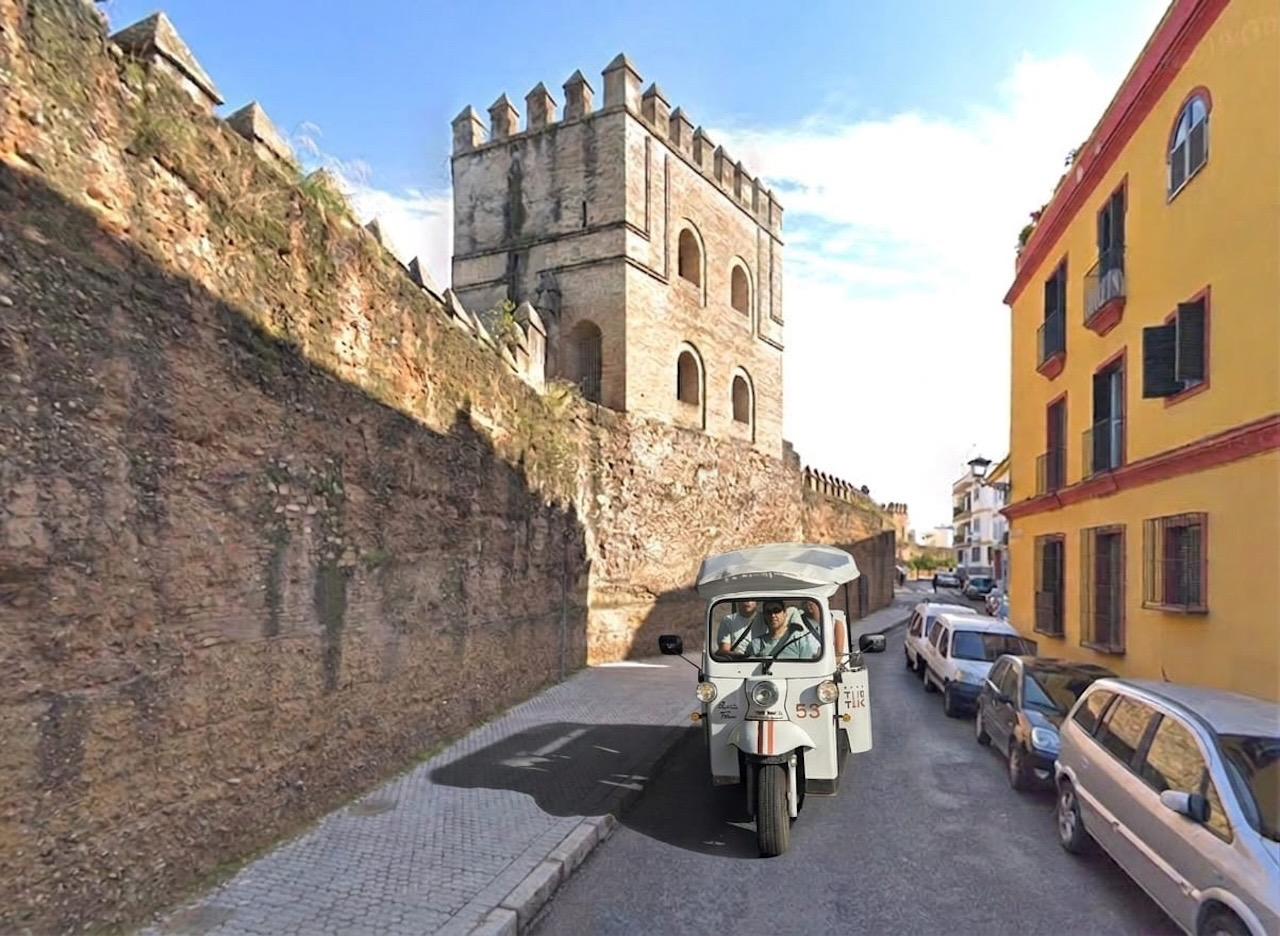
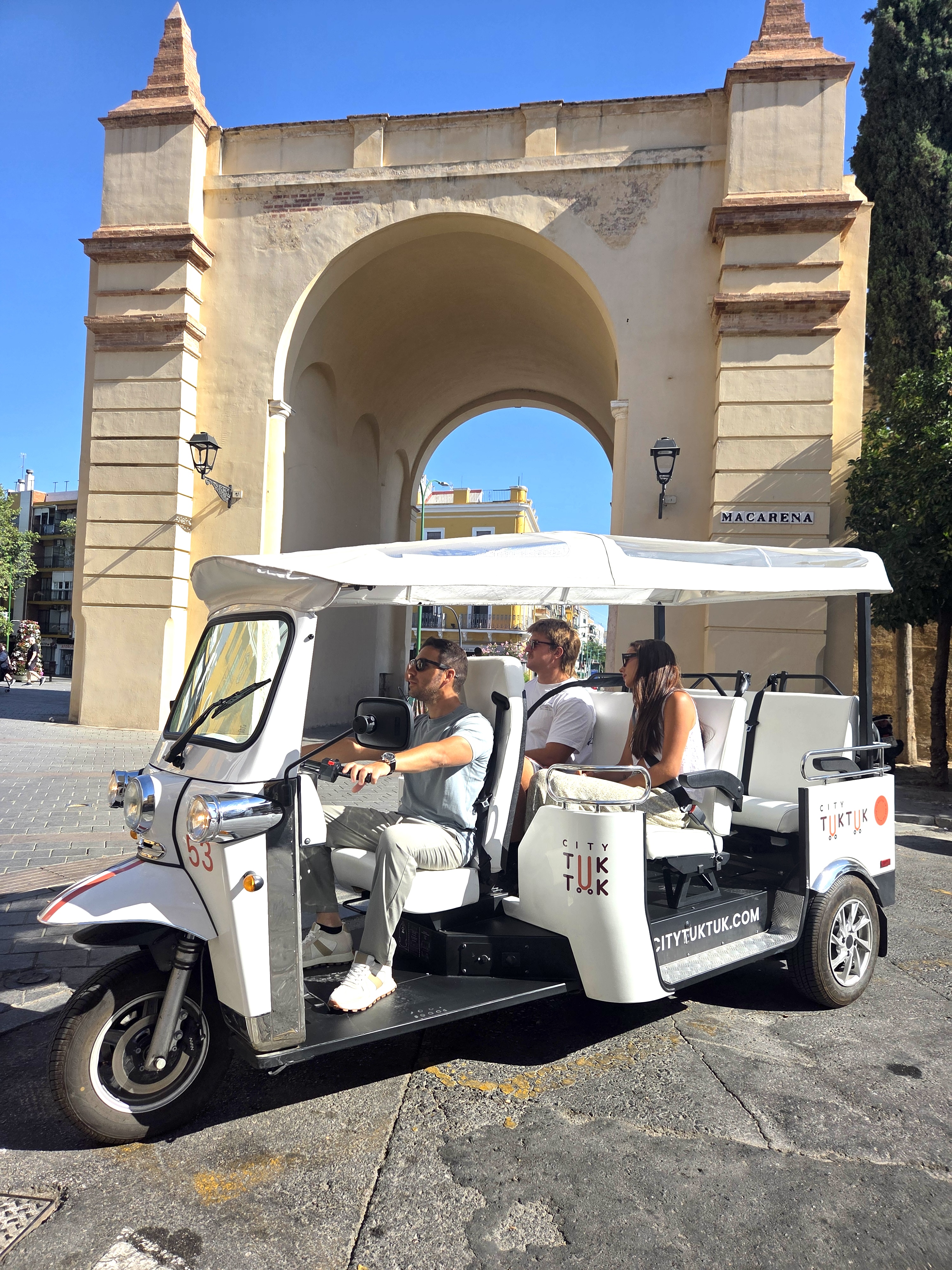
These ancient Almohad walls once protected the city from invaders. Today, the well-preserved section in the Macarena neighborhood stands as a testament to Seville’s medieval past.
Meeting Point
Abrir en google maps