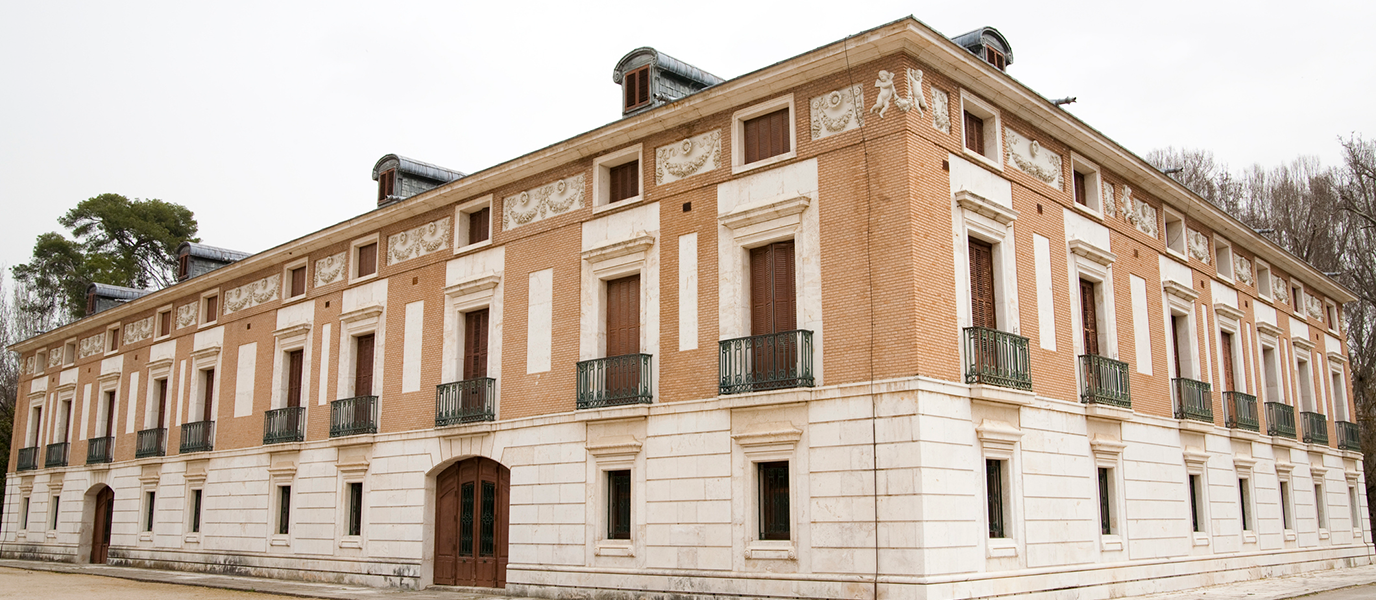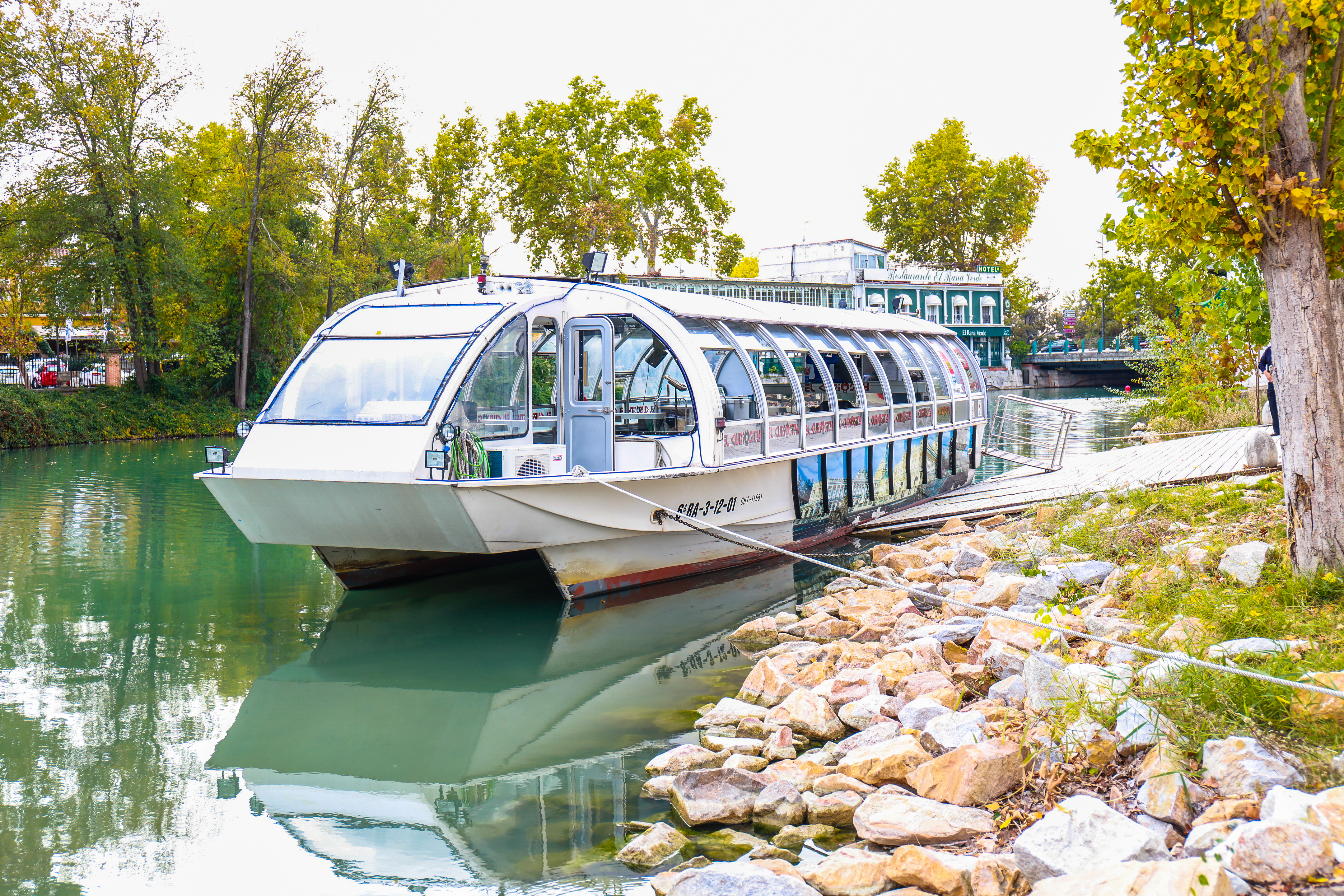
















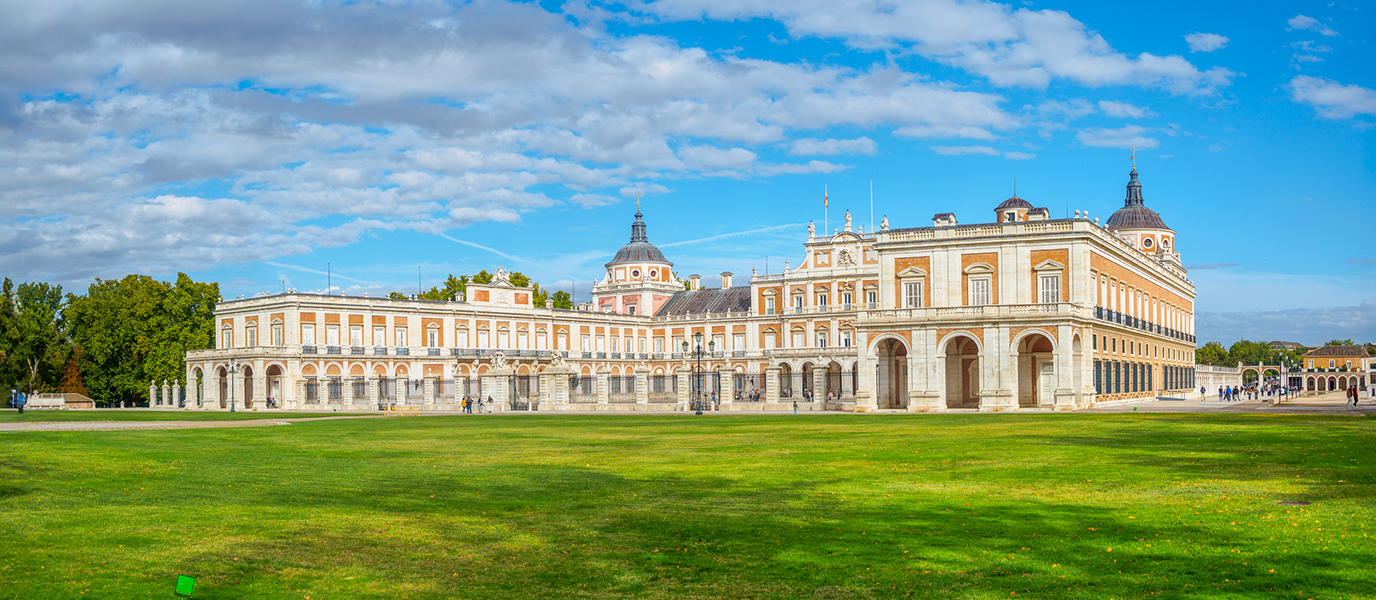
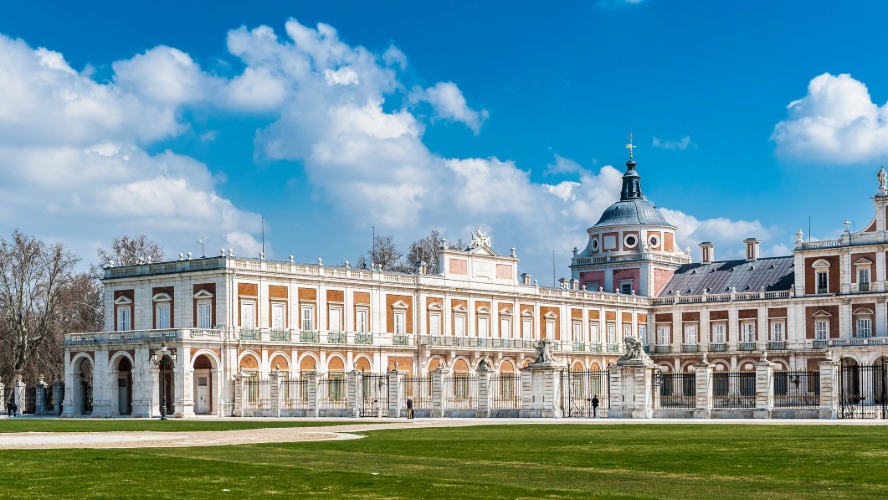
Less than 50 kilometres from Madrid, the way the landscape changes almost goes unnoticed until, suddenly, rows of trees, canals and avenues appear that defy conventional urban design, but form part of a far more ambitious project: to tame nature and turn it into a stage for power. Aranjuez wasn’t a mere indulgence, but an idea sustained over centuries, a seasonal residence where the court could escape the rigours of the capital. The Royal Palace of Aranjuez is the heart of that project. It doesn’t impose itself as a fortress or a symbol of defence, but as a form of architecture open to its surroundings, designed to be in harmony with the gardens and the course of the River Tagus. Here, power didn’t entrench itself behind thick walls, but was displayed through strolling, sailing and appearing at open-air concerts.
- History of the Royal Palace of Aranjuez
- What you’ll see on your visit
- Interesting facts about the Royal Palace of Aranjuez
- Opening times and visitor information for the Royal Palace of Aranjuez
- The gardens of the Royal Palace
History of the Royal Palace of Aranjuez: from Renaissance project to a stage for Bourbon intrigues
The palace’s origins date back to the 16th century, when Philip II decided to transform Aranjuez into one of the monarchy’s main Royal Sites. Inspired by Italian villas and the humanist tradition of integrating architecture and landscape, he commissioned Juan Bautista de Toledo, and later Juan de Herrera, to design a building that was to serve as a place of rest and as a symbol of the ordered exercise of power.
However, the project was halted for decades. It wasn’t until the 18th century, under the reign of Philip V and, above all, Ferdinand VI, that the palace began to take on the form we know today. The work of architects such as Santiago Bonavía helped to create a complex that combined Italian influences with elements of the Spanish tradition.
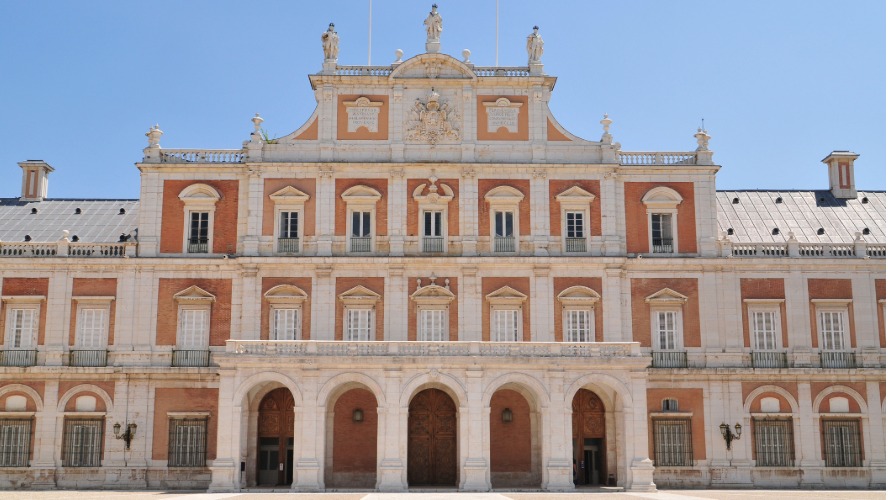
Charles III and Charles IV would go on to shape the palace’s character. During their reigns, Aranjuez became a regular setting for court life, especially in spring, when the court moved from Madrid. It was during this period that the palace ceased to be merely a residence and became a venue for state occasions, leisure and political tension.
One of the most decisive episodes in its history took place in 1808, with the Mutiny of Aranjuez. This popular uprising, directed against Manuel Godoy, marked the fall of Charles IV’s favourite and brought about the king’s abdication in favour of his son, Ferdinand VII. The palace, which had been conceived as a refuge and a place of rest, then became the scene of one of the most critical moments in Spanish history.
What you’ll see on your visit: rooms where every object had a specific function within ceremonial practices
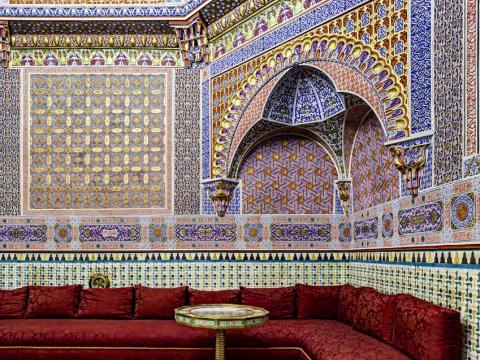
A tour of the Royal Palace of Aranjuez isn’t just a succession of decorated rooms, but a journey through a perfectly structured system where each room had a specific purpose within court life. Unlike other, more monumental palaces, many of the rooms here retain an almost domestic but deeply sophisticated character, where luxury is measured as much by materials as by function.
Furthermore, the complex clearly reflects the tastes of the 18th-century Bourbons, especially Charles III and Charles IV, with a strong presence of French and Italian influences, but also with distinctive local contributions, such as the Royal Porcelain Factory of Buen Retiro or the Spanish cabinet-making workshops.
Throne Room: red velvet, French clocks and the staging of Bourbon power
The Throne Room at Aranjuez reflects a very specific 18th-century aesthetic, where power was represented through symmetry, colour and the controlled accumulation of objects. The walls upholstered in red velvet and the gilding aren’t just ornamental; they establish an immediate visual hierarchy.
The French clocks and decorative consoles stand out in particular, revealing the influence of the court of Versailles on the Spanish monarchy. The throne, elevated and carefully framed, wasn’t an everyday element, but the focal point of highly specific ceremonies, where every gesture was strictly controlled.
Hall of Mirrors: a legacy of Versailles and the interplay of light at the Spanish court
Clearly inspired by the model of the Palace of Versailles, the Hall of Mirrors at Aranjuez takes this idea and adapts it for a smaller but equally sophisticated setting. The mirrors not only expand the space, but also multiply the natural light, something especially valued in a residence designed for spring.
This space hosted receptions and social gatherings, where image was essential. The reflections weren’t a simple aesthetic device, they helped to create a perception of abundance and control, where everything seemed to multiply and expand.
Royal chambers: clocks, tapestries and porcelain in the private lives of the monarchs
The royal chambers retain items that allow the daily life of the kings in Aranjuez to be reconstructed. Here you’ll find mantel clocks, furniture made from fine woods and porcelain pieces from the Royal Factory of Buen Retiro, one of Charles III’s great industrial ventures.
Especially interesting is the presence of more intimate private rooms, where the monarchs withdrew for their personal leisure. These rooms display more refined and less ostentatious decoration, with tapestries depicting mythological or pastoral scenes, very much in keeping with the natural surroundings of Aranjuez.
The chapel: sober architecture and sacred music in the daily life of the court
The palace chapel, although more discreet than those of other Royal Sites, played a central role in daily routines. Religious services were held here, setting the rhythm of court life.
The space combines sober architecture with specific decorative elements, such as altarpieces and liturgical objects that reflect the taste of the period. Music also played a vital role; religious ceremonies were accompanied by music, seamlessly weaving together art, religion and power.
Interesting facts about the Royal Palace of Aranjuez: details that explain how life was really lived there
One of the palace’s most distinctive aspects is its relationship with the court calendar. The so-called “Jornada de Aranjuez” marked the court’s annual move in spring, a large-scale logistical event involving hundreds of people, carriages and supplies.
Water, an ever-present element, wasn’t merely for decoration. The hydraulic systems that fed the fountains and gardens stem in part from developments begun during the Habsburg period, later perfected by the engineers who worked for the Bourbons. This control of water made it possible to maintain lush gardens in an environment that would otherwise be much drier.
Another little-known detail is the importance of music in Aranjuez. Not only because of the famous later association with the Concierto de Aranjuez, but because the court organised concerts, musical strolls and open-air performances in the gardens during the 18th century.
Lastly, the Mutiny of Aranjuez of 1808 wasn’t an isolated episode, but the result of tension that had built up at court. The palace itself and its surroundings became the scene of unrest, which contrasts with its current image as a peaceful place.
Opening times and visitor information for the Royal Palace of Aranjuez: useful details to plan your visit
The Royal Palace of Aranjuez is open to the public all year round from 10:00 a.m. to 7:00 p.m. and is closed on Mondays. General admission costs 9 euros, while the reduced rate is 4 euros. Entry is free on Wednesdays and Sundays from 3:00 p.m. to 7:00 p.m. Opening hours for the gardens, which are free to enter, vary throughout the year, in order to make the most of the natural light.
We recommend checking the updated opening hours before your visit, especially on public holidays or special dates. It’s also advisable to book in advance, as this is one of the most visited monuments in the Community of Madrid.
You can either visit at your own pace or book a guided tour, which allows for a better understanding of the historical context and the details of each room. In addition, admission usually includes signposted routes that make it easier to understand the complex as a whole.
The gardens of the Royal Palace: from the Island Garden to the Prince’s Garden, a landscape laboratory beside the Tagus
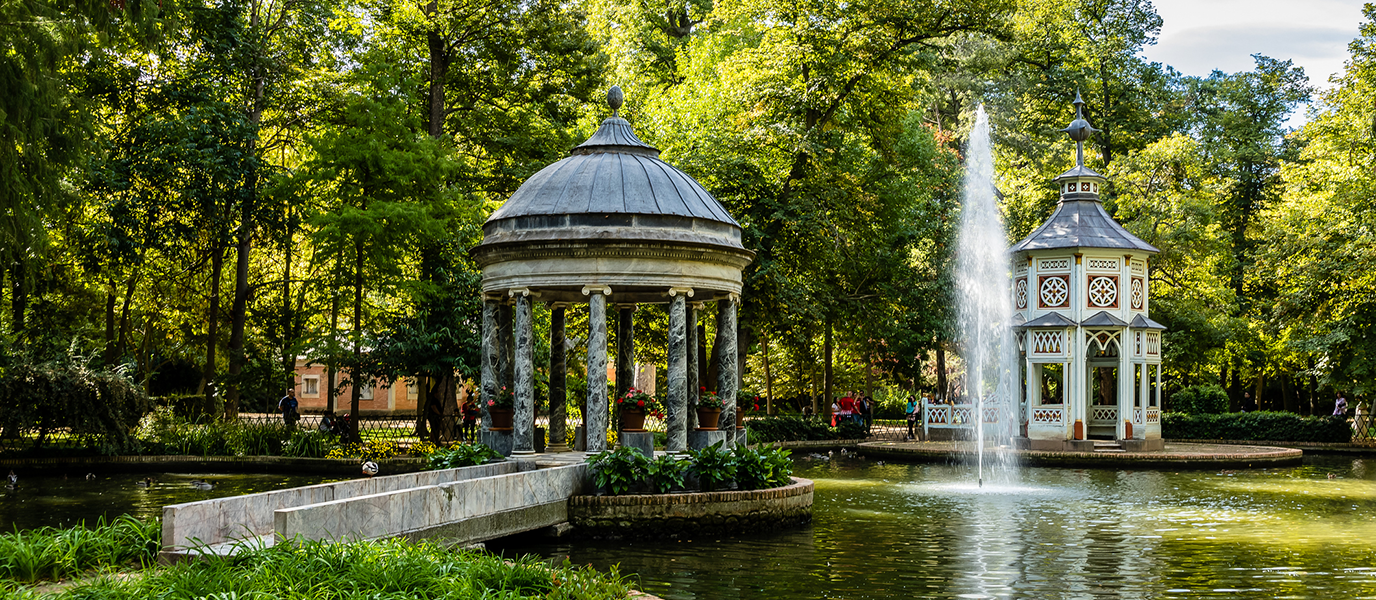
The gardens of the Royal Palace of Aranjuez form an essential part of the Royal Site project, designed in the 16th century by Philip II as a place that combined nature, hydraulic control and the representation of power. They weren’t merely ornamental, as they integrated agriculture, botany and royal leisure into a carefully designed space.
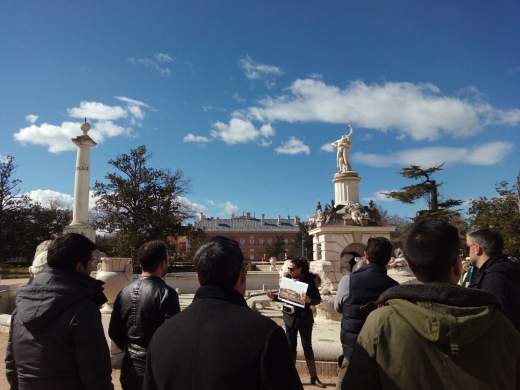
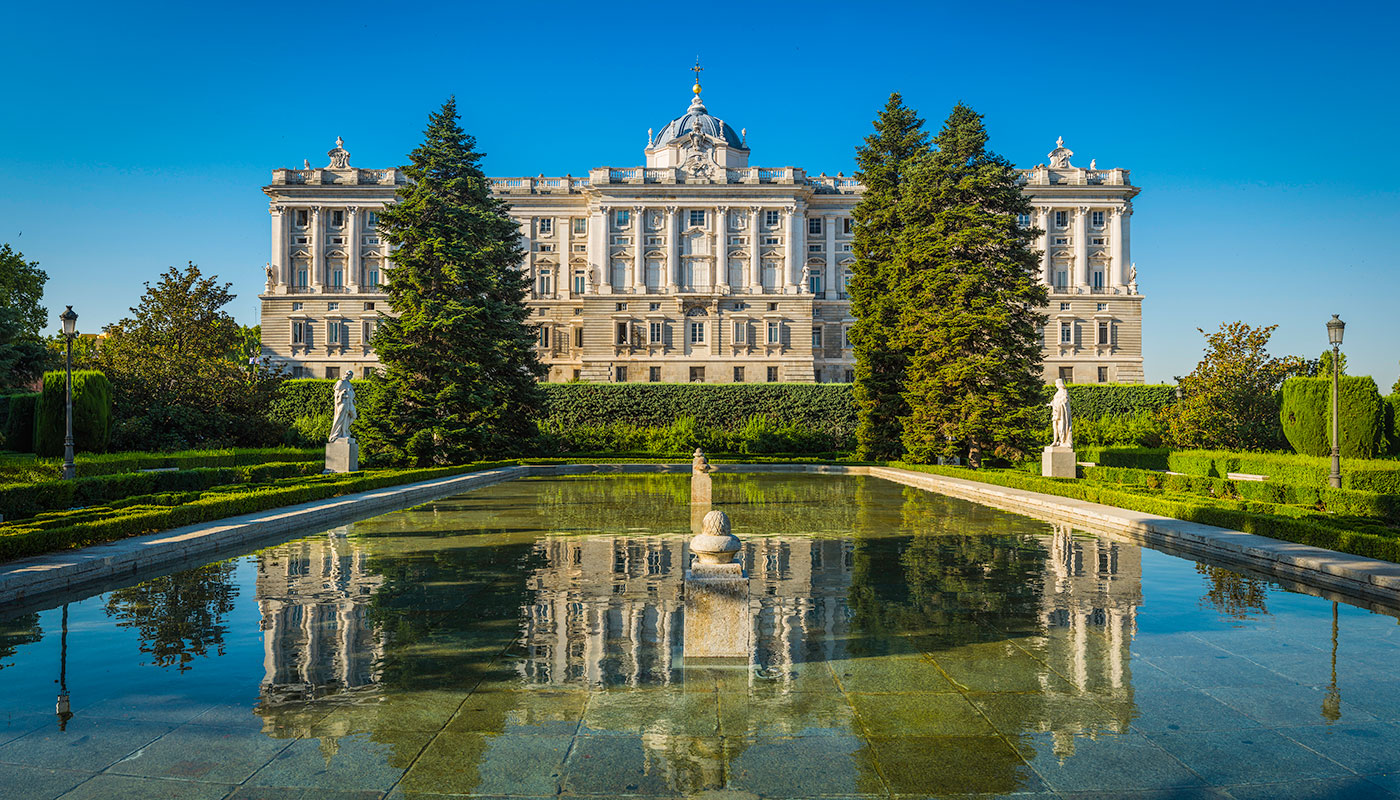
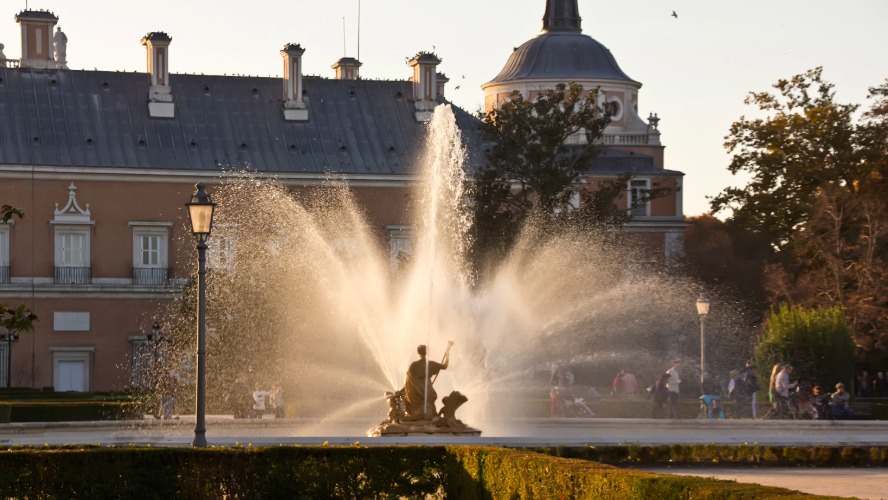
The Jardín de la Isla, surrounded by a winding stretch of the Tagus, is the clearest example of the Renaissance style: geometric axes, rows of trees and fountains with symbolic significance, such as those of Hercules and Antaeus, which directly alluded to the monarch’s strength and legitimacy. In contrast to this order, the Jardín del Parterre introduced a French-influenced aesthetic in the 18th century, with open perspectives inspired by the Palace of Versailles and designed to integrate visually with the palace façade.
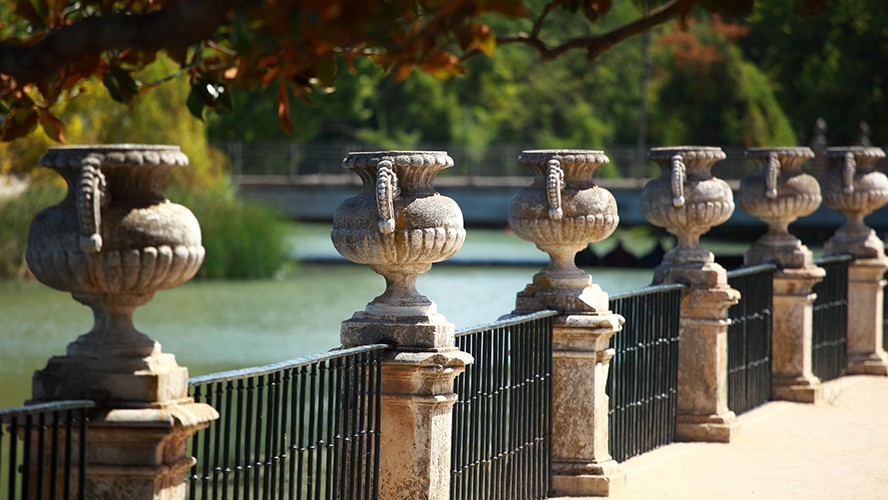
A shift in sensibility arrived with the Prince’s Garden, developed during the time of Charles IV. Here, the geometric strictness softens in favour of a more natural landscape, with winding paths and wide extensive wooded areas. Within it stands the Casa del Labrador, a refined pleasure pavilion decorated with marble, silk and porcelain from Buen Retiro, which served as an intimate retreat within the complex itself.
Water is the cornerstone of the entire system: irrigation channels, canals and fountains not only provide the space with structure, but also create a cooling effect and allow vegetation to be maintained in a demanding environment. During the Jornada de Aranjuez, in spring, these gardens also became the setting for court life, with strolls, music and celebrations that transformed the landscape into a living extension of the palace.