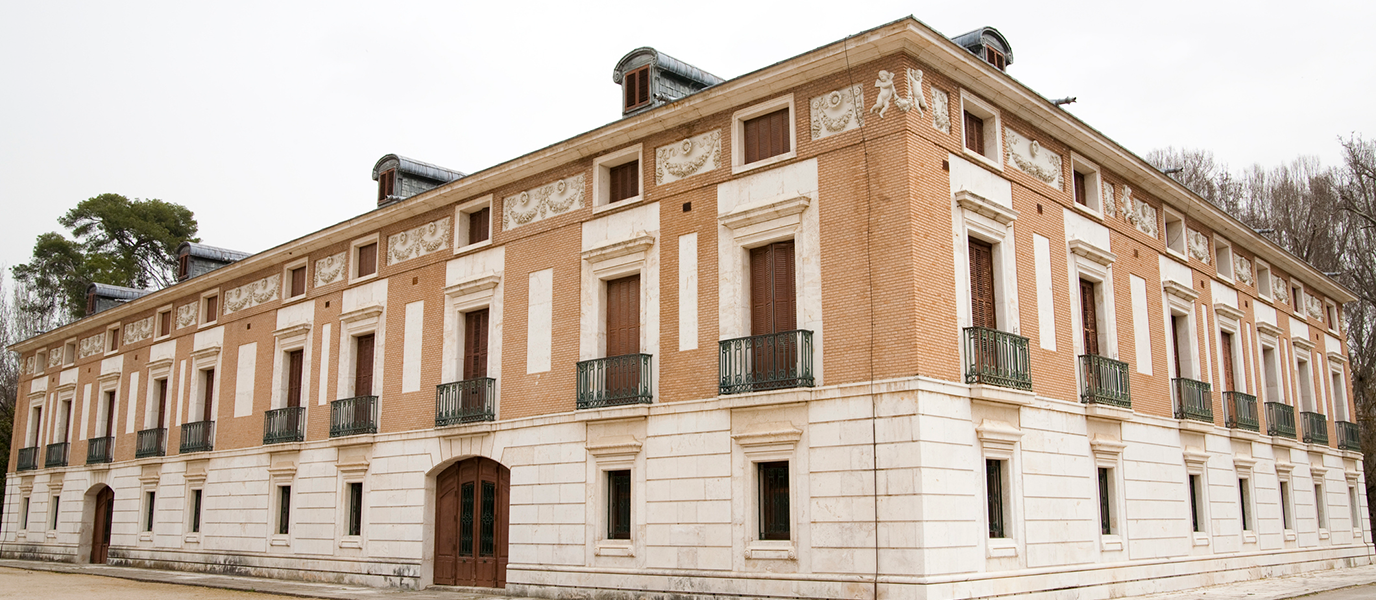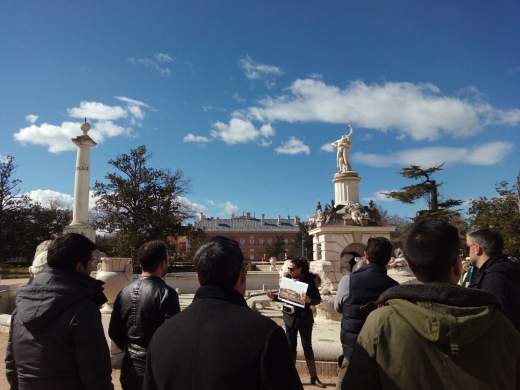



















































Unlike the more formal gardens in the area around the palace, the Jardín del Príncipe was not designed as a rigid scenario, but as a place for long walks, and for private exploration within a carefully constructed setting. Visitors will not find a dominant axis here, but a series of paths, clearings and nooks that are conducive to leisurely walks. Located to the east of Aranjuez’s palace complex, and extending along the bank of the river Tagus, this is the Royal Site’s largest garden. Its scale — over 150 hectares — and its design reflect an evolution in the understanding of gardening: it is less geometrical, closer to a kind of nature that is organised but appears free.
- The history of the Jardín del Príncipe
- What to see in the Jardín del Príncipe
- Interesting facts about the Jardín del Príncipe
The history of the Jardín del Príncipe: Charles IV, garden design and the transition towards the English style of garden
Work began on the Jardín del Príncipe in the 1770s, during the reign of Charles III, although it would be during the rule of Charles IV — at that time the Prince of Asturias — that it would acquire its definitive form. This is where the garden’s name comes from: a space associated with the heir to the throne and his awareness of new aesthetic trends.
The original design is attributed to Pablo Boutelou, a member of a family of royal gardeners with French ancestry, who introduced advanced layout and planting techniques to Aranjuez. Later, the garden’s development was influenced by English landscape design, in contrast with the Baroque formality that had characterised earlier projects.
This is no minor change: it reflects a transformation in the relationship between power and nature. Unlike the total control of the geometric garden, the English model seeks to imitate a natural landscape, with winding pathways, irregular clumps of trees and bushes, and strategically positioned design features.
During the nineteenth century, as the garden expanded, new plantings and structures were added, and the garden established itself as one of the Royal Site’s most complex spaces. The garden’s maintenance demanded constant organisation, with teams dedicated to watering, pruning, and repositioning species.
What to see in the Jardín del Príncipe: a stroll among water, shade and scattered architecture
There is no single route through the Jardín del Príncipe: instead there are numerous possible itineraries. Its scale means that visitors are forced to make a choice of areas to walk, combining riverside walks with diversions into more densely wooded areas.
One constant element is water, which is present in lakes, fountains and channels that have a climatic as well as an aesthetic role. In summer, these sheets of water help to lower the temperatures, and create cooler microclimates.
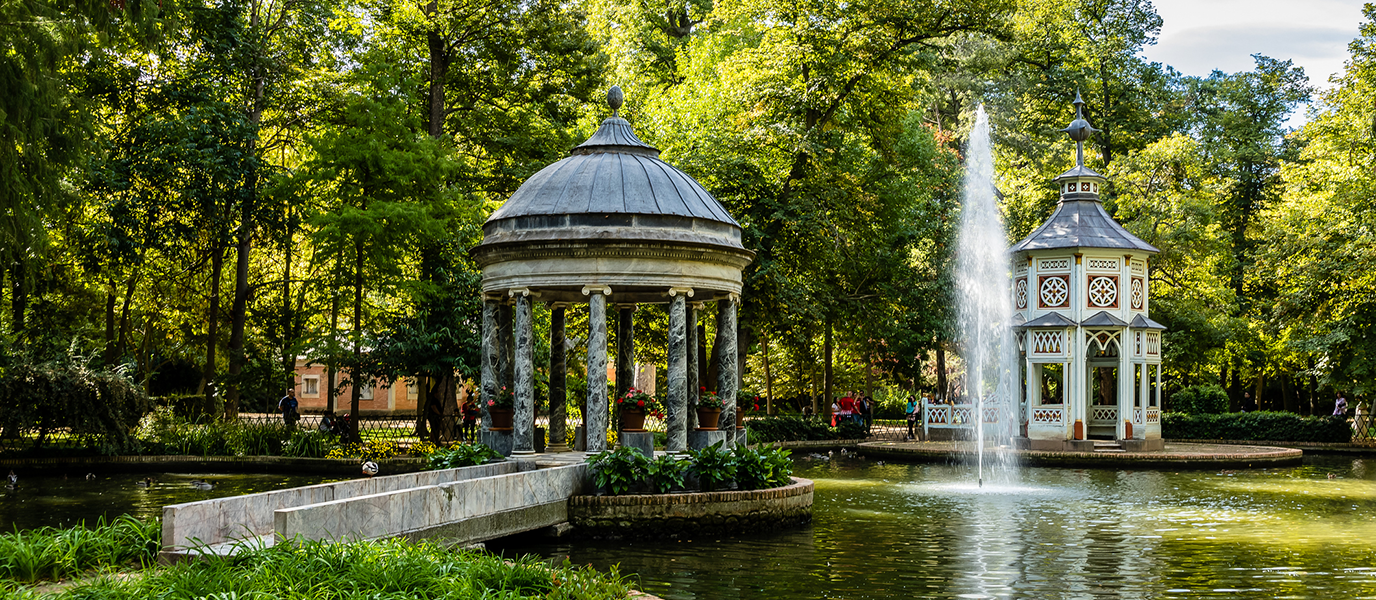
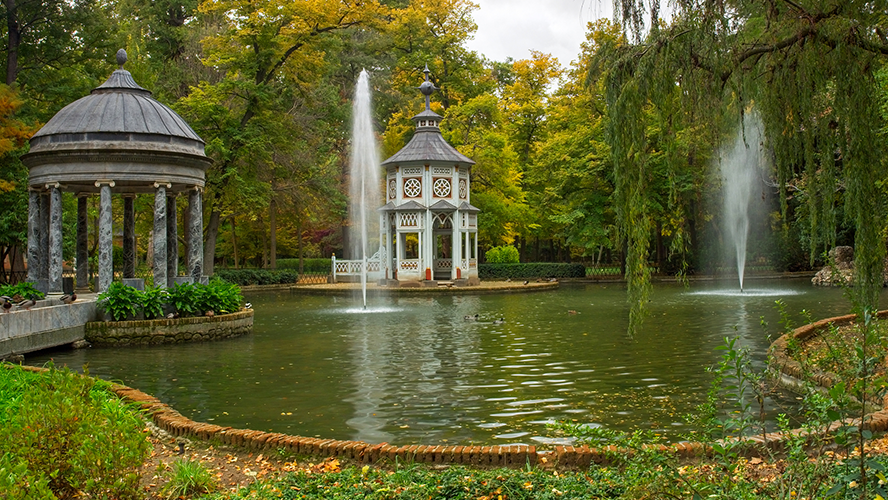
The Estanque de los Chinescos [Chinoiserie-style lake]: Enlightenment exoticism on the banks of the Tagus
The Estanque de los Chinescos is one of the garden’s most remarkable spots. Dating from the late eighteenth century, it reflects the taste for the oriental style that spread across Europe at that time, known as Chinoiserie.
Originally, the lake was decorated with small structures inspired by Asian architecture, but these have mostly disappeared. Nevertheless, the area retains the same artistic character, with the water as a central element and the plant life completing the scene.
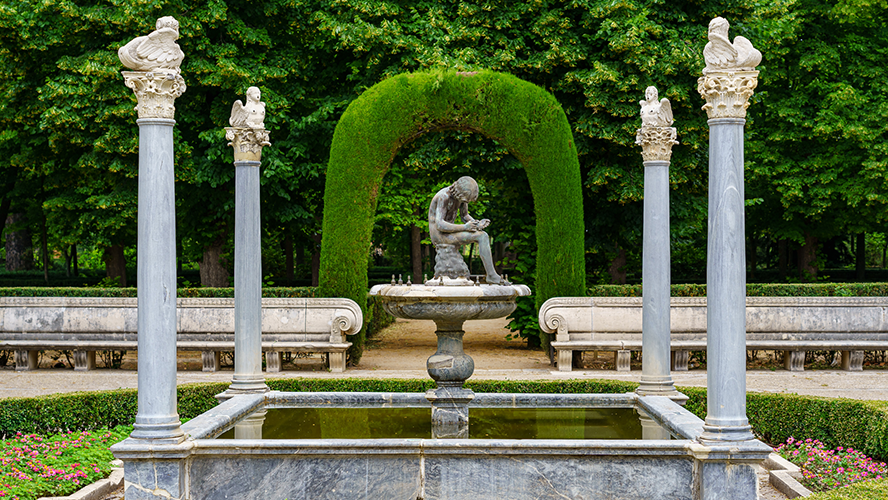
The Fountain of Narcissus: classic mythology in garden design
The Fountain of Narcissus introduces a narrative element into the garden. The figure of the young man gazing at his reflection in the water, taken from classical mythology, follows the tradition of including symbolic stories in gardens.
Beyond its symbolic significance, the fountain marks a pause in the walk, and acts as a point where visitors can rest. Its position, surrounded by plant life, strengthens the impression of isolation in comparison with more open areas.
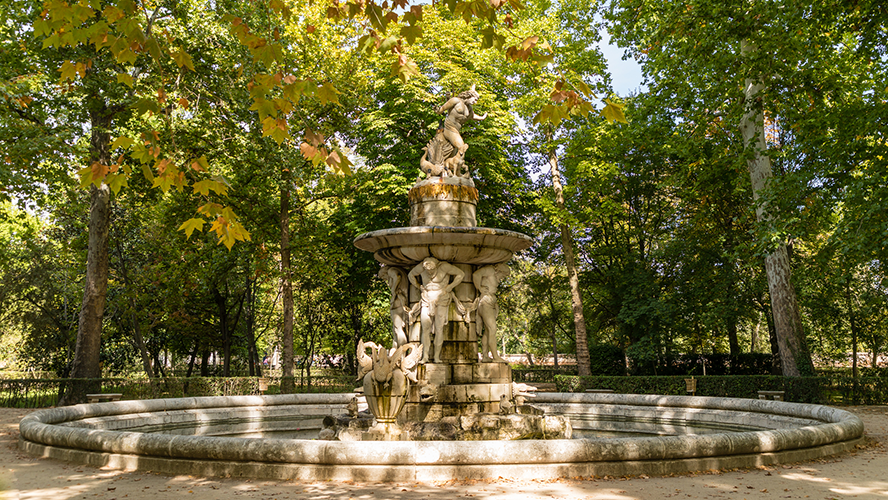
Walks and avenues: long axes for wandering at leisure
Although the garden has a less formal design, there are main avenues that lend structure to the gardens. These tree-lined paths allow visitors to walk for some distance in continuous shade.
One of the most outstanding avenues runs parallel to the Tagus, where the proximity of the water and the density of the plant life combine to make for one of the most pleasant walks.
The flora of the Jardín del Príncipe: a botanical catalogue on a royal scale
The gardens are home to a great variety of tree species, many of them introduced as an experiment. Shady plantains, lime trees, horse chestnuts and various varieties of poplar trees make up the bulk of the wooded areas.
There are also large and very old specimens, some of which are over two hundred years old. These trees do not merely define the landscape: they form part of the place’s historical heritage.
Interesting facts about the Jardín del Príncipe: anecdotes, botanical experiments, and court scenes among the groves
One of the most fascinating aspects of the Jardín del Príncipe is the role it played as a setting for the everyday — and sometimes private — life of the royal family. During the late eighteenth and early nineteenth century, Charles IV and María Luisa de Parma used to walk together here in defiance of the Royal Palace’s most rigid protocols. Records from the time mention rides in light carriages and walks in hidden areas of the gardens, especially in the parts close to the river.
The gardens also indirectly witnessed one of the most turbulent incidents in the history of Aranjuez: the 1808 Mutiny of Aranjuez. Although the main action took place around the Royal Palace, the Jardín del Príncipe formed part of the same political and symbolic climate. In those March days, the area was practically deserted, reflecting the sudden collapse of the court system that had brought it onto being.
In the field of science, the garden was a genuine botanical laboratory. During the eighteenth century, species from America such as various types of plantains and acacias were introduced, along with ornamental trees from central Europe. These experiments were not undertaken for purely aesthetic reasons: they reflected the Enlightenment interest in acclimatising useful species and studying how they behaved in different soils.
Another important, but scarcely visible element is the hydraulic network that sustains the gardens. The irrigation system was supplied by diverting the waters of the Tagus into irrigation ditches and secondary channels, some of which still survive. This system enabled certain areas to be kept very moist even though they lay close to other drier areas, thereby creating a diversity seldom seen on Castile’s meseta.
Also important is the fate of some structures that have since disappeared or been transformed. The Estanque de los Chinescos had short-lived decorative features, such as wooden pavilions and painted decorations, which have not survived the passage of time.