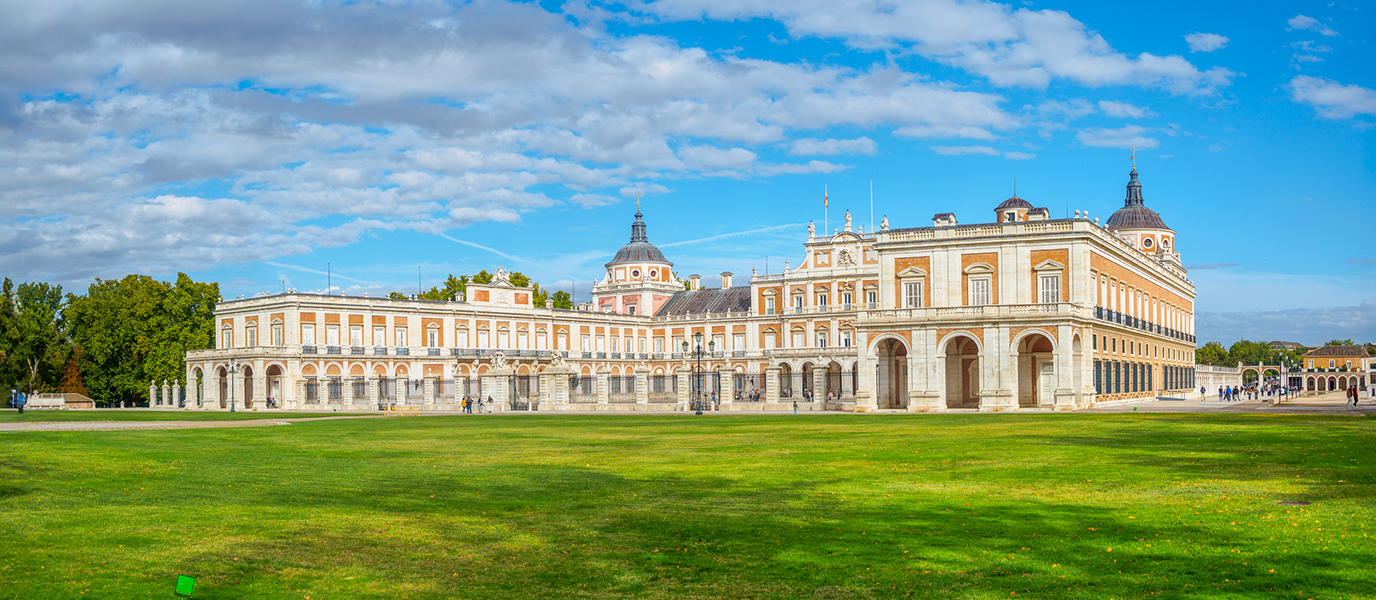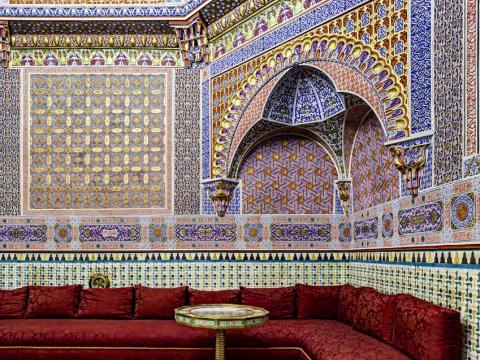

































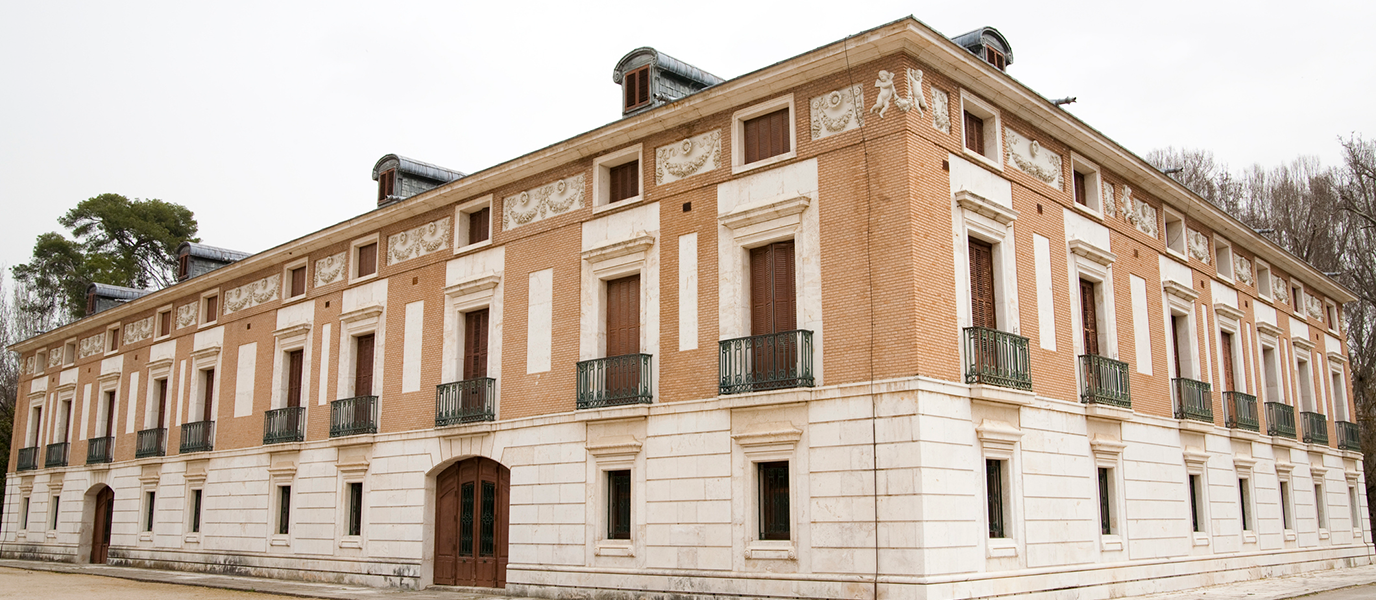
Nothing about the House gives any indication from the outside of what is inside. Its sober, almost restrained appearance stands in stark contrast to the ornate interiors. This contrast is no accident: it reflects a very specific understanding of power in the final years of the 18th century. The aim was not to impress ambassadors nor organise public ceremonies but to create a controlled, intimate space where the monarch could experiment with new forms of taste, materials and refinement, away from the rigid court protocol.
- History of the Casa del Labrador
- The Casa del Labrador’s architecture
- Highlights inside the Casa del Labrador
- Information for visiting the Real Casa del Labrador
History of the Casa del Labrador: Charles IV’s personal project in the twilight of his reign
- Construction of the Casa del Labrador began in 1791 under the initial supervision of Juan de Villanueva, architect of the Prado Museum and one of the leading figures of Spanish Neoclassicism. It was directly commissioned by Charles IV, who was seeking a private space within the Prince’s Garden, away from the formal atmosphere of the Royal Palace.
- Nevertheless, the project did not remain static. From 1794 onwards, other architects such as Adolfo Cassanueva and, later, Isidro González Velázquez were involved in the project, extending and modifying the original design. This explains the building’s complex nature, which does not reflect a single stylistic period, but rather a succession of phases.
- The construction work continued until 1803, with a considerable investment in materials and decorative arts. Over the years, top-level artisans, many of them French and Italian, specialising in gilded bronze, cabinetmaking and wall decoration, have been involved.
- The name ‘Casa del Labrador’ (Farmer’s House) is deliberately misleading. At the height of the Enlightenment, the monarchy adopted a rhetoric of simplicity and closeness to nature, but in reality the building represents one of the court’s greatest displays of technical and artistic luxury.
- A telling fact: when the interiors were being completed, the political situation in Spain was rapidly deteriorating. Barely five years after its completion, in 1808 the Mutiny of Aranjuez would precipitate the downfall of the prime minister Manuel Godoy and the abdication of Charles IV. The Casa del Labrador thus stands as one of the last major projects undertaken by the monarchy before the Napoleonic crisis.
The Casa del Labrador’s architecture: a restrained exterior designed to protect an extraordinary interior
The building has a rectangular floor plan organised around a central area, with two clearly distinct storeys. The façade, constructed from exposed brick combined with stone, has a simple, understated appearance, broken up only by pilasters and cornices.
That outward restraint stems from a conscious decision: to shift the focus inwards. Unlike the Royal Palace, where the façade is a defining feature, here the building acts almost as a shell.
The main entrance is via a flight of steps that gradually leads visitors into the interior, marking a clear transition between the garden and the building, and reinforcing the sense of entering a different realm.
The house features French influences, particularly from the Louis XVI style and the later Empire style, as evidenced in the layout of the rooms and the choice of materials.
Highlights inside the Casa del Labrador: an exceptional collection of European decorative arts
The interior of the Casa del Labrador is one of the finest examples of late 18th-century decorative arts in Spain. Each room is designed for a specific purpose, with carefully selected materials and techniques.
- The Platinum Cabinet is one of the most unique spaces in Europe. Decorated with inlays of this metal (which was extremely rare at the time), it reflects an interest in technical experimentation. Platinum, which is difficult to work with, had begun to be used in Europe in the late 18th century, making this room a pioneering example.
- The Ballroom displays a clear French influence, with polychrome marble, columns and a rich décor featuring gilded bronze. This area was designed for private receptions, away from the rigid protocol of the main palace.
- Another highlight is the Porcelain Room, which features decorative panels reminiscent of works from manufacturers such as Sèvres. The presence of such objects indicates the high level of artistic exchange between Spain and other European countries.
- Other features include cabinets adorned with silk, French clocks, furniture by renowned cabinetmakers and selected paintings. Every item meets strict quality and exclusivity criteria, creating a space where luxury is carefully curated.
Information for visiting the Real Casa del Labrador: admission, tour and tips
Visits to the Casa del Labrador are available solely through guided tours of up to 14 people organised by Patrimonio Nacional. This format enables visitors to explore rooms that would otherwise go unnoticed.
- The admission fee is 10 euros.
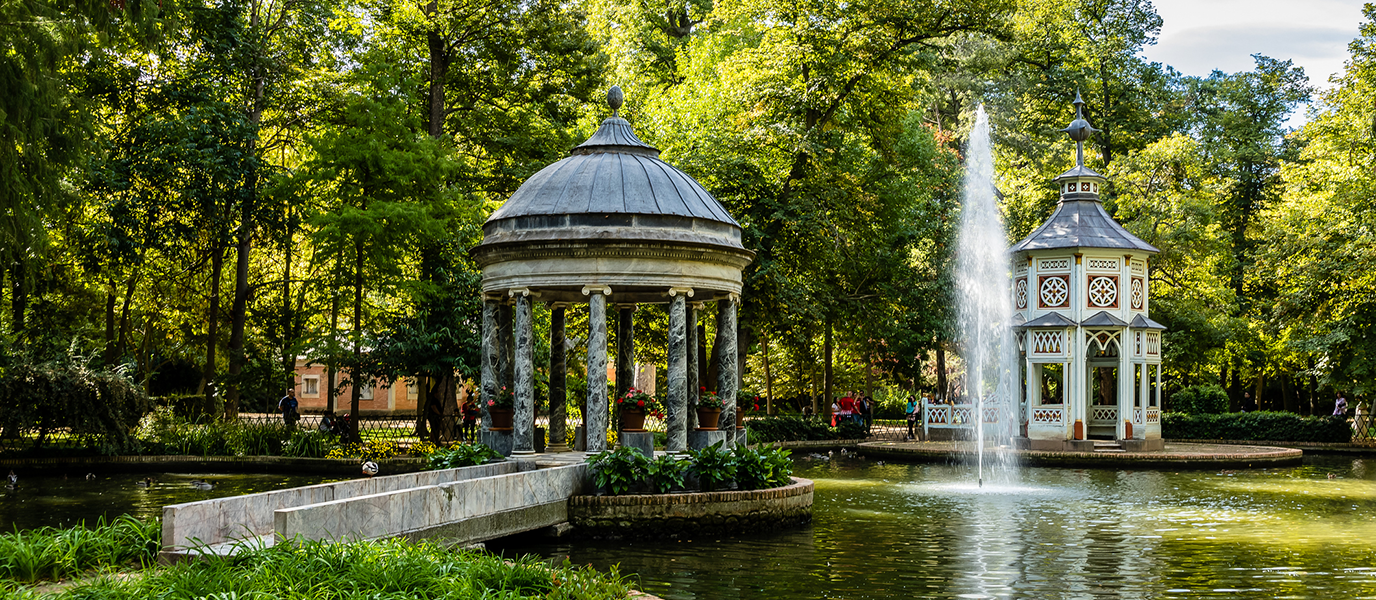
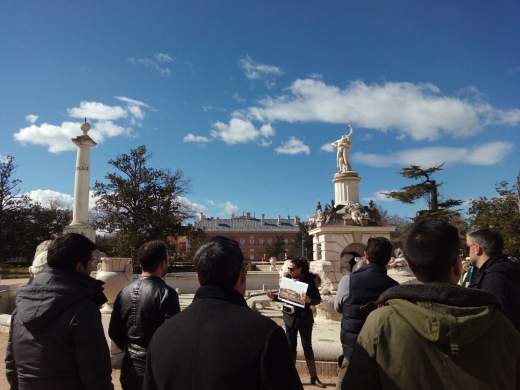
- The tour begins at the Prince’s Garden, which adds an essential scenic component. The distance from the Royal Palace is not merely physical: it forms part of the building’s concept as a retreat.
- The average duration of the visit is approximately one hour, although this may vary. The tour takes time: it requires attention to detail since most of its value lies in elements that are not immediately obvious.