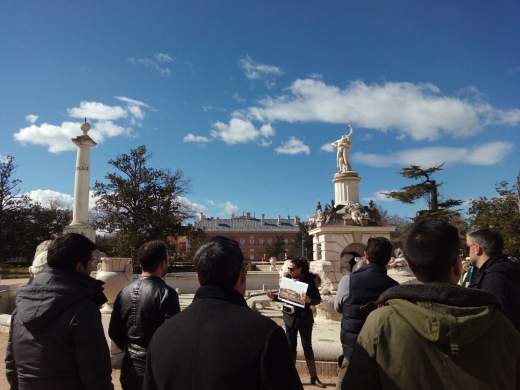



























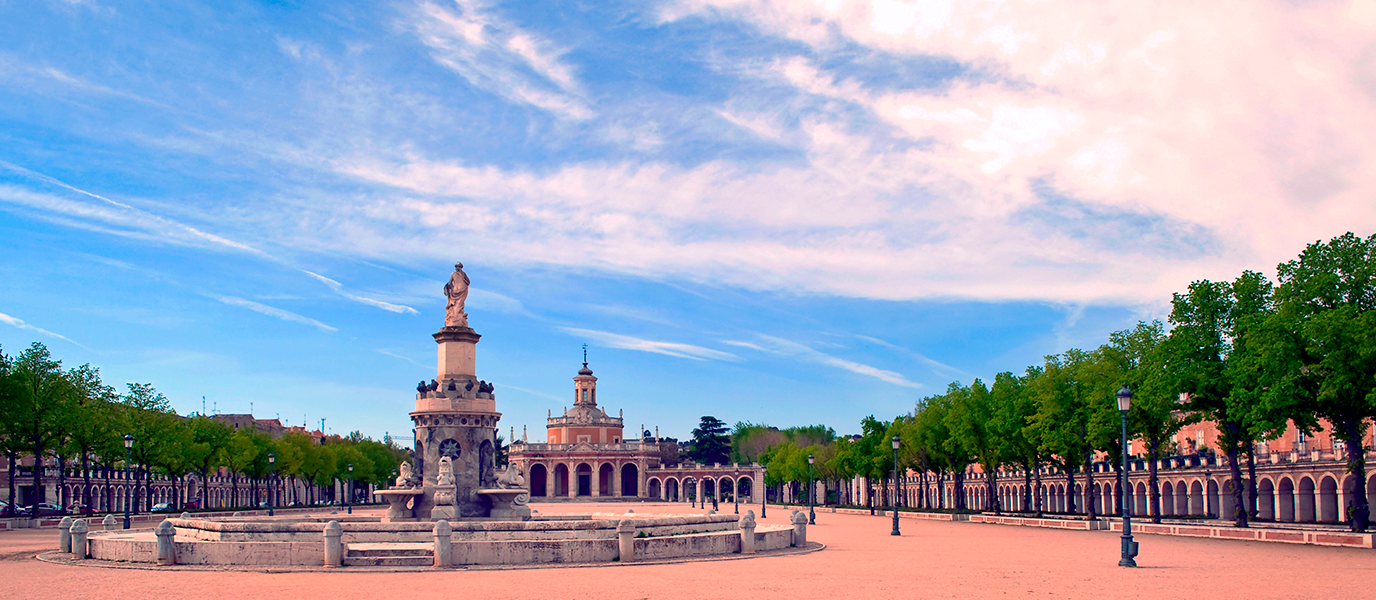
San Antonio Square was not the result of spontaneous development, nor was it an attempt to address existing business needs. Its origins are entirely different: it is a space designed from a position of power, which was planned to organise access to the Royal Palace of Aranjuez and to establish the relationship between the court and the civil population. Its semicircular shape marks a break with traditional Castilian planning, and shows the influence of eighteenth-century Italian and French models. Here nothing has been left to evolution or to chance: every building, every archway and every visual axis is the product of prior planning. The result is a space that acts as a filter — as a measured transition between the human scale of the town and the symbolic scale of the palace.
- The history of the square and church of San Antonio de Padua
- The architecture of the church of San Antonio
- What you can see in San Antonio Square
- What to see near San Antonio Square
The history of the square and church of San Antonio de Padua: from a Bourbon project to the centre of court life
Although Aranjuez had been used as a seasonal residence since the time of Philip II, it was not until the eighteenth century that any attempt was made to create an integrated town plan. This transformation was undertaken during the reign of Ferdinand VI, and in particular during the 1740s, when it was decided to impose an organised, coherent design on the town.
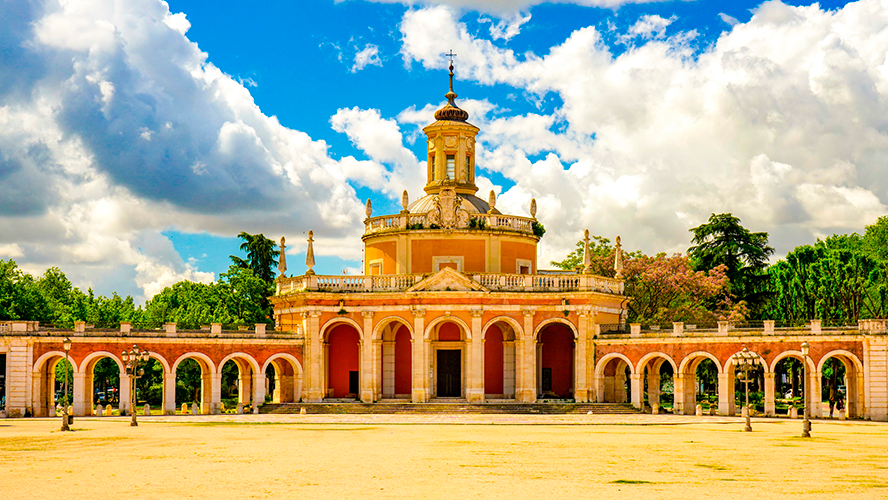
In this context, San Antonio Square was planned as a key piece in the new scheme. Its construction was directly linked to the architect Santiago Bonavía (appointed as royal architect in 1748), who took on the task of reorganising the urban layout of the Royal Site. The church of San Antonio de Padua, built between 1750 and 1752, became the central axis of this design.
Here, Bonavía introduced a concept inherited from the Italian tradition: the square is not merely a thoroughfare, but a setting in which architecture builds perspective. The arcaded galleries at each side, which were planned at the same time, do not merely define the space: they contain it visually and guide the flow of traffic.
During the reign of Charles III, the square acquired its status as the hub of court life. Documents dating from the eighteenth century mention public celebrations, processions and official ceremonies in this space, particularly during the days of spring when the court transferred to Aranjuez. One of the most frequent uses of the square was for open receptions, when the monarch could appear before the public in a controlled environment, reinforcing the idea of a carefully constructed closeness.
It is also known that ceremonies linked with the religious calendar took place in this square, especially around the festival of Saint Antonio of Padua each 13th of June, when the church took on a leading role and the space became packed with devout Christians and curious onlookers.
The Mutiny of 1808,a key episode in the history of Aranjuez, had its epicentre in the area close to the palace, but it was San Antonio Square that provided the urban setting where troops, peasants and a tense populace gathered in the days leading up to the fall of Manuel Godoy. The square’s status as an open space and a place for expression made it a strategic point for the movement of people and communications at a time of great public unrest.
The architecture of the church of San Antonio: classic equilibrium in an unusual layout
The church of San Antonio de Padua has a centrally focused floor plan: circular with attached chapels, something not often seen in Spain at that time when churches with longitudinal naves were the norm. This choice was no accident: it addresses a desire to integrate the church with the square, and to reinforce the symmetry of the whole.
The main façade consists of a portico with Tuscan columns and a triangular pediment influenced directly by classical architecture. Unlike the more extravagant Baroque churches of the previous century, this edifice conforms to a more restrained aesthetic, in which proportion and structural clarity play a major role.
The most striking element is the cupola, which rises above the edifice and acts as a visual reference from various points in Aranjuez. This cupola not only performs an aesthetic function: it marks out the centre of the space and establishes a visual dialogue with the Royal Palace.
Inside, the zenithal lighting strengthens the geometrical structure of the space. Light enters in a controlled fashion, emphasising the structure, and preventing any overly dramatic effects. The sobriety is linked to the ideals of the Enlightenment that were beginning to predominate in Spanish architecture from the mid eighteenth century.
What you can see in San Antonio Square: a town planning project that still works three centuries later
- The most striking feature of the square is its semicircular shape, which creates the impression of a space that is enclosed, but not completely closed off. This design enables the retention of an open aspect towards the south, while creating an ordered space around the church.
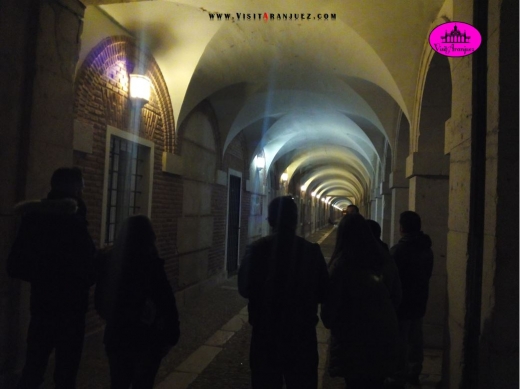
- The arcaded galleries are one of the most distinctive features. Built as an extension of the church, these arcades originally housed administrative offices, accommodation, and businesses linked with the court. They perform a similar function today, making the square a living space rather than a mere historical relic.
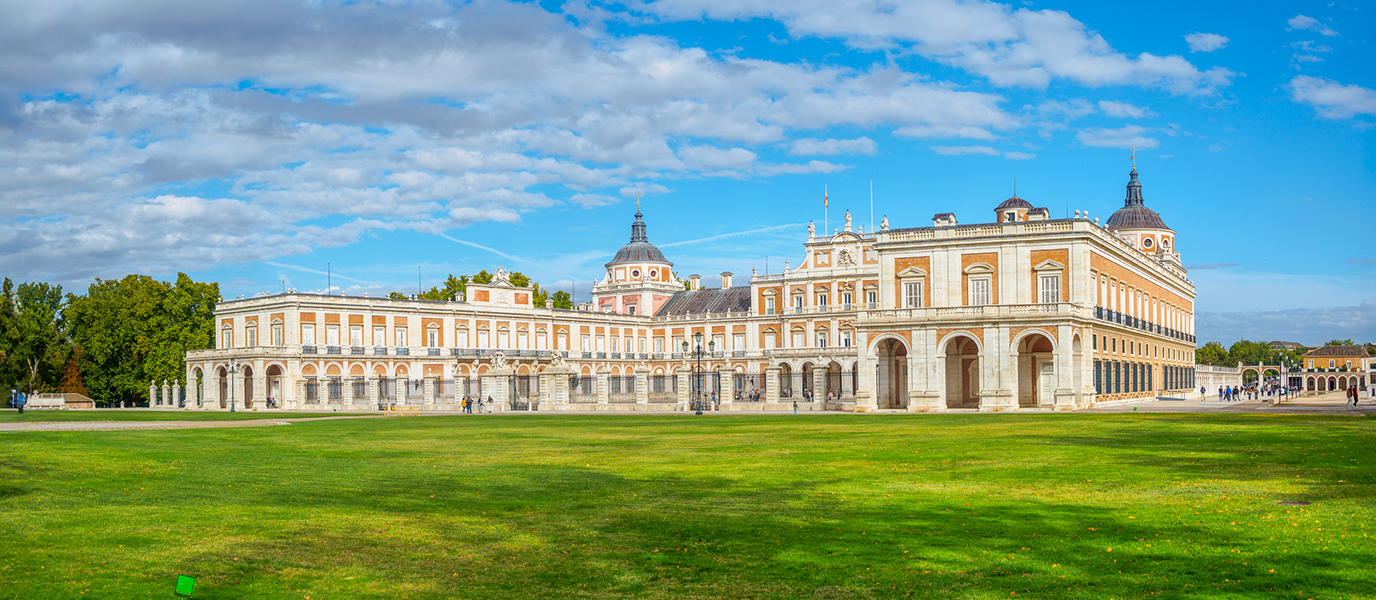
- Another important aspect is the square’s relationship with the Royal Palace. Although the palace is not actually part of the square, its proximity makes this area into a carefully designed ante room. The route from the town to the palace leads through the square which acts as a symbolic, as well as a physical, transition point.
- The square also demonstrates how Enlightenment urban planning sought to organise the town by means of clear axes and open spaces. Unlike the organic development we see in other towns and cities, here everything was subject to a rational logic, with each element occupying a precise place within the whole.
What to see near San Antonio Square: from urban axis to historic gardens
- A stone’s throw away stands the Royal Palace of Aranjuez, the proximity of which explains the strategic importance of the square within the whole scheme. A visit to both the palace and the square follows a natural itinerary that allows us to understand how the Royal Site was organised.
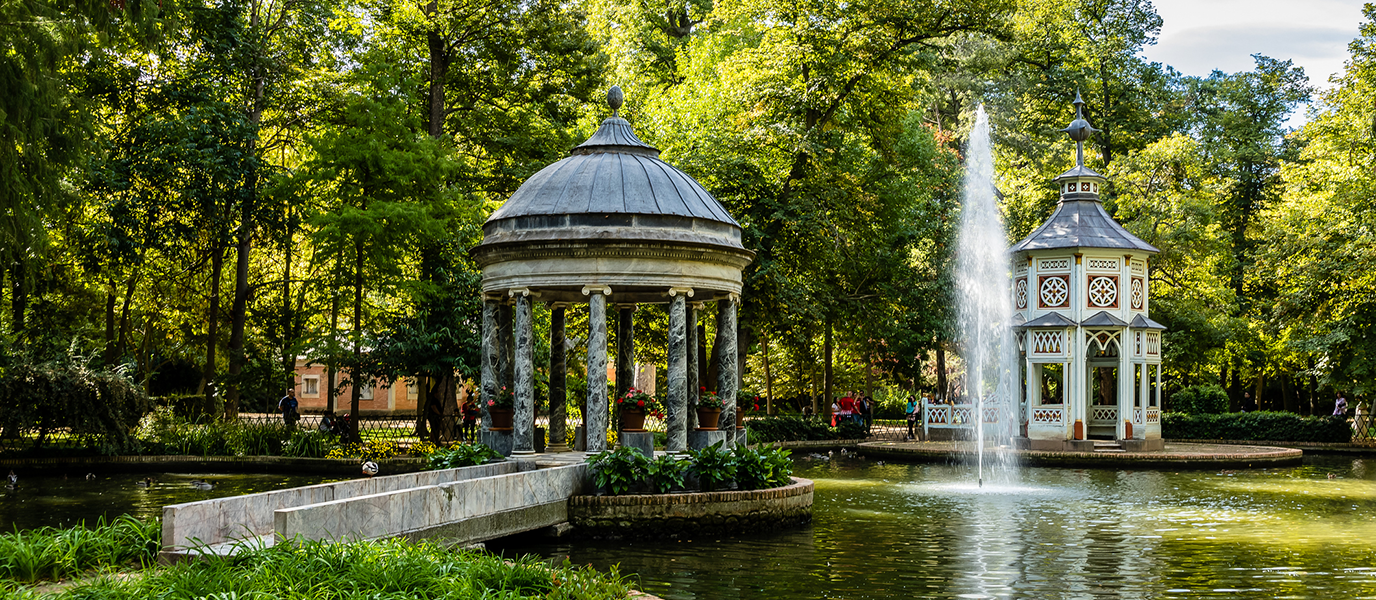
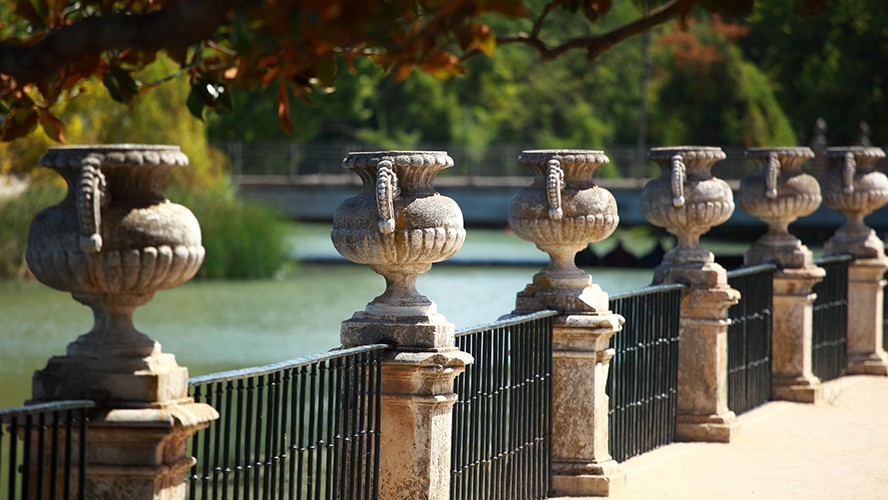
- Also close by are the Jardín del Parterre and the Jardín de la Isla, two of Aranjuez’s most important landscaped areas. These gardens are part of a broader system in which architecture, water and land combine to construct a perfect model of a royal residence.
- The immediate area also retains streets planned during the eighteenth century, set out in an orderly arrangement seldom found in other Spanish towns and cities. Walking along these streets enables visitors to prolong the experience of the square, and to better understand the scope of the planning project undertaken by the Bourbons.