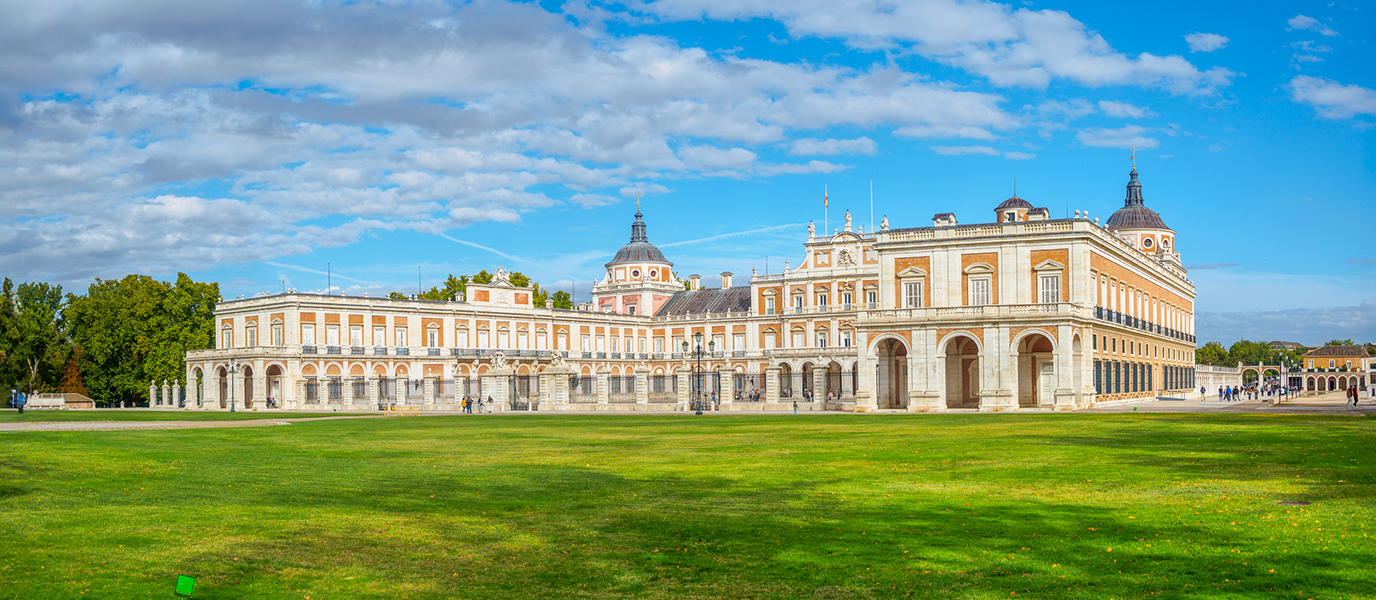



























While visitors to Aranjuez typically focus their attention on the Royal Palace and its gardens, one need only pause in the large square in front of the palace to realise that the complex is much more than just a residence. There, in perfect alignment, the Casa de Oficios y Caballeros boasts a sober architecture that, instead of competing with it, complements the palace and makes it all possible. This building was not designed for spectacle, but for the logistics of power. The day-to-day life of the court was organised within its rooms: accommodation, services, administration and the entire human network required for sustaining palace life. In a sense, it is the least visible—and most revealing—aspect of the court system.
- Casa de Oficios y Caballeros de Aranjuez
- What to see in the area surrounding the Casa de Oficios y Caballeros
- Can you go inside the Casa de Oficios y Caballeros? Current uses and how to explore its history
- What to see close to the Casa de Oficios y Caballeros
Casa de Oficios y Caballeros de Aranjuez: history and architecture, from the order of Philip II to Enlightenment rationality
La Casa de Oficios y Caballeros forms part of the ambitious project initiated by Philip II in the sixteenth century to transform Aranjuez into a planned Royal Estate. The aim was not just to build a palace but to create an organised courtly city where each building would serve a specific function as part of an overarching design.
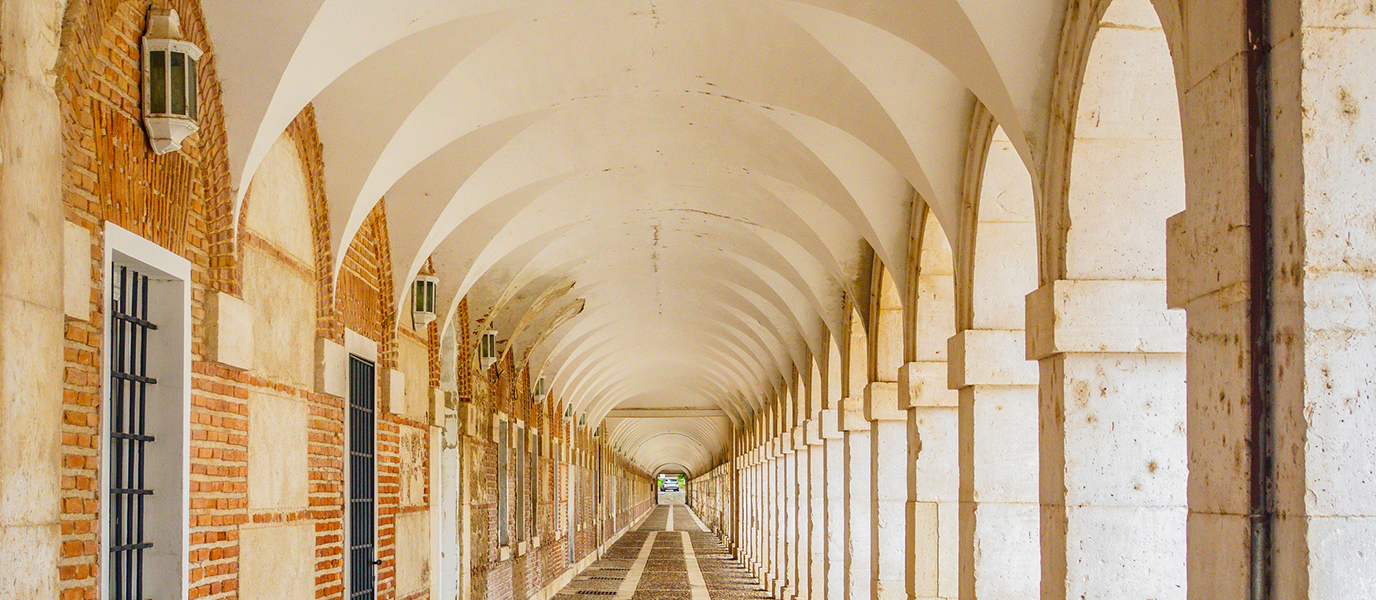
The initial design is attributed to the royal architects of the time, including Juan de Herrera and his associates, who were responsible for bringing the principles of Herrerian classicism—sobriety, proportion and structural clarity—to Aranjuez. This architectural language is evident in the repetition of modules, the regularity of the façades and the use of brick as the dominant material.
In the eighteenth century, with the arrival of the Bourbons, the complex was expanded and redefined. Under the reign of Charles III, architects such as Juan de Villanueva worked on the Royal Estate, consolidating the urban layout and reinforcing the functional character of buildings such as the Casa de Oficios y Caballeros. Architecture thus became a tool for arranging the court according to almost Enlightenment-era criteria.
Together with the Casa de Infantes, the building forms one side of the Plaza de Parejas, a space designed for both pedestrian traffic and courtly activities. Its repetitive structure, formed of aligned windows, uniform balconies and the absence of excessive ornamentation, does not reflect a lack of ambition but rather a desire for order. Here, form follows function.
What to see in the area surrounding the Casa de Oficios y Caballeros: Plaza de Parejas and the interplay between service and power
The building’s immediate surroundings are key to understanding its significance.
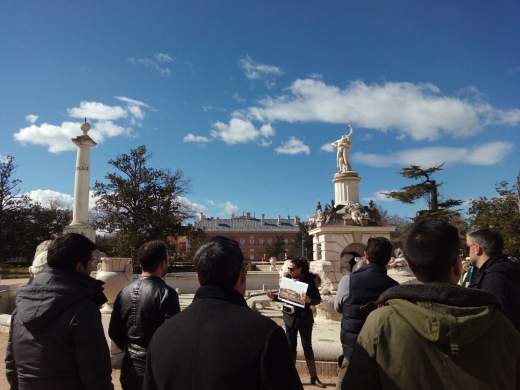
- The spacious and open Plaza de Parejas was designed as a multifunctional space for parades, equestrian displays and even horseback games—events that were very popular at the court.
- From this vantage point, there is a direct and revealing visual connection to the Royal Palace: the structures that supported power stand facing the buildings that represented it. This layout is not accidental but deeply symbolic, illustrating the mutual dependence between representation and organisation.
- What’s more, the proximity to the main tree-lined avenues and the garden entrances reinforces the complex’s sense of integration. The Casa de Oficios y Caballeros is not an isolated building but rather a part of a perfectly articulated urban system.
Can you go inside the Casa de Oficios y Caballeros? Current uses and how to explore its history
The Casa de Oficios y Caballeros is not currently open to the public in the traditional sense. Much of the building houses institutional and administrative offices, which means access to the interior is restricted.
However, understanding the building’s importance is not dependent on a tour of the interior. Simply observing the exterior, the scale of the building and its relationship with the surrounding area provides a clear understanding of its historical function. Access to certain areas is occasionally granted for special events or cultural activities, but this is uncommon. Therefore, the main focus lies in understanding its role within the Royal Estate complex.
What to see close to the Casa de Oficios y Caballeros: a full tour of the heart of Aranjuez
The building’s location makes it a perfect starting point for exploring Aranjuez
- The Royal Palace stands right opposite, where you can get a full picture of the court system from its most emblematic perspective.
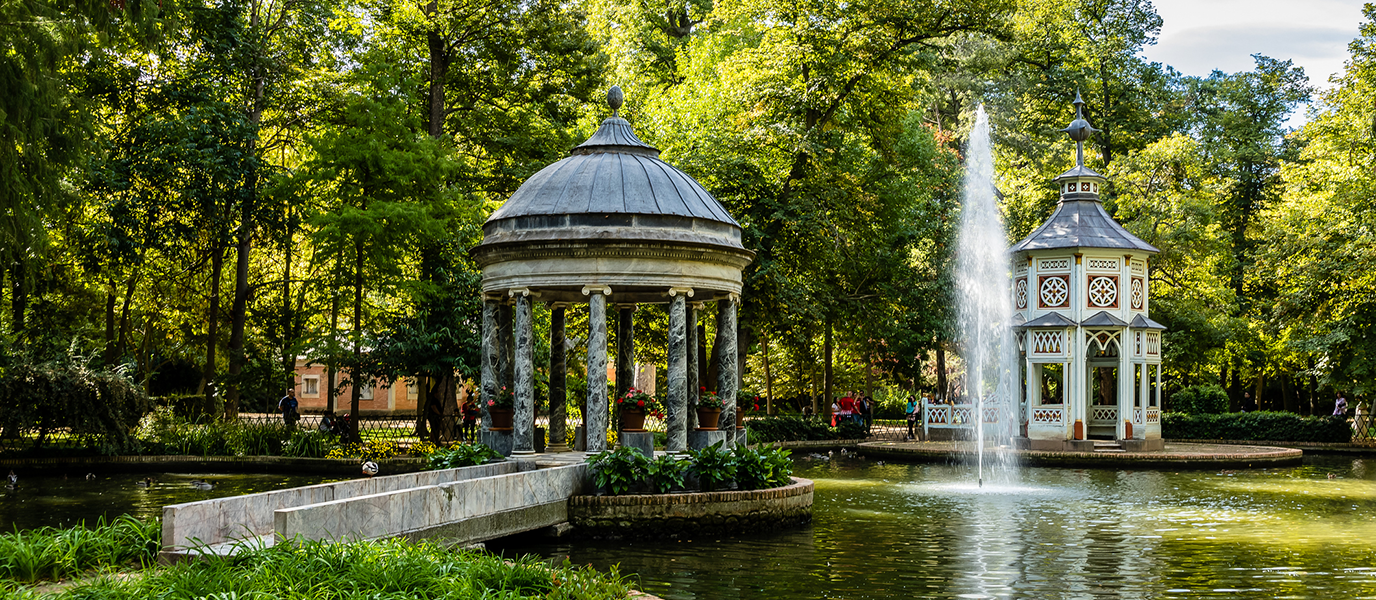
- Just a short walk away are the Parterre Garden and the Island Garden, where the interplay between architecture, water and plants is at its most refined. These spaces provide insight into how the court inhabited buildings and also meticulously designed landscapes.
- It is also worth taking a leisurely stroll through the Plaza de Parejas itself to observe the symmetry of the buildings and the scale of the space. Here, the overall planning of Aranjuez as a courtly city is most evident.